1. First relax: is it melting
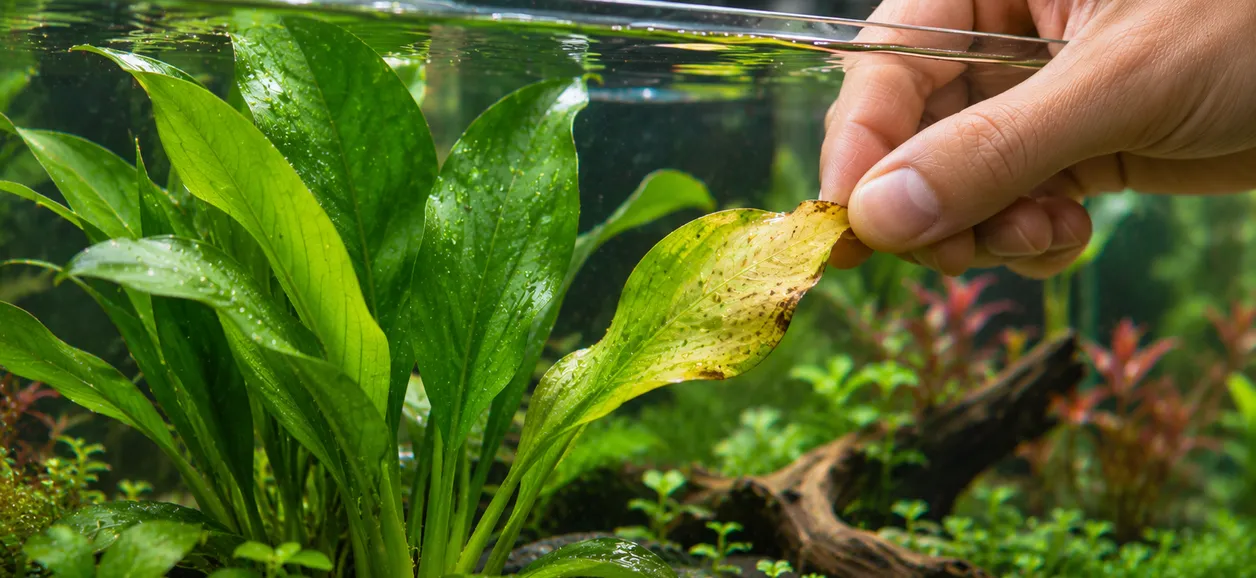
If a plant has been in the aquarium for only a few days or weeks and its old leaves turn yellow, transparent or disappear, the cause is most likely melting. Many plants are grown out of water, in emersed form, and underwater they have to swap their leaves for submerged ones. This transition is normal.
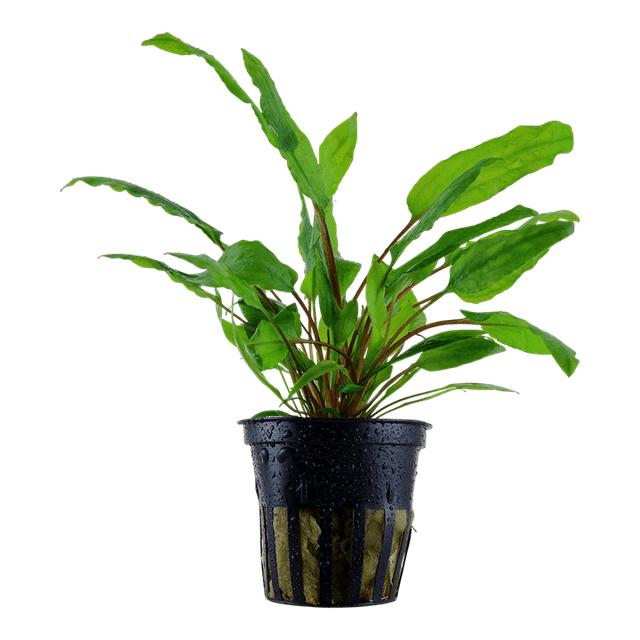
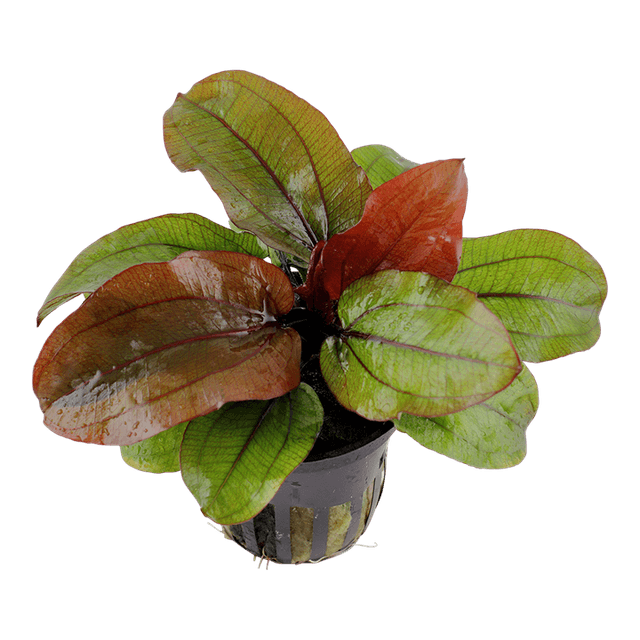
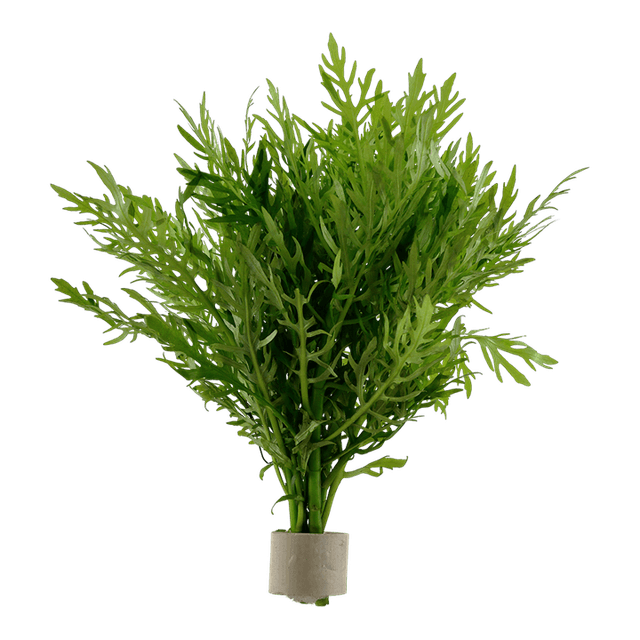
Typically old, thick and broad leaves fade, while the new ones are smaller, thinner and sometimes a different shape. Cryptocoryne often loses leaves and regrows from the rhizome, and Echinodorus regrows from the rosette. Stem plants such as Hygrophila usually adapt faster.
Do not pull the plant out or throw it away when old leaves fade. Leave it in place, remove only the dead leaves and wait a couple of weeks. If the roots are healthy and the base of the stem is green, new growth usually comes.
2. Light: too little or too much
Lack of light makes leaves pale and yellowish and growth leggy. Too much light, especially with few nutrients and little CO2, gives leaves spots and algae. Keep the photoperiod stable, about 8 hours a day, and use a timer.
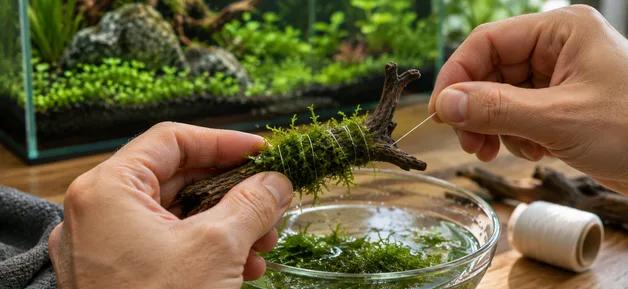
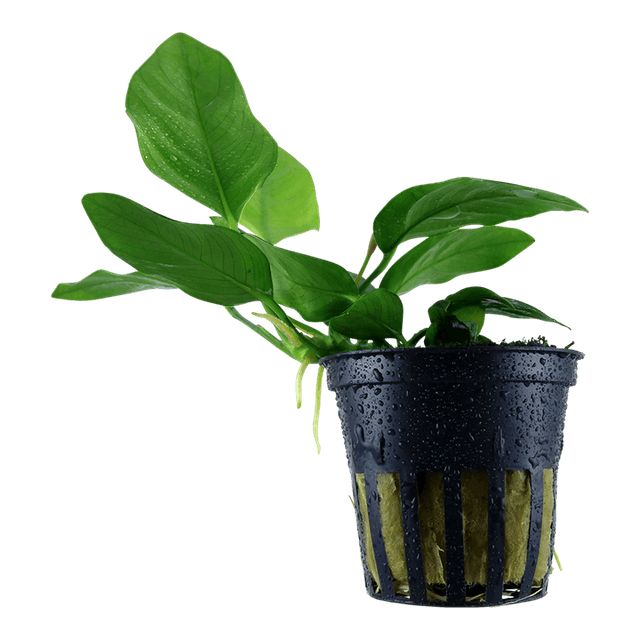
Check the light demand on the plant’s product page. Cryptocoryne wendtii ‘Green’, Echinodorus ‘Reni’ and Hygrophila difformis, for example, are listed there as suitable for low light. With a strong light and demanding plants, look at light, nutrients and CO2 together: when there is a lot of light, the plants also need enough of the other two. Anubias barteri var. nana is an easy plant that suits a rock or wood; do not bury its rhizome in the substrate, or it may rot.
3. Nutrient deficiency
If a plant has been in the aquarium for a longer time and old leaves gradually turn yellow, the cause can be a lack of nitrogen or phosphate. Pale young leaves often point to too little iron or trace elements. An exact diagnosis is not always easy, because the same symptom can have several causes.
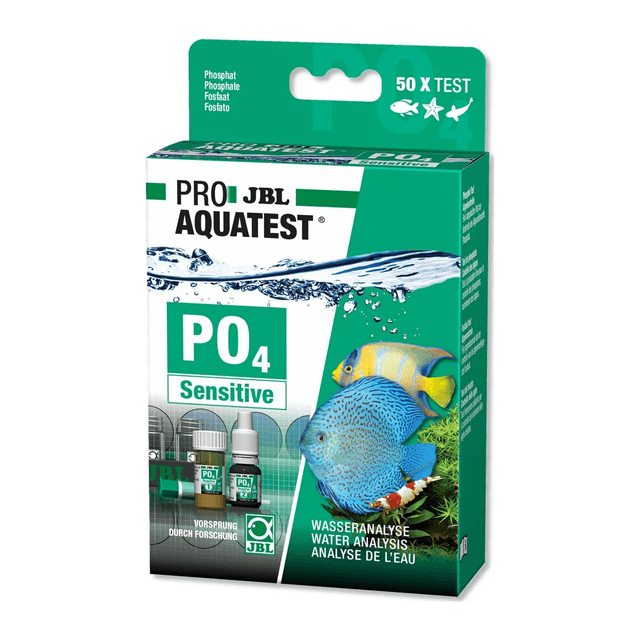
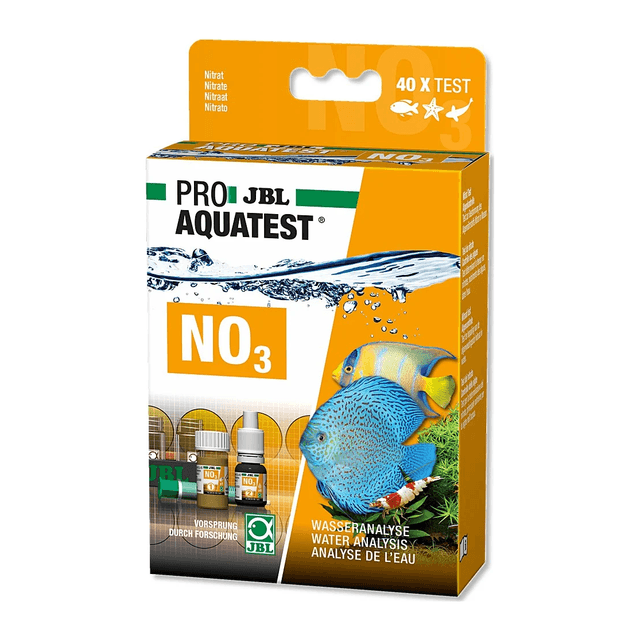
Measure nitrate and phosphate before adding fertiliser. According to the manufacturer, JBL Test PRO NO3 and PO4 Sensitive help you dose fertiliser so that plants have enough food but algae does not appear. Add fertiliser step by step, one thing at a time.
Rooted plants such as Echinodorus and Cryptocoryne do well with root fertiliser and a nutrient-rich substrate. Liquid fertiliser helps plants that feed mainly through the leaves.
4. CO2 and stability
Plants grown out of water took carbon dioxide from the air. In water the amount of CO2 is limited, and fast-growing or demanding plants can turn yellow and stall when CO2 is short. Adding CO2 can speed up the transition, but easy plants often manage without.
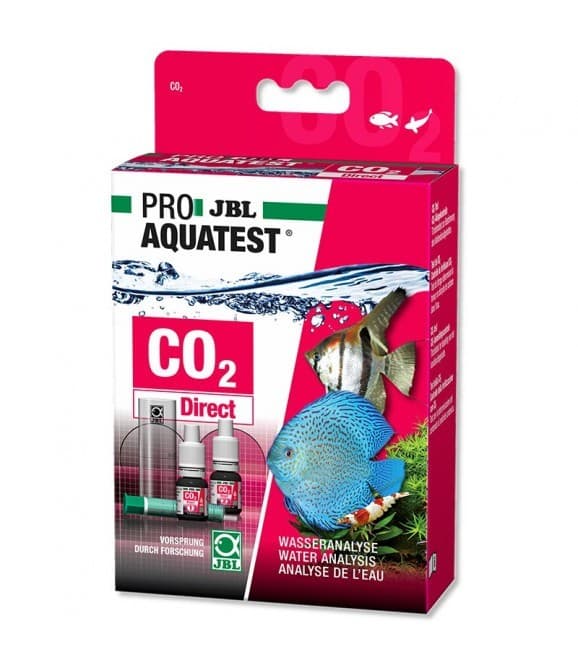
If you use a CO2 system, measure the gas level and watch the fish behaviour. JBL ProAquaTest CO2 Direct measures CO2 directly. Too much CO2 is dangerous for fish, so change the dose slowly.
Stability is as important as single values. Sudden changes in temperature, hardness or fertiliser can damage leaves, so make changes gradually and one at a time.
5. When to wait and when to act
Keep a diary: note when the plants were planted, what you changed and how the leaves behave. After a couple of weeks you will see whether old leaves fade only in the first period or whether it continues with new leaves. Melting is temporary, while a nutrient or light problem keeps coming back.
Act at once if new leaves turn yellow, if the fish behave unusually or if tests show ammonia or nitrite. In that case do a water change and look into the cause. If you are unsure, write to us and attach a photo, and we will help you find a fix.
In the long run a stable routine keeps both plants and algae under control: the same photoperiod, regular water changes and moderate fertilising.
Diagnostic table: what the leaves can mean
| Sign | Possible cause | What to do |
|---|---|---|
| Old leaves fade in the first weeks | Melting: transition from emersed form | Do not move, remove dead leaves, wait |
| Transparent or holey leaves | Melting or unstable water | Check water values, do a water change |
| Old leaves yellow gradually | Lack of nitrogen or phosphate | Measure NO3 and PO4, fertilise |
| Young leaves pale | Lack of iron or trace elements | Add trace elements per product page |
| Pale, leggy shoots | Lack of light | Lengthen the photoperiod or add light |
| Spots on leaves and algae | Too much light, nutrients and CO2 out of balance | Shorten the photoperiod, change water |
| Growth stops, leaves yellow | Lack of CO2 | Check the CO2 level, add if needed |
Checklist
- New plant: wait a couple of weeks before deciding
- Remove only dead leaves
- Do not move the plant without reason
- Keep the photoperiod stable, about 8 hours
- Measure nitrate and phosphate before fertilising
- Change one thing at a time
- Watch the CO2 level and fish behaviour
- Do regular water changes
Products for this guide
| Plant | Height | Light | CO2 | Growth | Difficulty | Placement |
|---|---|---|---|---|---|---|
| Cryptocoryne wendtii 'Green' | 10–30 cm | low | low | medium | easy | midground |
| Echinodorus 'Reni' | 15–30 cm | low | low | medium | easy | midground |
| Hygrophila difformis | 20–30 cm | low | low | fast | easy | background |
| Anubias barteri var. nana | 5–15 cm | — | — | — | easy | on rock or wood |
Size, light and CO2 demand are manufacturer data; real results depend on your aquarium.
Frequently asked questions
Does a yellow leaf mean the plant is dying?
Not necessarily. A single yellow old leaf is normal, especially for a new plant. Watch whether new growth appears and whether the new leaves turn yellow too.
How long does melting last?
Usually a couple of weeks up to a few months, depending on the species. Cryptocoryne can be slow. Leave the plant undisturbed in the meantime.
Does fertiliser fix yellow leaves?
Only if the cause is a nutrient shortage. Measure nitrate and phosphate first, because too much fertiliser can feed algae.
Should I cut off yellow leaves?
Yes, if a leaf is dead or breaking down, remove it. That way it does not decay in the water and feed algae.