1. Why algae appear
Algae are a natural part of the aquarium ecosystem. A small amount on the glass, stones or decorations does not necessarily mean something is wrong. The problem begins when algae multiply quickly, cover plant leaves or cloud the water.
Spread can be encouraged by light that is too long or too intense, direct sunlight, overfeeding and a build-up of organic waste, slow plant growth or too few plants, unstable CO₂ in a planted tank, and insufficient maintenance and water changes.
There is not always a single cause: several factors in the aquarium often act at once. In a new tank the balance is not yet established, because plants are still rooting and the filter is still starting up.
2. Seven common algae problems
Below are the seven most common problems with their signs, possible causes and ways to remove them. If you are unsure, compare your tank with the cards and look at the differences between look-alike problems. Cyanobacteria are not really algae, but they are included here because they are easily mistaken for algae.
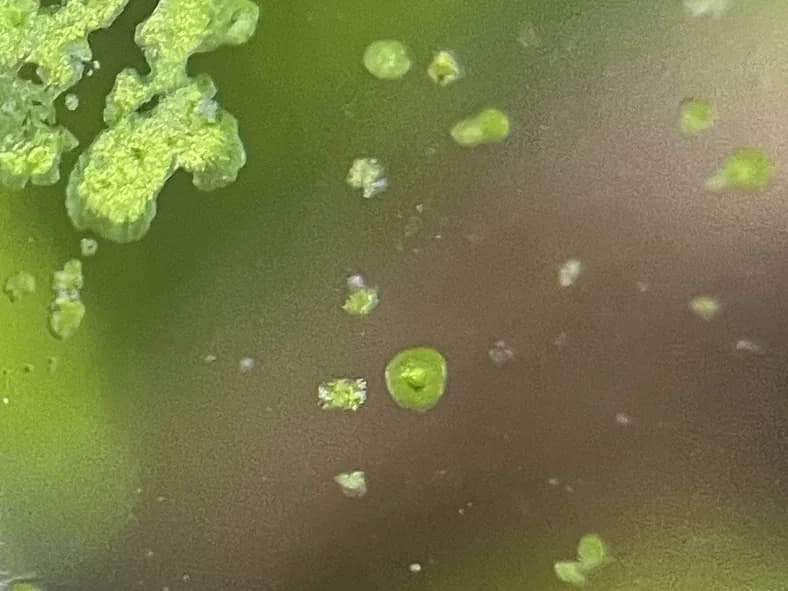
Photo: Jenn Wren / iNaturalist · CC BY 4.0 · cropped 1. Green spot algae (Green Spot Algae (GSA))
- How to recognise it
- Small hard green dots on the glass, on stones or on the leaves of slow-growing plants. The dots are hard and difficult to rub off.
- Possible causes
- They are often linked to light that is too strong or on for too long. A phosphate imbalance can sometimes play a part.
- How to remove it
- Clean the glass with a suitable algae scraper and check how long the light is on. On acrylic use a soft tool, not a blade. Remove algae from plant leaves carefully so the leaves are not damaged.
- How it differs
- It differs from diatoms by hardness: the dots do not rub off easily, while the brownish dusty film does.
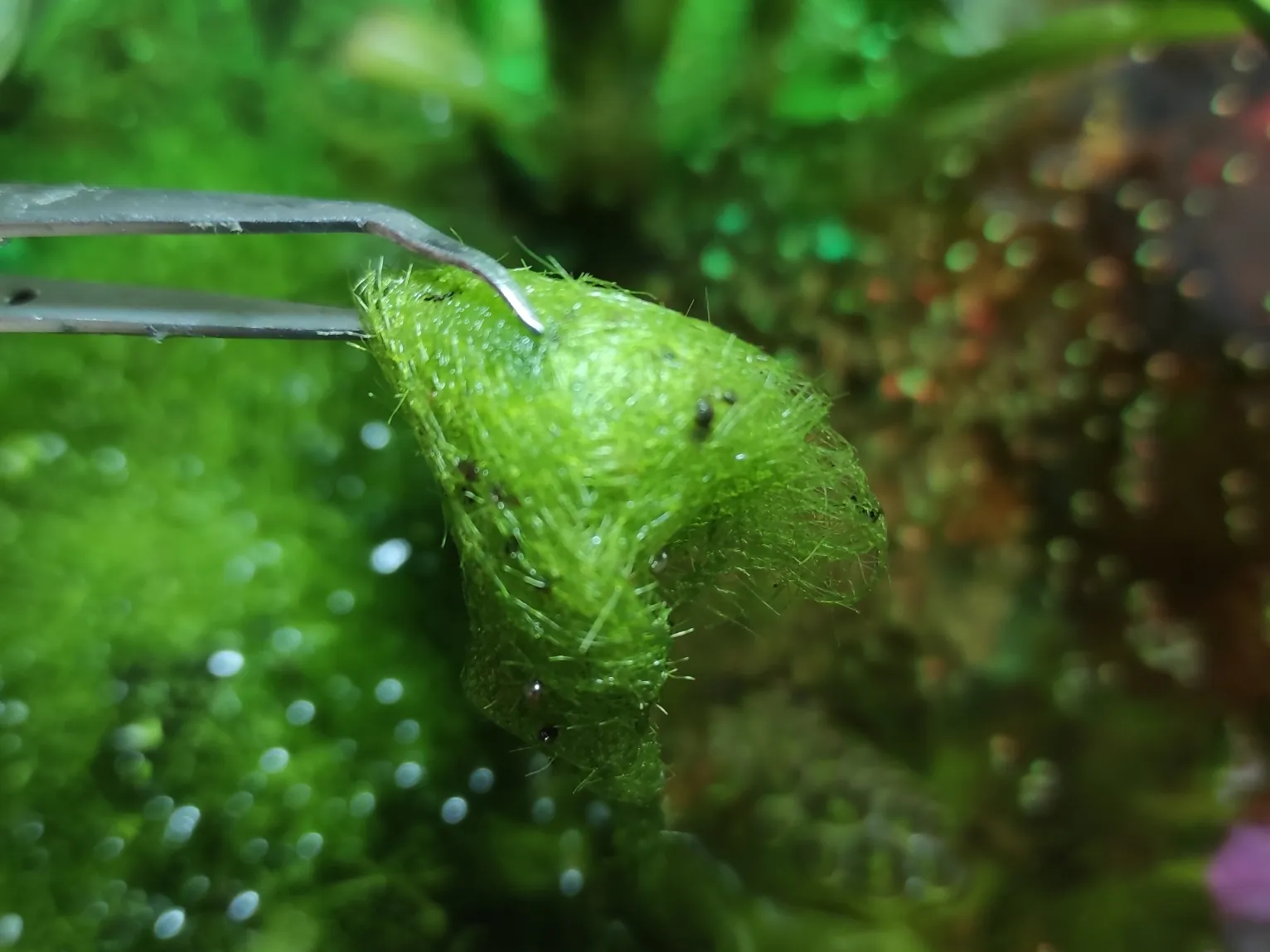
Photo: Marina E. / iNaturalist · CC BY 4.0 · cropped 2. Hair algae (Hair Algae)
- How to recognise it
- Long green threads that attach to plants, stones and decorations. Pulled out they look like wet hair. They can form dense clumps.
- Possible causes
- An imbalance between light and plant growth, fluctuating nutrients or unstable conditions.
- How to remove it
- Wind the threads carefully onto a toothbrush or a stick and remove them from the tank. Check the light, the maintenance routine and plant growth. Amano shrimp can help with some hair algae species but do not replace dealing with the cause.
- How it differs
- It differs from black beard algae by being soft and green: a thread comes out whole, while black beard is coarse and dark.
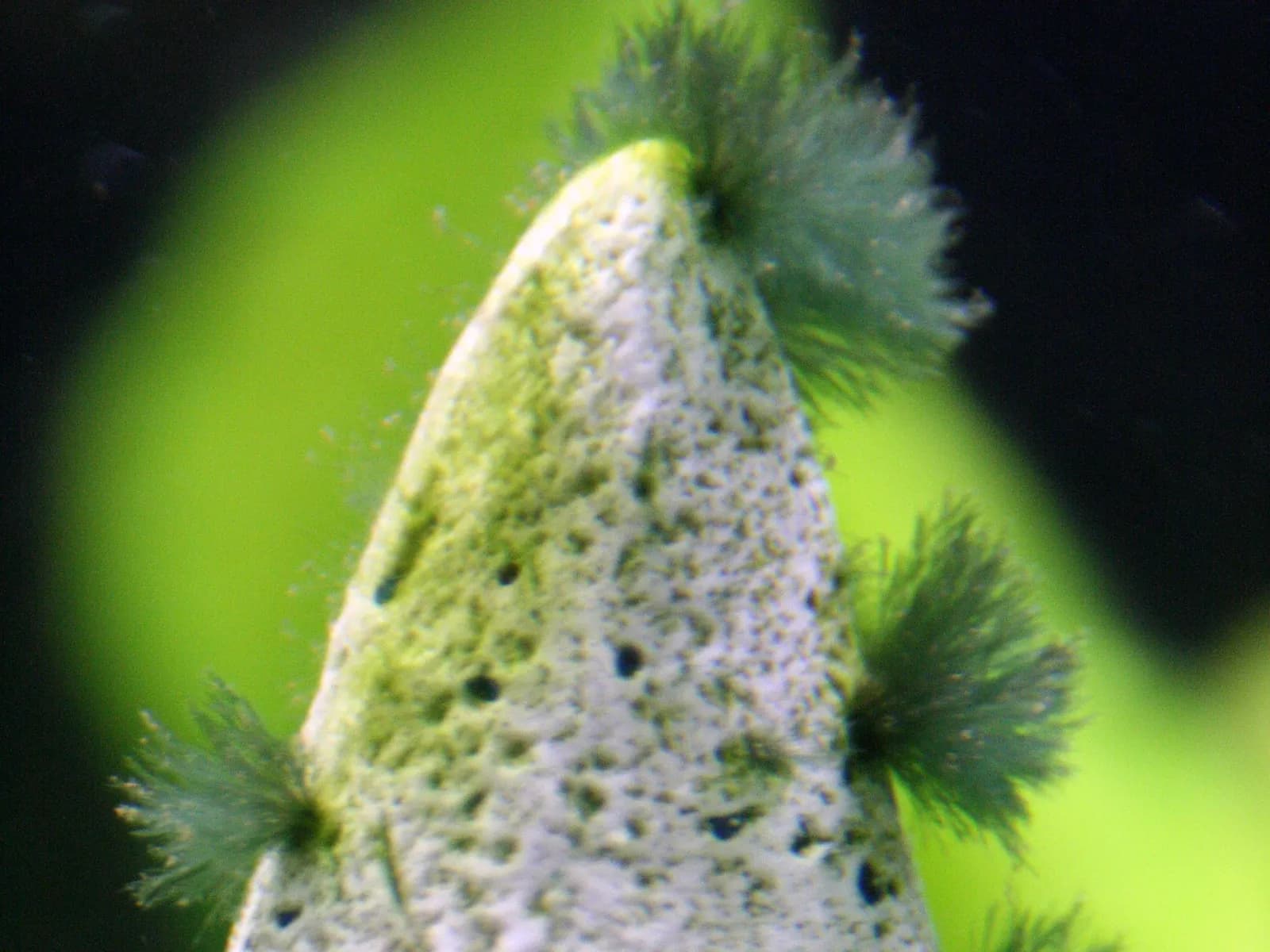
Photo: Kai Schreiber / Flickr · CC BY-SA 2.0 · cropped 3. Black beard algae (Black Beard Algae (BBA))
- How to recognise it
- Dark grey or blackish bristly tufts growing on leaf edges, driftwood, stones and equipment.
- Possible causes
- There can be several causes. In a planted tank it is worth checking CO₂ stability, water flow and the general condition of the plants.
- How to remove it
- Remove heavily damaged leaves. Clean decorations outside the tank where possible. Check the CO₂ system and avoid sudden changes. Getting rid of it can take time and one quick fix may not give a lasting result.
- How it differs
- It differs from staghorn algae by growth form: black beard is a coarse dense tuft, staghorn clearly branches like antlers.
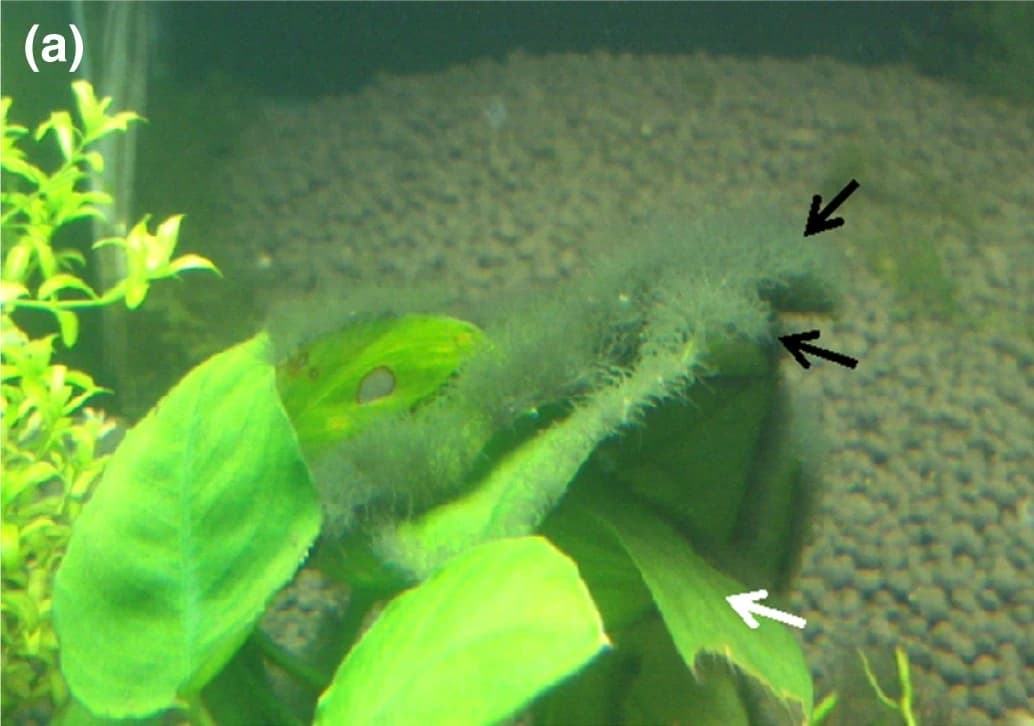
Photo: Shing Hei Zhan, Tsai-Yin Hsieh, Lan-Wei Yeh, Ting-Chun Kuo, Shoichiro Suda, Shao-Lun Liu / Wikimedia Commons · CC BY 4.0 · resized where needed, converted to WebP 4. Staghorn algae (Staghorn Algae)
- How to recognise it
- Greyish or dark branching threads that look like small antlers. They are often found on plant leaves and aquarium decorations.
- Possible causes
- Unstable growing conditions, a build-up of organic waste, or problems with CO₂ and water flow.
- How to remove it
- Remove damaged plant parts and clean off the visible clumps. Check filtration, water flow and regular maintenance.
- How it differs
- It differs from black beard by branching: clear branches suggest staghorn, a coarse bristly tuft suggests black beard.
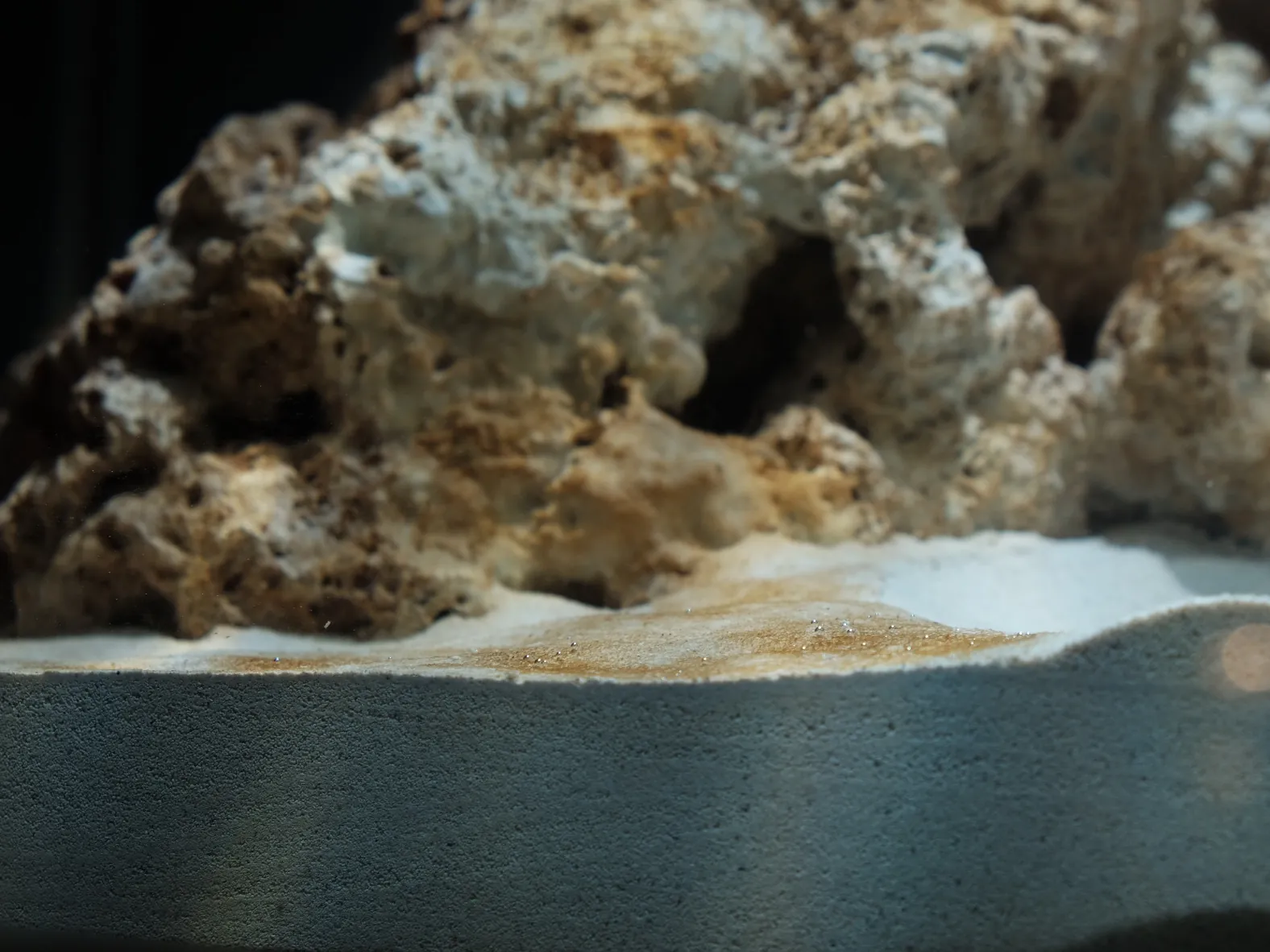
Photo: kerinin / Wikimedia Commons · CC BY-SA 2.0 · cropped 5. Brown algae (diatoms) (Brown Diatoms)
- How to recognise it
- A brownish dusty film on glass, substrate, plants or decorations. The film is soft and usually rubs off easily.
- Possible causes
- Diatoms often appear in new aquariums whose biological environment is still stabilising. Silicates in the water can also affect their growth.
- How to remove it
- Clean the surfaces gently and keep up regular water changes. In a new tank the problem may fade over time. Do not add fish or shrimp just to remove algae if the environment is not yet suitable for them.
- How it differs
- It differs from cyanobacteria by being a dusty, soft, odourless film; cyanobacteria form a slimy layer that often smells unpleasant.
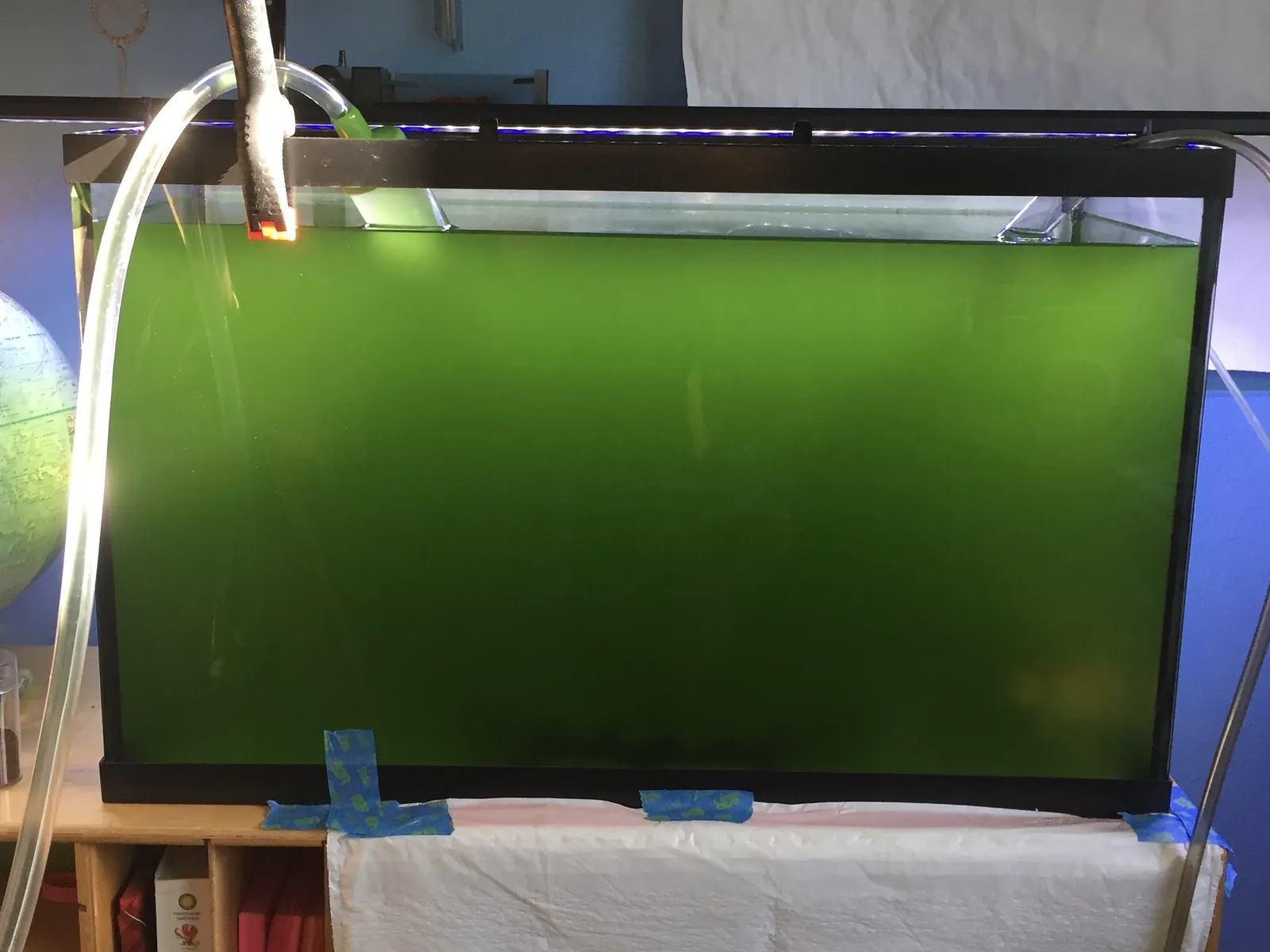
Photo: Barry Langdon-Lassagne / iNaturalist · CC BY 4.0 6. Green water (Green Water)
- How to recognise it
- The water turns green and cloudy, although no noticeable algae film may form on the glass.
- Possible causes
- Rapid growth of microscopic algae floating in the water. It can be encouraged by strong light, direct sunlight, excess nutrients and an ammonia spike, for example in a tank that has not finished cycling.
- How to remove it
- Check the light and avoid direct sunlight. Remove excess organic waste and check water quality. Water changes alone are usually not enough. For a persistent problem a suitable UV-C unit can help reduce the floating algae; it does not replace restoring balance.
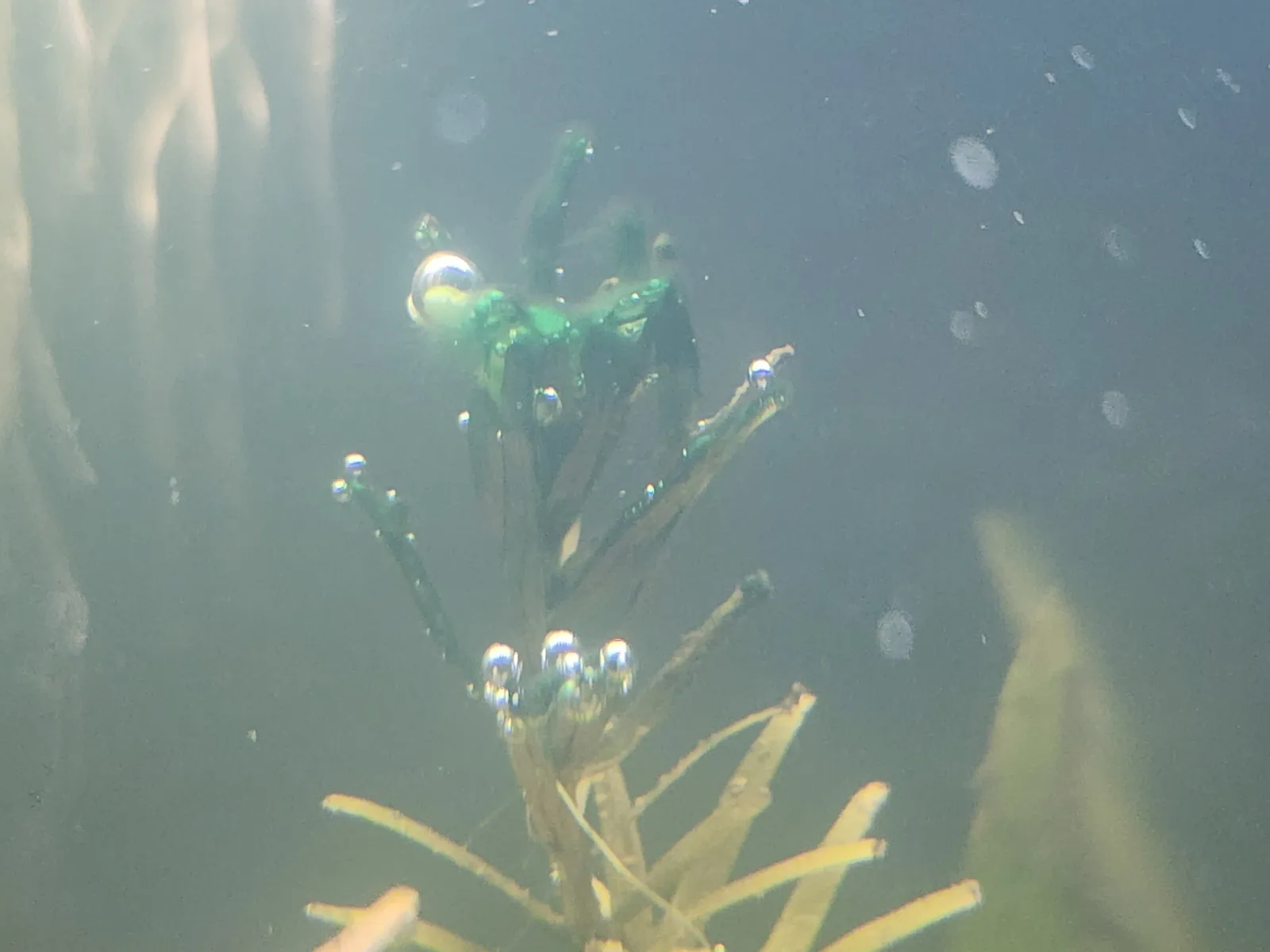
Photo: Kaden Slone / iNaturalist · CC BY 4.0 · cropped 7. Blue-green algae (cyanobacteria) (Cyanobacteria (BGA))
- How to recognise it
- A blue-green, dark green or almost black slimy layer that can cover substrate, plants and decorations. It often has a characteristic unpleasant smell. They are not really algae but photosynthetic bacteria.
- Possible causes
- They are often linked to a build-up of organic waste, weak water flow and other unfavourable conditions. The exact cause is not always clear.
- How to remove it
- Siphon off the visible clumps carefully. Clean the substrate, improve water flow if needed and check water quality. Avoid casual use of chemicals or antibiotics: the wrong treatment can harm the aquarium's inhabitants and its biological filtration.
- How it differs
- It differs from diatoms by its slimy texture and smell; diatoms are brownish, dusty and rub off easily.
3. How to get rid of algae: five steps
Check the light. In many planted tanks about 6–8 hours a day is a sensible starting point; if the light is on for more than 10 hours, try shortening it and use a timer. Also keep the plants' needs in mind and change one thing at a time.
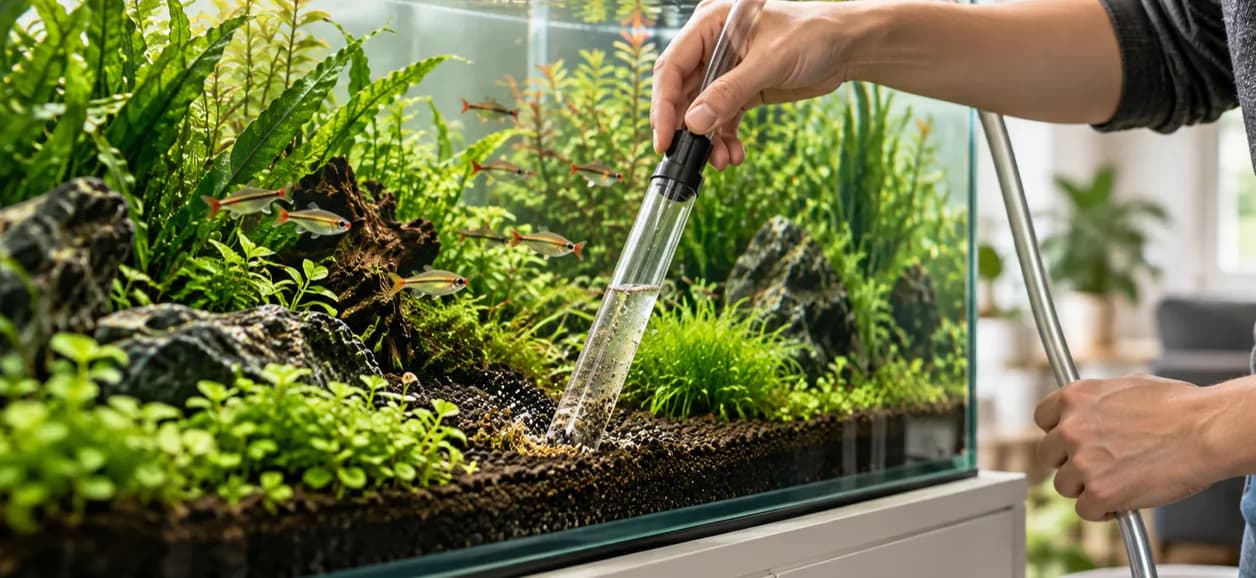
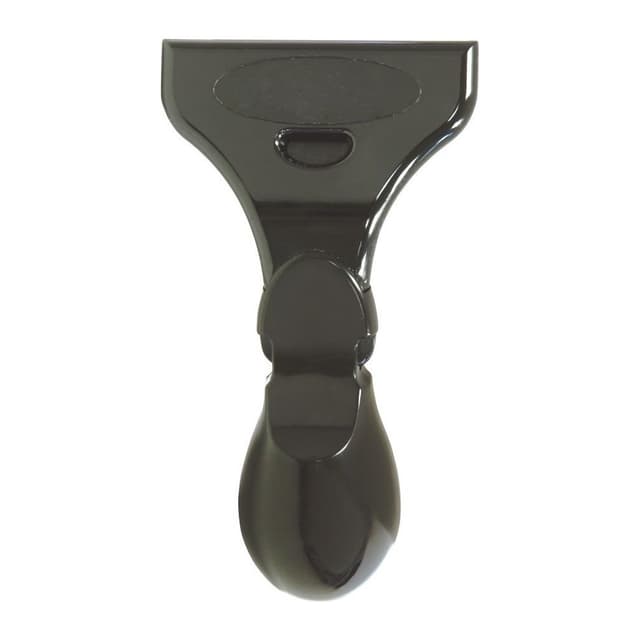
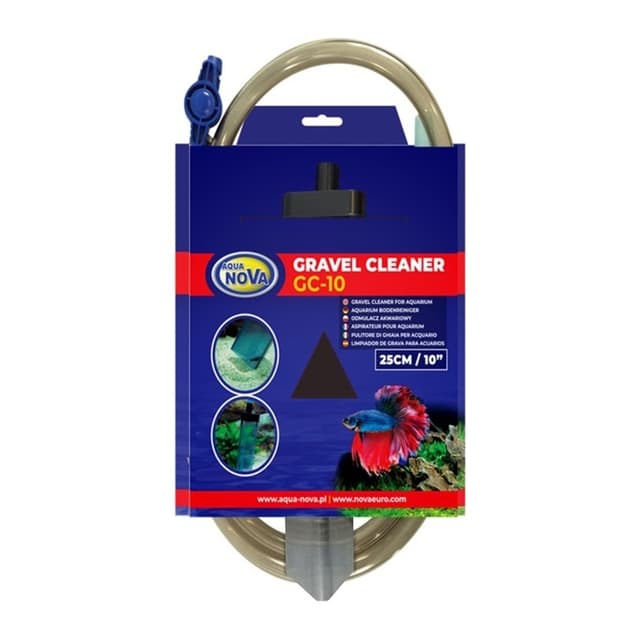
Remove the visible algae. Clean the glass, decorations and, if needed, damaged plant leaves, using tools suited to an aquarium such as a scraper and a gravel siphon.
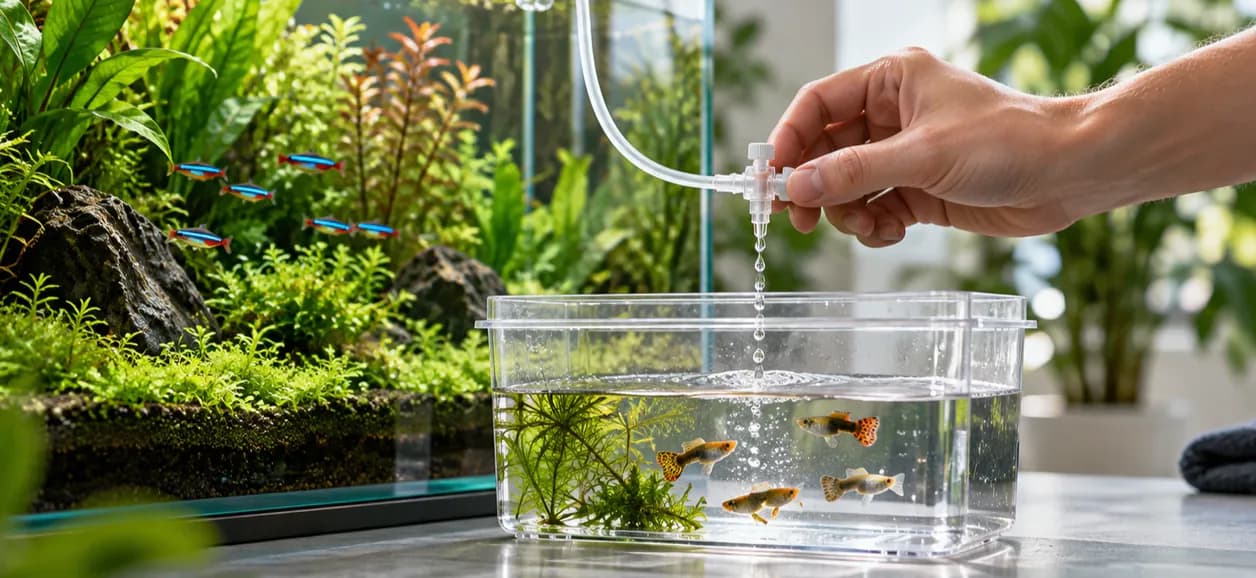
Do a partial water change. In a well-running tank about 20–30% once a week is often a suitable routine, but the exact need depends on the tank's load and water parameters.
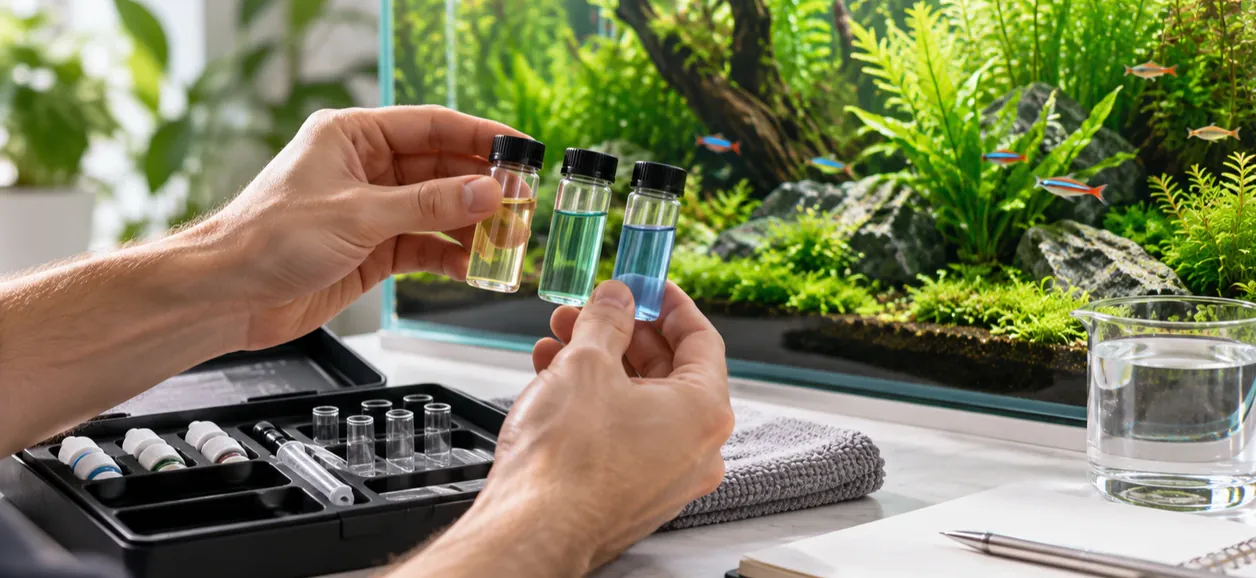
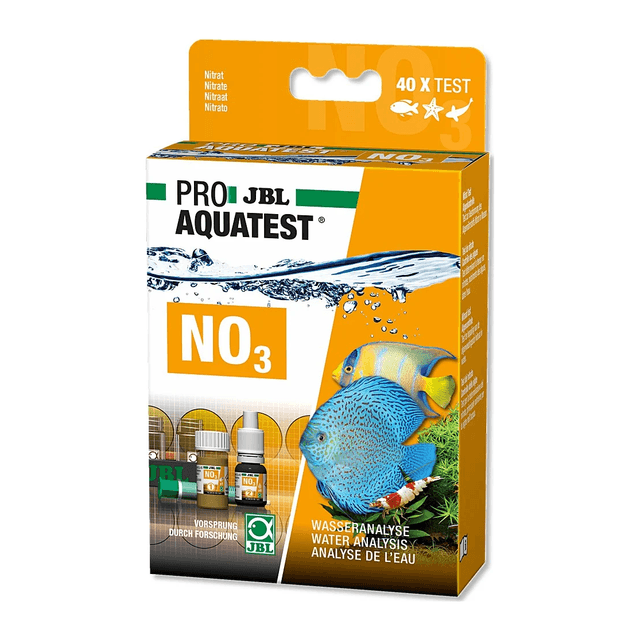
Check feeding and water parameters. Remove uneaten food and, if needed, measure ammonia, nitrite, nitrate and phosphate. Do not change fertilising on guesswork alone.
Support healthy plant growth. Check that plants get enough light, nutrients and, where used, CO₂, because fast-growing plants help use up excess nutrients. Give changes time: judge the result after several weeks, and getting black beard algae under control, for example, can take much longer.
4. How to keep algae from coming back
The most effective long-term solution is consistent maintenance. Keep the light on a fixed schedule, avoid overfeeding and remove decaying plant parts. Check the filter and water flow regularly and clean the filter as needed, keeping as much of the beneficial bacteria as possible.
If you use a CO₂ system, watch that it runs steadily. If you feed irregularly, an automatic feeder can keep portions even; set the amount modestly.
The goal is not an algae-free aquarium but a healthy, balanced environment where algae do not get in the way of the plants or animals.
5. Aids: UV-C and algae treatments
Before buying treatments, try to restore stable conditions in the aquarium. A treatment is an aid, not a fix for the cause: if the cause remains, the algae come back.
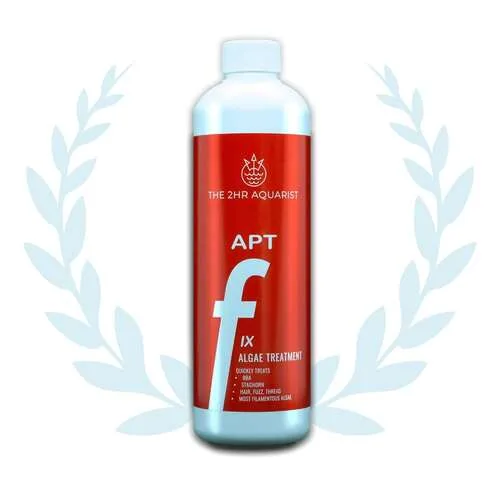
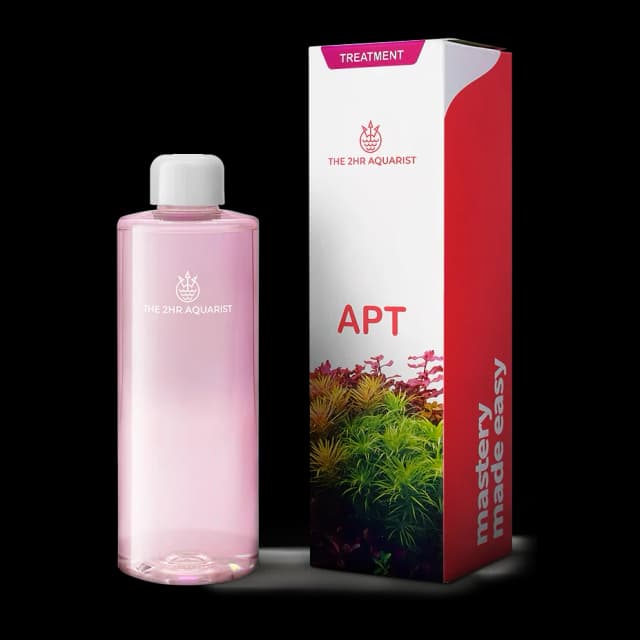
According to the manufacturer, 2Hr Aquarist APT Fix is made for black beard algae (BBA) and for hair, string and fuzz algae. 2Hr APT Fixlite is the gentler option for mosses, liverworts and delicate plants. The manufacturer's dose for both is up to 1 ml per 10 litres every 24 hours, spot-dosed; read the instructions on the pack and test on a small area.
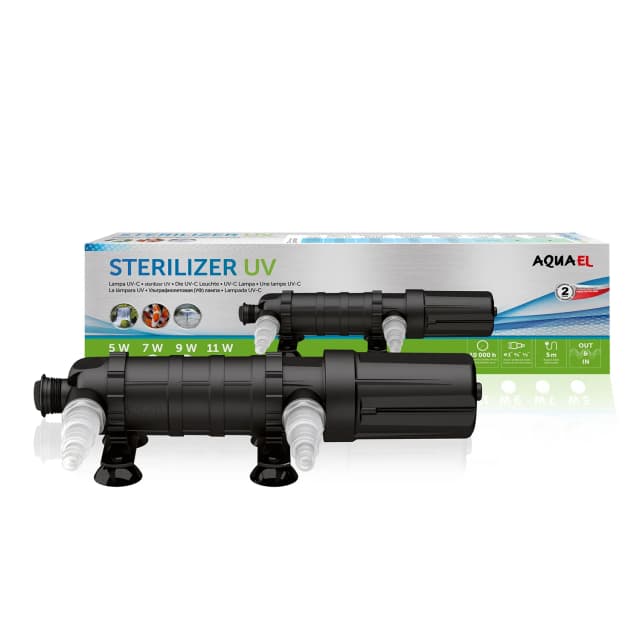
For green water a UV-C unit can help reduce the algae floating in the water. The choice depends on the tank volume and filter; check the manufacturer's recommended volume on the product page.
Algae identifier: signs at a glance
| Problem | Appearance | Where | Easily confused with |
|---|---|---|---|
| Green spot algae | Small hard green dots | Glass, stones, leaves of slow-growing plants | Diatoms: the dots are hard |
| Hair algae | Long green threads | Plants, stones, decorations | Black beard: the thread is soft and green |
| Black beard algae | Dark coarse bristly tufts | Leaf edges, driftwood, stones, equipment | Staghorn: the tuft does not branch |
| Staghorn algae | Greyish branching antler-like threads | Plant leaves, decorations | Black beard: staghorn branches |
| Brown algae (diatoms) | Brownish dusty soft film | Glass, substrate, plants, decorations | Cyanobacteria: diatoms are not slimy |
| Green water | Greenish cloudy water | The whole water body; the glass may stay clear | — |
| Cyanobacteria | Blue-green or almost black slimy layer, often smells | Substrate, plants, decorations | Diatoms: cyanobacteria are slimy and smell |
Checklist
- Keep the light stable with a timer and away from the window
- Remove visible algae by hand and with a scraper
- Do regular partial water changes
- Remove uneaten food and decaying plant parts
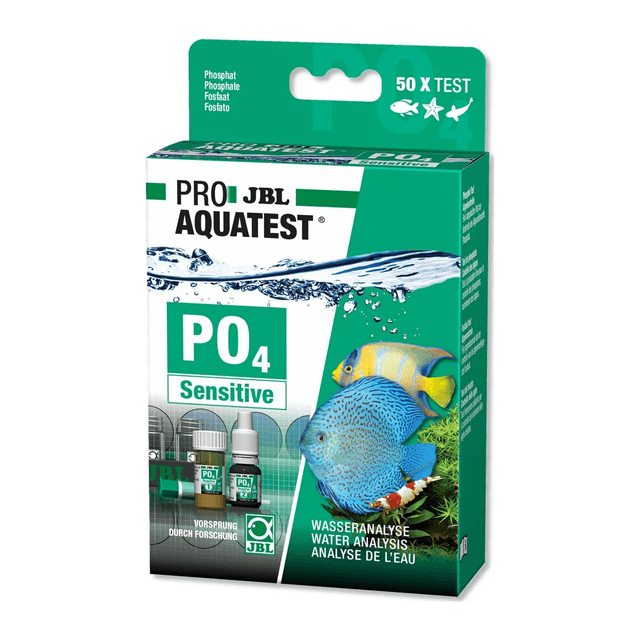
- Measure nitrate and phosphate, do not fertilise blindly
- Change only one parameter at a time
- Give changes several weeks to show
- Use treatments and a UV-C unit only as an aid
Products for this guide
from€11.99
from€11.99
from€6.99
Unit price: €55.92 / l
from€14.99
Unit price: €74.95 / l
from€9.99
Unit price: €99.90 / l
Frequently asked questions
Are algae dangerous to fish?
Most common algae are not directly dangerous to fish. Extensive algae growth can still point to water quality problems. Some cyanobacteria can produce toxins.
Does switching off the light help?
Reducing the light can help in some cases, but it does not always remove the cause. Long, complete darkness can harm plants.
Do shrimp eat all algae?
No. Different shrimp and fish species eat different algae, and some algae they hardly touch. A small number of shrimp works slowly.
Does a lack of CO₂ cause algae?
Not necessarily. Many plants grow well without added CO₂. Problems can arise when light intensity and the plants' growing conditions are out of balance.
How quickly do algae go away?
It depends on the type of algae and the cause of the problem. Some problems can fade within a couple of weeks, but getting black beard algae under control, for example, can take much longer.
Should I use antibiotics against cyanobacteria?
Start with manual removal, siphoning and improving water flow and water quality. Antibiotics and chemicals can harm biological filtration and the tank's inhabitants, so do not use them casually.