1. What an easy plant means
An easy plant is one that survives even while the tank is still maturing and maintenance is not yet perfect. In Tropica’s data each plant is marked with a difficulty (Easy, Medium or Advanced), light demand, CO2 demand and growth rate. For a beginner the combination to look for is difficulty Easy, low light demand and low CO2 demand.
Such a plant needs no special lighting or CO2 system and forgives small mistakes such as uneven water changes. All eight species below match this description.
2. Species that grow on rock and wood
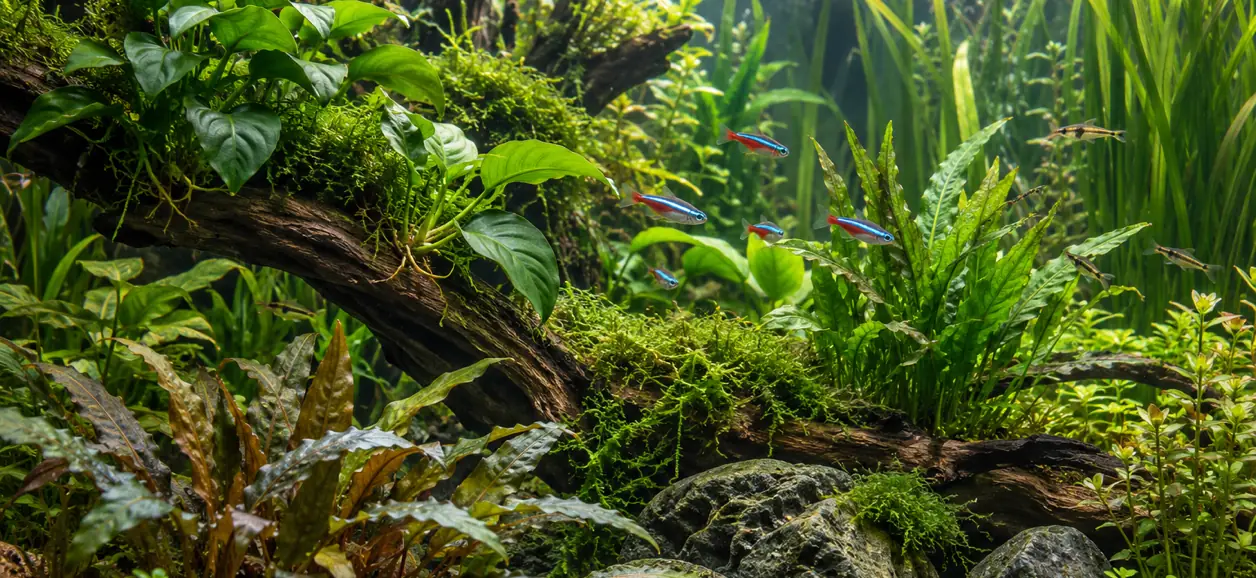
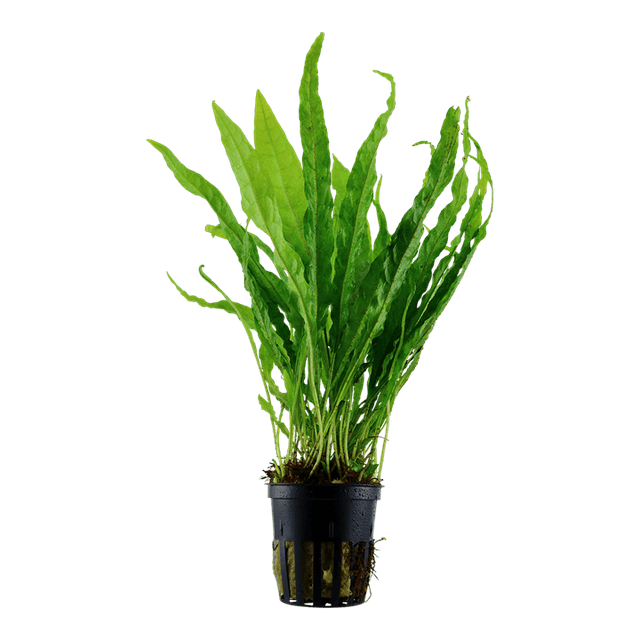
Java fern (Microsorum pteropus) is, according to Tropica, one of the hardiest aquarium plants. Grow it on wood or stone, tied with fishing line until it holds on its own, and never bury the rhizome. Height 15–30 cm, slow growth.
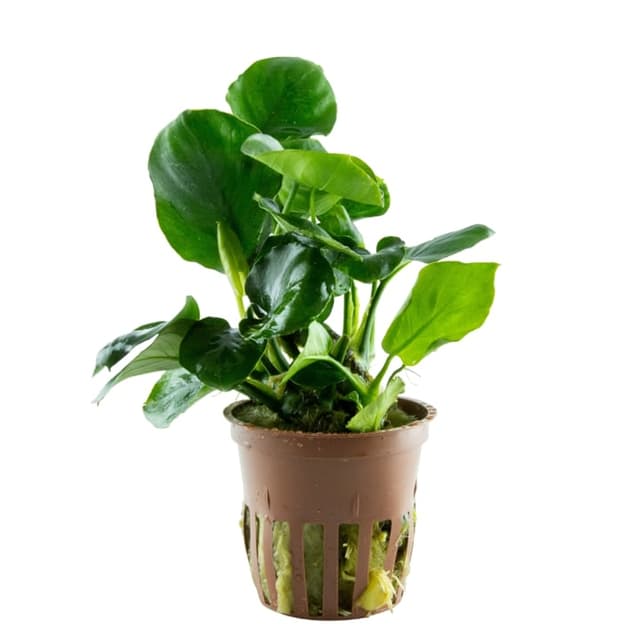
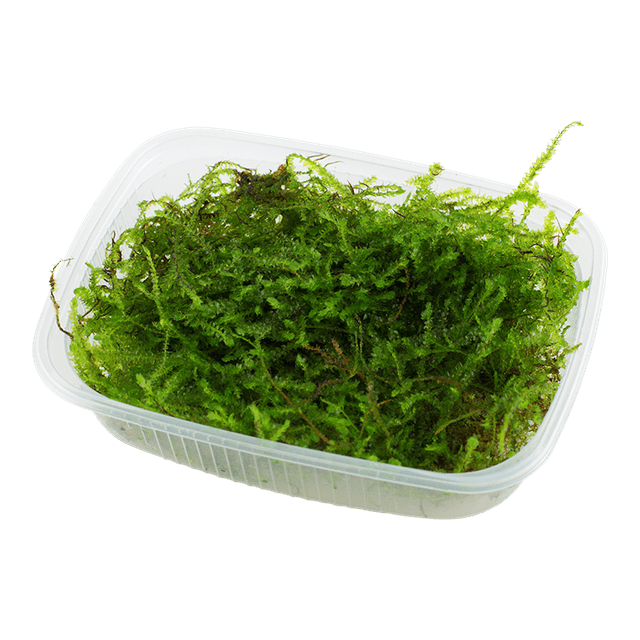
Anubias barteri 'Coin Leaf' has almost round, bright green leaves, is undemanding and happy in modest light. Attach it to stone or wood as well, or plant it so that the rhizome stays above the substrate: covered, it rots. Bogor moss grows on any surface and asks little of water or light; tie it to a stone or root with thread.
3. Species that grow in the substrate
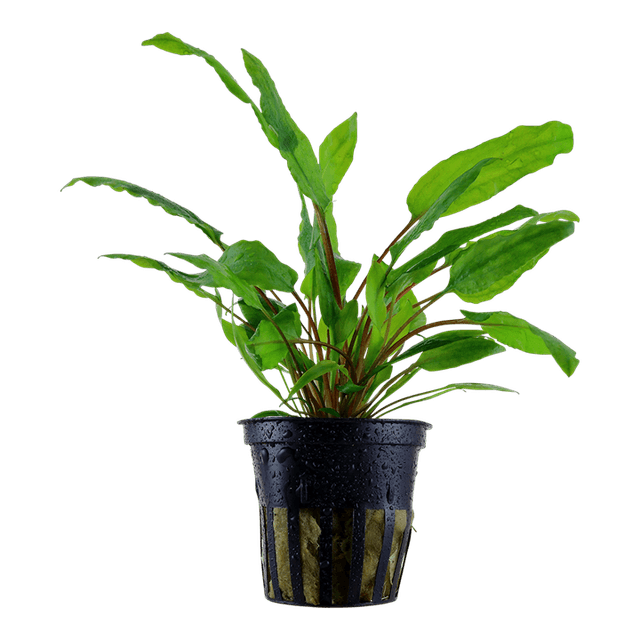
Cryptocoryne wendtii 'Green' is a green form of the classic C. wendtii. By Tropica it grows well in hard water too, and in open space its leaves lie almost flat on the bottom. Height 10–30 cm, medium growth. A Cryptocoryne needs time to adapt: at first its leaves may melt, which is normal.
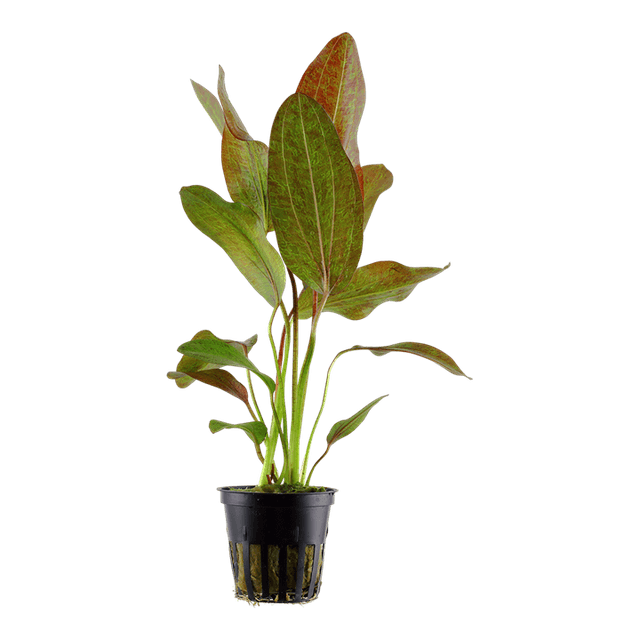
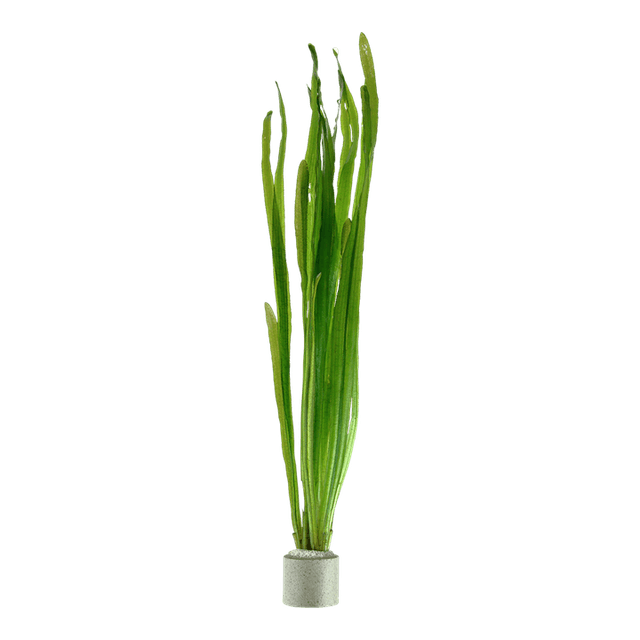
Echinodorus 'Ozelot' has red-brown leaves with dark spots that keep the pattern even in low light. Vallisneria americana 'Natans' has narrow ribbon leaves and spreads by runners; it is sold as a bundle that you can split and plant a little apart. Both suit the background.
4. Stem plants
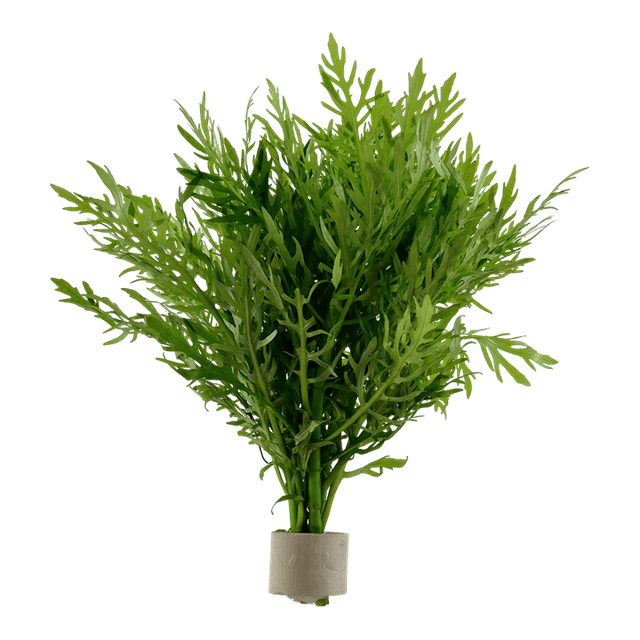
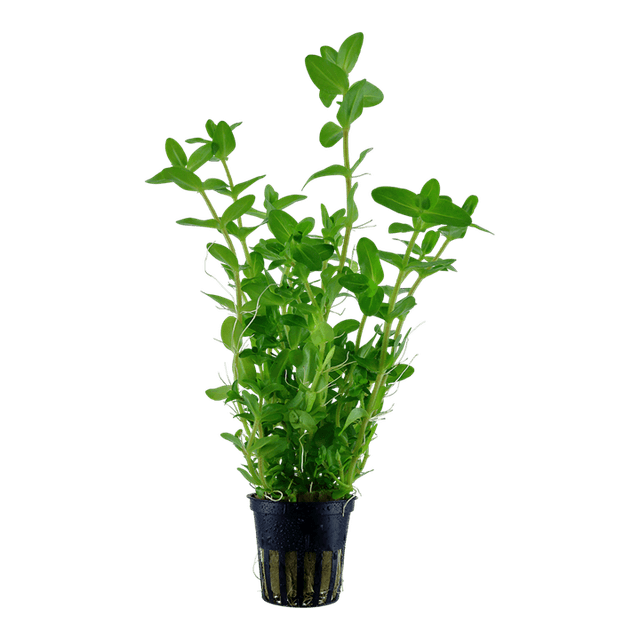
Hygrophila difformis (water wisteria) is a fast, easy stem plant with finely divided leaves that takes up nutrients quickly. Bacopa caroliniana grows more slowly, so needs little pruning and, by Tropica, is one of the easiest stem plants for beginners. Plant it in small groups.
Fast growth is an advantage in stem plants: they use up nutrients and help keep the water clean, which gives algae fewer chances. When a stem reaches the surface, trim it and replant the top.
5. The first weeks and common mistakes
Plants need time to settle after purchase. Position them correctly, do not bury the rhizome and leave room to grow. Keep the photoperiod at about eight hours a day and use a timer. Too long a light period is the most frequent cause of algae in a beginner’s tank.
Do not change everything at once. Start with a few species, watch for a month and add plants after that. If you see yellowing leaves, do not panic: see the guide on yellow leaves.
6. A simple plan for a first tank
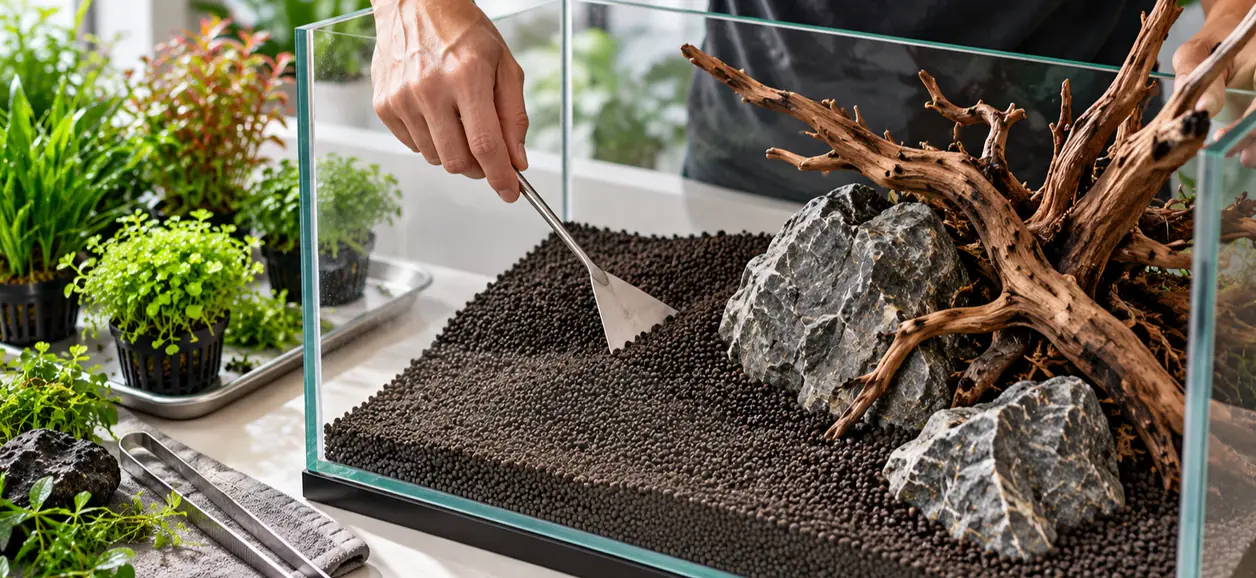
If you are unsure how to put together a set from the eight species, follow a simple plan. Put Vallisneria 'Natans' and Bacopa caroliniana at the back and in the corners, and Echinodorus 'Ozelot' or Cryptocoryne wendtii 'Green' in the middle. Attach Java fern, Anubias 'Coin Leaf' and Bogor moss to a rock or root.
Such a mix occupies different heights and uses nutrients differently, so the tank stays in balance. The more plants in the water, the fewer nutrients are left for algae. In the first month do not add new plants every day; watch how the existing ones grow.
8 easy plants: data from the product pages
| Plant | Height | Placement | Growth |
|---|---|---|---|
| Microsorum pteropus | 15–30 cm | middleground | slow |
| Anubias barteri 'Coin Leaf' | 5–15 cm | middleground | slow |
| Bogor moss | 3–10 cm | on rock or wood | medium |
| Cryptocoryne wendtii 'Green' | 10–30 cm | middleground | medium |
| Echinodorus 'Ozelot' | 20–30 cm | background | medium |
| Vallisneria americana 'Natans' | 20–30 cm | background | fast |
| Hygrophila difformis | 20–30 cm | background | fast |
| Bacopa caroliniana | 20–30 cm | background | slow |
Checklist
- Pick difficulty Easy, low light and low CO2.
- Do not bury the rhizome of Anubias or Java fern.
- Combine plants for rock, substrate and stem plants.
- Split plants sold as a bundle and plant them a little apart.
- Keep the light at about eight hours and use a timer.
- Start with a few species and add more after a month.
- Trim stems that reach the surface and replant the tops.
Products for this guide
| Plant | Height | Light | CO2 | Growth | Difficulty | Placement |
|---|---|---|---|---|---|---|
| Microsorum pteropus | 15–30 cm | low | low | slow | easy | midground |
| Anubias barteri 'Coin Leaf' | 5–15 cm | low | low | slow | easy | midground |
| Taxiphyllum barbieri 'Bogor Moss' | 3–10 cm | low | low | medium | easy | on rock or wood |
| Cryptocoryne wendtii 'Green' | 10–30 cm | low | low | medium | easy | midground |
| Echinodorus 'Ozelot' | 20–30 cm | low | low | medium | easy | background |
| Vallisneria americana 'Natans' | 20–30 cm | low | low | fast | easy | background |
| Hygrophila difformis | 20–30 cm | low | low | fast | easy | background |
| Bacopa caroliniana | 20–30 cm | low | low | slow | easy | background |
Size, light and CO2 demand are manufacturer data; real results depend on your aquarium.
Frequently asked questions
Does a beginner aquarium need CO2?
No, the species above are listed with low CO2 demand. CO2 can speed up growth later, but a beginner does not need it.
How many plants should I buy at first?
Start with a few species: one for rock, one for the substrate and one stem plant. You can add more later.
What if a Cryptocoryne’s leaves melt?
This is a common adaptation to a new environment. Remove the dead leaves and let the plant grow new ones.
Are these plants also fine in a shrimp tank?
Mosses and plants on rock make good hiding places for shrimp. Tropica recommends keeping bundled plants in a tank with frequent water changes before moving them near shrimp.