1. Before planting: what kind of plant is it?
The first question is how the plant grows. Stem plants have a long stem with leaves and anchor in the substrate. Rosette plants, such as Cryptocoryne and sword plants, grow a rosette above the roots and need substrate. Rhizome plants (Anubias, Java fern and Bucephalandra) grow a thick root stem, the rhizome, from which leaves and roots emerge.
This difference matters because wrong planting is the most common beginner mistake. A rhizome must not be buried in the substrate or it rots, while a stem plant needs its lower end in the substrate so that it can root. The product page shows the plant height, light and CO2 demand and the recommended place in the tank.
If you buy a plant grown in a cup, see the guide to cup plants as well. The contents of a cup are the same plant, but it must be cleaned of gel and rockwool before planting and is usually divided into several small pieces to get more cuttings.
2. What you need
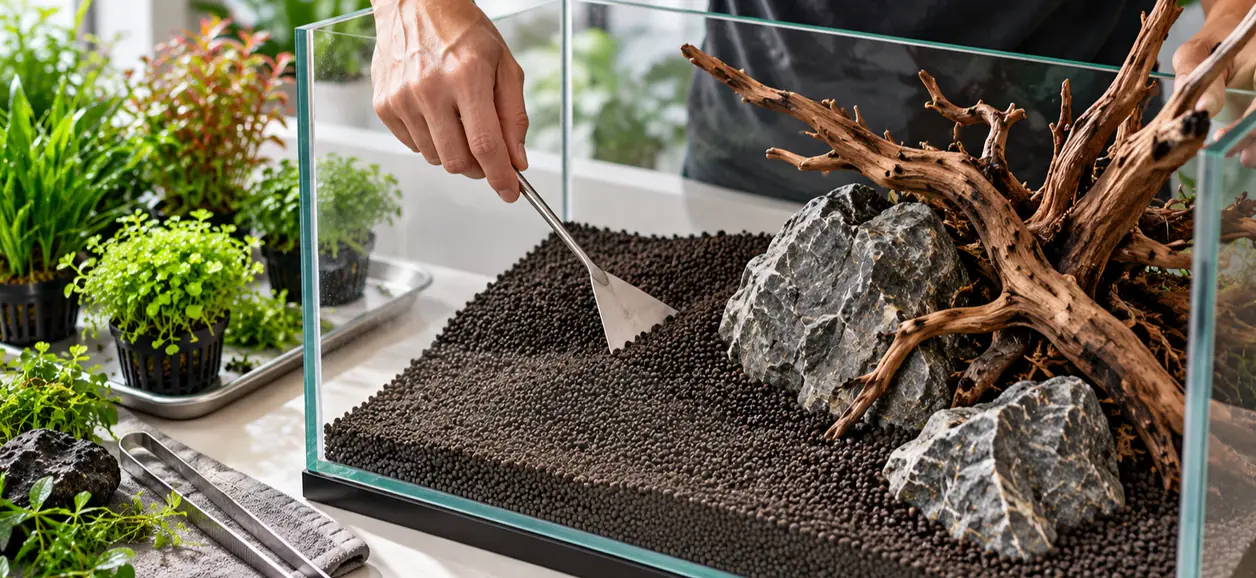
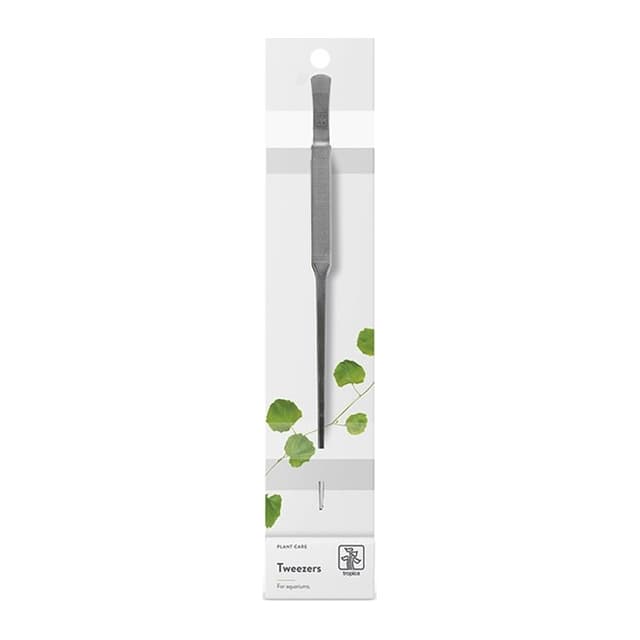
The main tool is long tweezers. Tropica Tweezers 25 cm, or a 27 cm tweezer, let you plant without putting your hands in the water, disturb neighbouring plants less and protect the delicate tip of the plant. You also need scissors to shorten long roots and, for rhizome plants, fishing line or thread to fix them.
If the substrate is already in place, let it settle and fill the tank so that water covers at least the surface. Wet substrate holds plants down and they do not float up while you plant. If the substrate is a nutrient one, such as Tropica Aquarium Soil, no extra bottom layer is needed.
3. Stem and rosette plants in the substrate
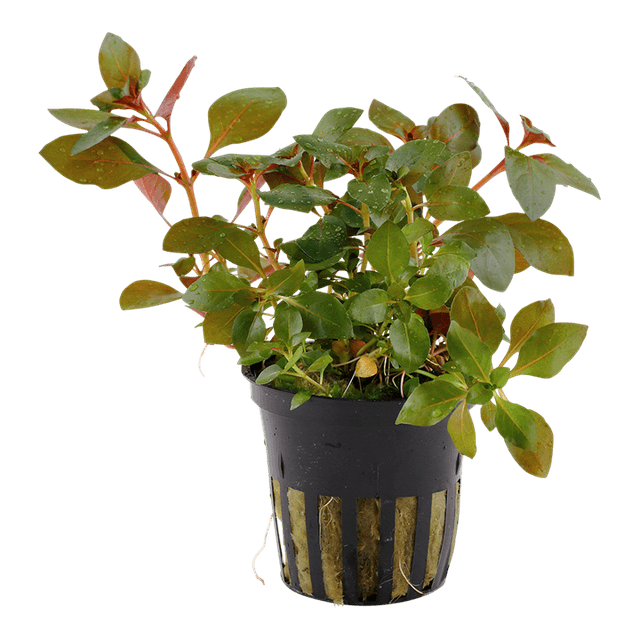
Stem plants, such as Ludwigia repens 'Rubin', must be taken out of the pot and the rockwool or cup they grew in removed. Trim the lowest leaves so that the stem goes cleanly into the substrate. Grip the stem with tweezers near the bottom, push it in at an angle to about 2–3 cm and withdraw the tweezers carefully so the plant does not come up with them.
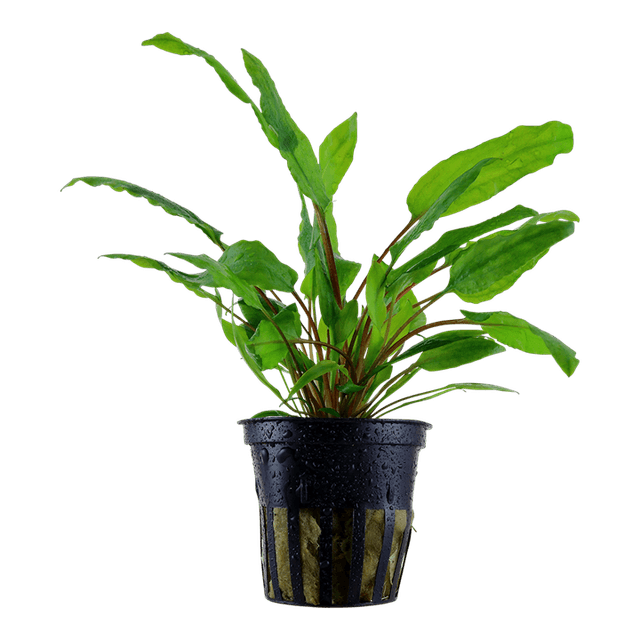
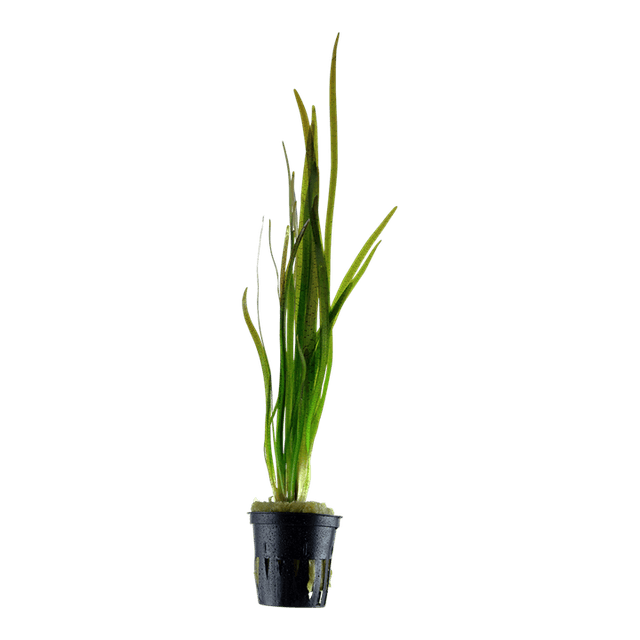
Rosette plants, such as Cryptocoryne wendtii 'Green' or Vallisneria spiralis 'Tiger', can be divided into several pieces and planted one by one. The roots go into the substrate, but the crown, the point where the leaves branch, must stay above the surface. A plant buried too deep stalls. Cryptocoryne leaves may melt after planting: that is common and the plant usually regrows new leaves.
Plant in groups: a single stem looks thin, while a bunch of five or six stems forms a dense bush. Leave a couple of centimetres between them so that light reaches the lower leaves and the stems do not start rotting at the base. Taller plants go at the back and lower ones in front, so you can see everything.
4. Rhizome plants on stone and wood
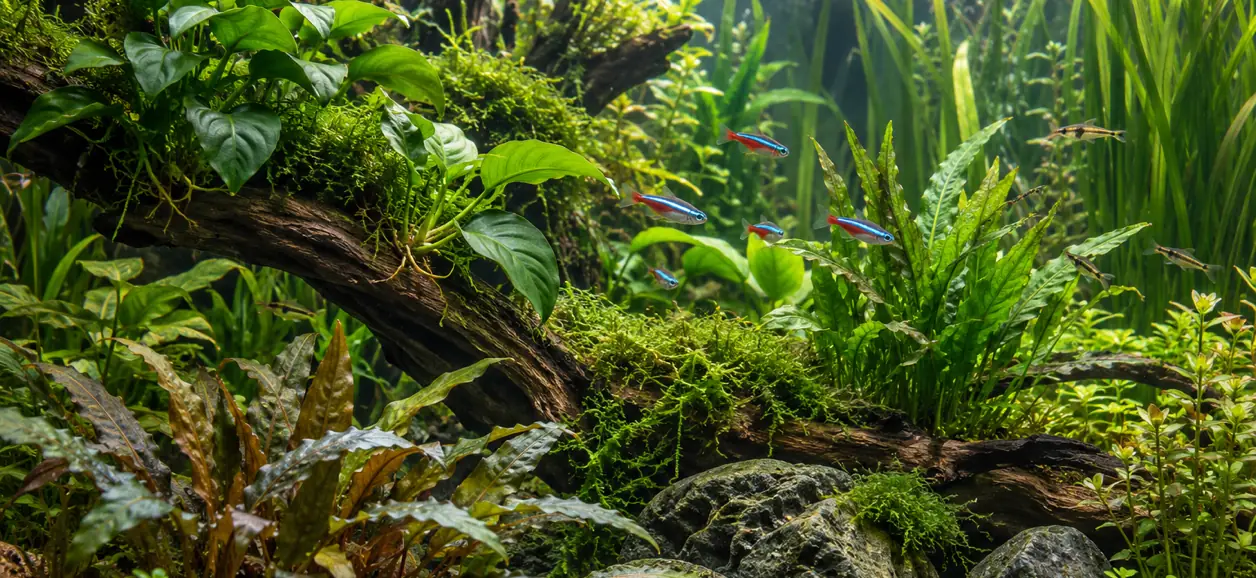
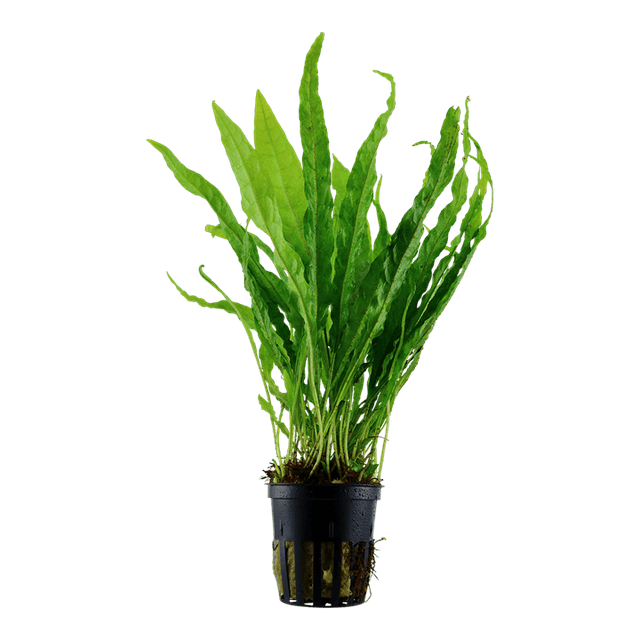
Java fern and Anubias do not belong in the substrate. Place the plant on stone or wood so that the rhizome is free and tie it on lightly with fishing line or thread. Within a few weeks the roots grip on their own and the line can be removed. You can also use aquarium glue if the surface is dry.
If a rhizome plant comes in a cup, remove the gel and rockwool, rinse the roots and divide it if needed. Keep the rhizome above the substrate even when the plant sits next to a stone.
5. The first days and weeks
After planting, fill the tank slowly so the water does not wash plants out. Keep the light at a normal level, around 8 hours a day, and do not add a lot of fertiliser at once. If plants are spread evenly through the tank, they use nutrients more efficiently than algae do.
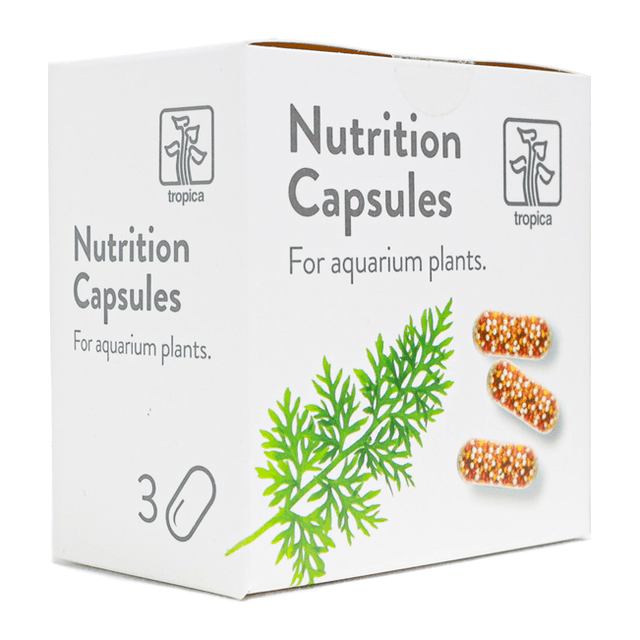
In the first weeks check whether a stem has come out of the substrate and push it back in. If a plant needs extra food at the roots, Tropica Nutrition Capsules can be pushed in near the roots with tweezers. Fast growers may start immediately; slow ones need a couple of weeks.
Plant types and planting method (examples)
| Plant | Placement | Light | Planting |
|---|---|---|---|
| Ludwigia repens 'Rubin' | Background | Medium | Stem 2–3 cm into substrate |
| Cryptocoryne wendtii 'Green' | Middleground | Low | Roots in substrate, crown above |
| Vallisneria 'Tiger' | Background | Low | Roots in substrate, crown above |
| Echinodorus grisebachii 'Bleherae' | Background | Low | Roots in substrate, crown above |
| Java fern | Middleground | Low | On stone or wood, rhizome free |
| Anubias barteri var. nana | On rock or wood | – | On stone or wood, rhizome free |
Checklist
- Identify the plant type: stem, rosette or rhizome
- Take the plant out and remove rockwool or gel
- Tweezers and scissors at hand
- The rhizome stays above the substrate
- The crown of a rosette plant is not buried
- Fill the aquarium slowly
- Light about 8 hours a day
- Check anchoring during the first weeks
Products for this guide
| Plant | Height | Light | CO2 | Growth | Difficulty | Placement |
|---|---|---|---|---|---|---|
| Cryptocoryne wendtii 'Green' | 10–30 cm | low | low | medium | easy | midground |
| Vallisneria spiralis 'Tiger' | 20–30 cm | low | low | — | easy | background |
| Microsorum pteropus | 15–30 cm | low | low | slow | easy | midground |
| Ludwigia repens 'Rubin' | 20–30 cm | medium | low | medium | easy | background |
Size, light and CO2 demand are manufacturer data; real results depend on your aquarium.
Frequently asked questions
How deep should I plant?
A stem plant usually needs 2–3 cm, while a rosette plant keeps its crown and leaves above the surface. A rhizome is not planted in the substrate at all.
Why do Cryptocoryne leaves melt?
The plant adjusts to new water and light and drops its old leaves. Leave it in place: new leaves usually grow back.
Can I plant right after filling the aquarium?
Yes, and it is even a good idea: plants start taking up nutrients at once. Add the water conditioner before fish are introduced.
Do plants need fertiliser right after planting?
Not necessarily. A nutrient substrate feeds the roots at first; add liquid fertiliser once the plants have settled and new leaves appear.