1. Why mosses suit a beginner
Aquarium mosses are low, rootless plants that attach to stones and roots. They do not need a substrate, so you can cover a rock or a piece of wood with them or hide equipment. Many species are very undemanding: in Tropica’s data Taiwan moss, Bogor moss and Leptodictyum riparium are listed with low light and low CO2 demand and difficulty Easy.
Mosses are also good hiding places for fry and shrimp. According to Wikipedia, Taxiphyllum barbieri is used for raising fry and shrimp feed on the microorganisms that collect on it. Mosses grow fairly slowly, though, and will not cover a whole tank in a week.
2. Choosing a species
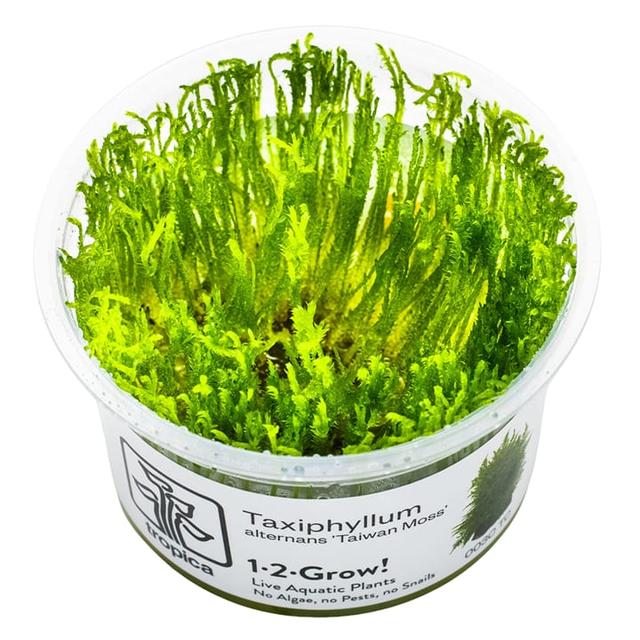
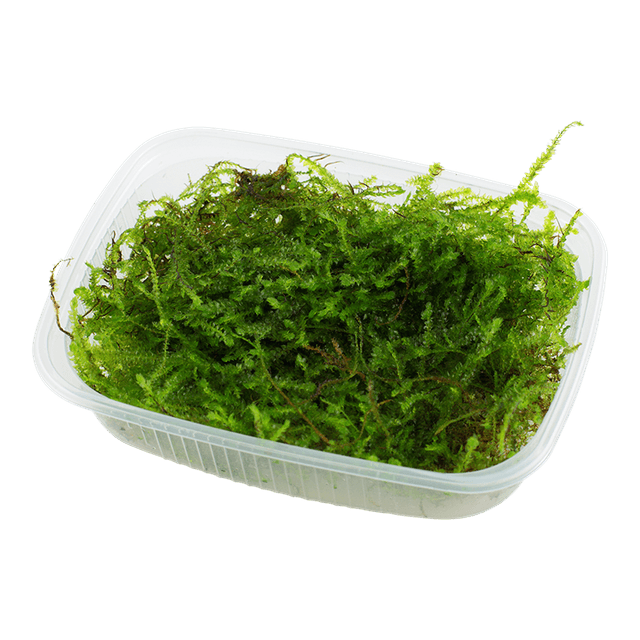
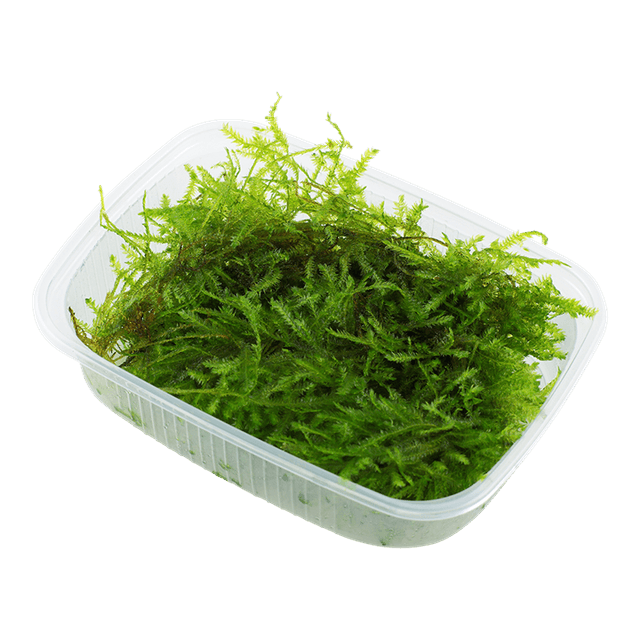
Taiwan moss (Taxiphyllum alternans) has fine, drooping shoots and gives a soft, natural look. Bogor moss (Taxiphyllum barbieri) is, by Tropica’s description, hardy and grows on any surface. In the trade it is sometimes confused with Java moss, so the species name on the product page is the safest guide.
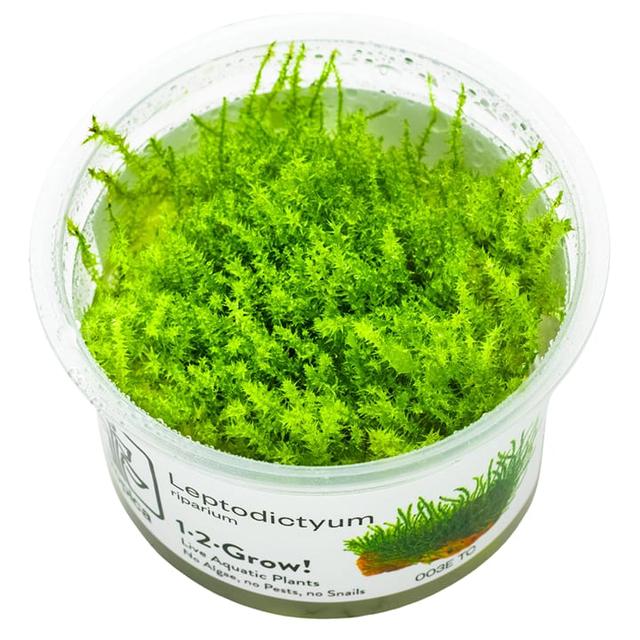
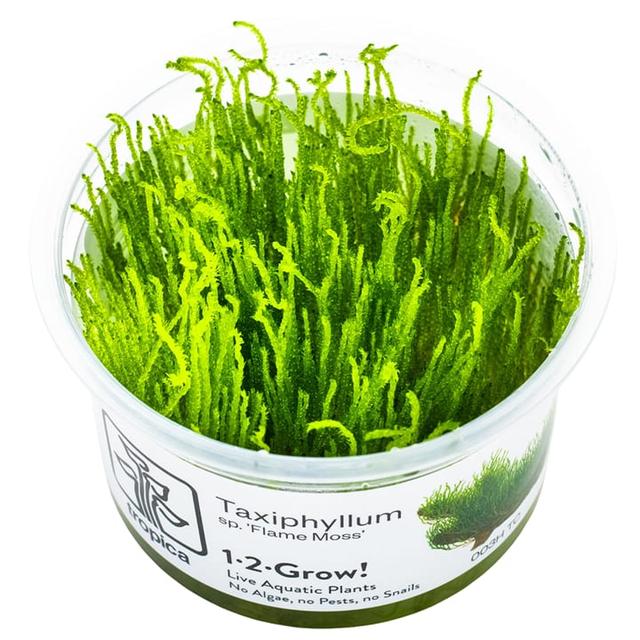
Leptodictyum riparium is upright and slightly translucent and tolerates both high and low temperatures. Flame moss (Taxiphyllum sp. 'Flame') grows slowly with upright, gently twisting shoots; Tropica says it does best on horizontal surfaces. Christmas moss (Vesicularia montagnei) is more demanding and slower than ordinary Java moss and needs medium light.
3. Attaching to rock and wood
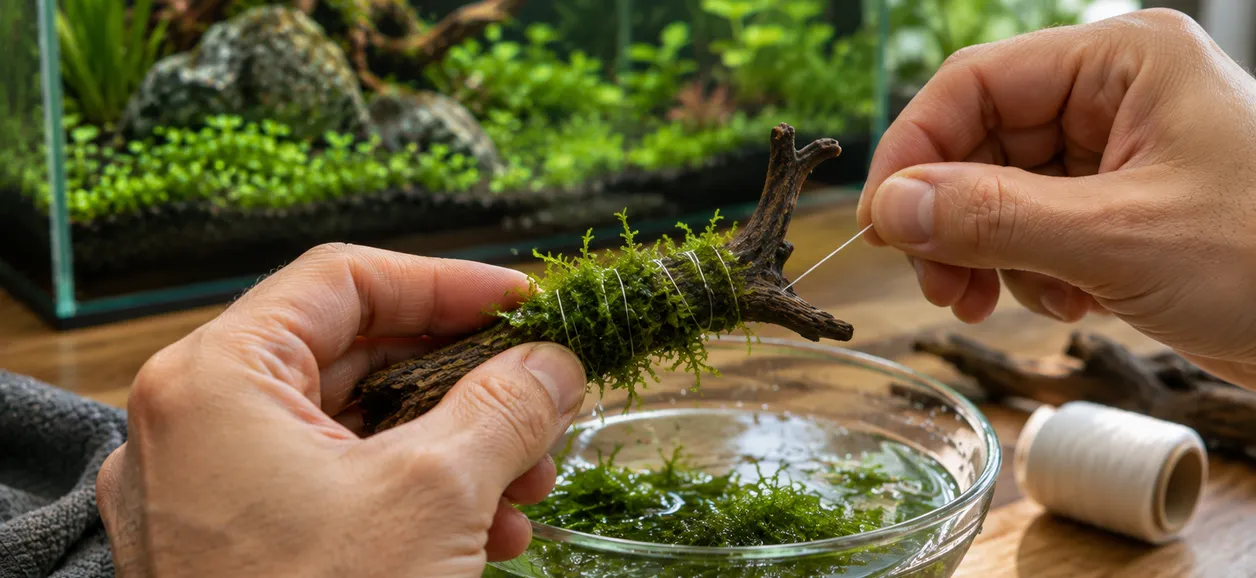
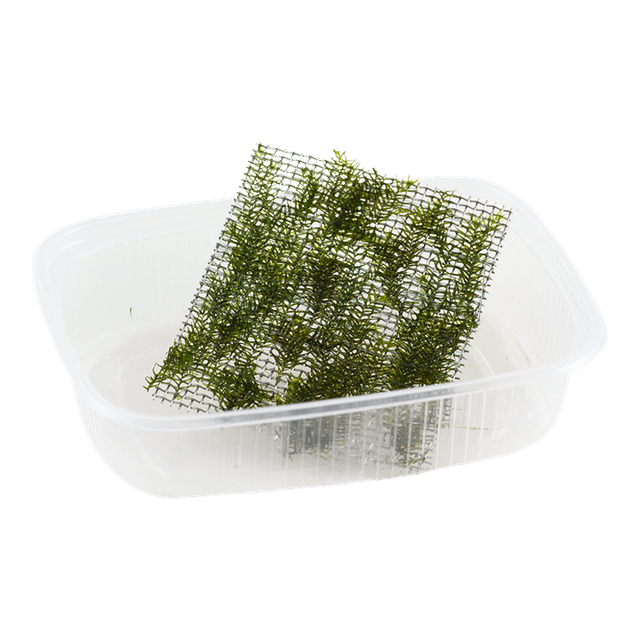
Mosses do not need a substrate to take root. Lay the moss on a stone or root in a thin layer and tie it with thread, fishing line or nylon mesh until it holds on its own. Keep the layer thin, because a thick one collects debris and the inner parts can die off.
You can also plant small tufts in the substrate, but then it needs cleaning more often. Keep the moss under water: a layer left in the air dries out quickly.
4. Light, CO2 and care
According to Wikipedia, Taxiphyllum barbieri grows best at roughly 20–30 °C and tolerates varied light. Standard aquarium lighting is enough; stronger light favours algae on the moss. If debris settles between the strands, rinse it gently with tank water or clean it with tweezers and a soft brush.
Trim the moss with scissors when it grows too long or thick. The cut pieces can be used to cover another stone. If the top parts are covered with algae, cut them off and let new growth branch out from what is left.
5. More demanding: Fissidens and pearl moss
Fissidens fontanus is a feather-like moss with dense, deep green foliage. By Tropica’s description it grows relatively slowly and needs much more light than other mosses; the difficulty is Advanced. It can be attached to wood or rock, vertically or horizontally.
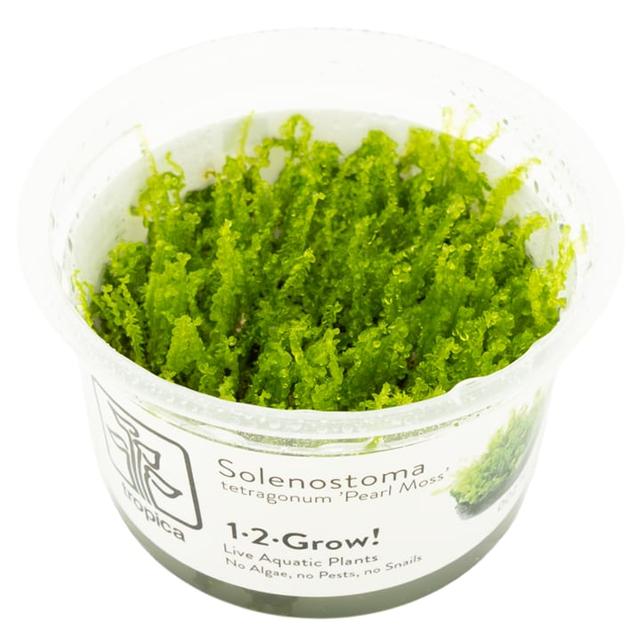
Pearl moss (Solenostoma tetragonum) is in fact a liverwort from Borneo that forms dense, translucent cushions. Tropica says it grows slowly and needs stable conditions with added CO2. A beginner is better off starting with Taiwan or Bogor moss.
6. Where to put moss
Each species has a favourite surface. By Tropica’s description spiky moss looks best on vertical surfaces, and small tufts planted in the substrate can form a carpet. Weeping moss shows best on wood or roots, where its drooping shoots look like a weeping willow. Christmas moss attaches readily to wood and stone.
Think ahead about where the moss will go: at the back, where it hides equipment, or at the front on top of a stone. Moss near the filter outlet is kept cleaner by the flow, but a current that is too strong can tear tufts loose. Start with a small piece and let it attach over a few weeks.
Mosses: data from the product pages
| Moss | Height | Light / CO2 | Difficulty |
|---|---|---|---|
| Taiwan moss | 3–10 cm | low / low | Easy |
| Bogor moss | 3–10 cm | low / low | Easy |
| Leptodictyum riparium | 3–10 cm | low / low | Easy |
| Flame moss | 3–10 cm | low / low | Medium |
| Christmas moss | 3–5 cm | medium / low | Medium |
| Fissidens fontanus | 3–5+ cm | much more light | Advanced |
| Pearl Moss | – | stable conditions, CO2 | Medium |
Checklist
- Start with Taiwan, Bogor or Leptodictyum moss.
- Tie the moss to a stone or root with thread or fishing line.
- Keep the layer thin so debris does not collect.
- Keep the moss under water at all times.
- Use standard light so algae do not take hold.
- Trim moss that grows too long with scissors.
- Fissidens and pearl moss need more light or CO2.
Products for this guide
| Plant | Height | Light | CO2 | Growth | Difficulty | Placement |
|---|---|---|---|---|---|---|
| Taxiphyllum alternans 'Taiwan Moss' | 3–10 cm | low | low | medium | easy | on rock or wood |
| Taxiphyllum barbieri 'Bogor Moss' | 3–10 cm | low | low | medium | easy | on rock or wood |
| Leptodictyum riparium | 3–10 cm | low | low | medium | easy | on rock or wood |
| Taxiphyllum sp. 'Flame Moss' | 3–10 cm | low | low | slow | medium | midground |
| Vesicularia montagnei 'Christmas Moss' | 3–5 cm | medium | low | medium | medium | foreground |
Size, light and CO2 demand are manufacturer data; real results depend on your aquarium.
Frequently asked questions
Do mosses need CO2?
Taiwan, Bogor and Leptodictyum are listed with low CO2 demand on their product pages. Pearl moss needs stable conditions with added CO2, according to Tropica.
How do I attach moss to a stone?
Lay a thin layer on the stone and tie it down with thread or fishing line. Within a few weeks the moss grows onto the surface by itself.
Why is my moss turning brown or black?
The cause is often settled debris or algae. Rinse the moss gently, cut off damaged parts and check that the layer is not too thick.
Are Java moss and Bogor moss the same?
According to Wikipedia, Taxiphyllum barbieri is sometimes confused in the trade with Vesicularia dubyana, which is sold as Java moss. Check the species name on the product page.