1. What the background is and why it matters
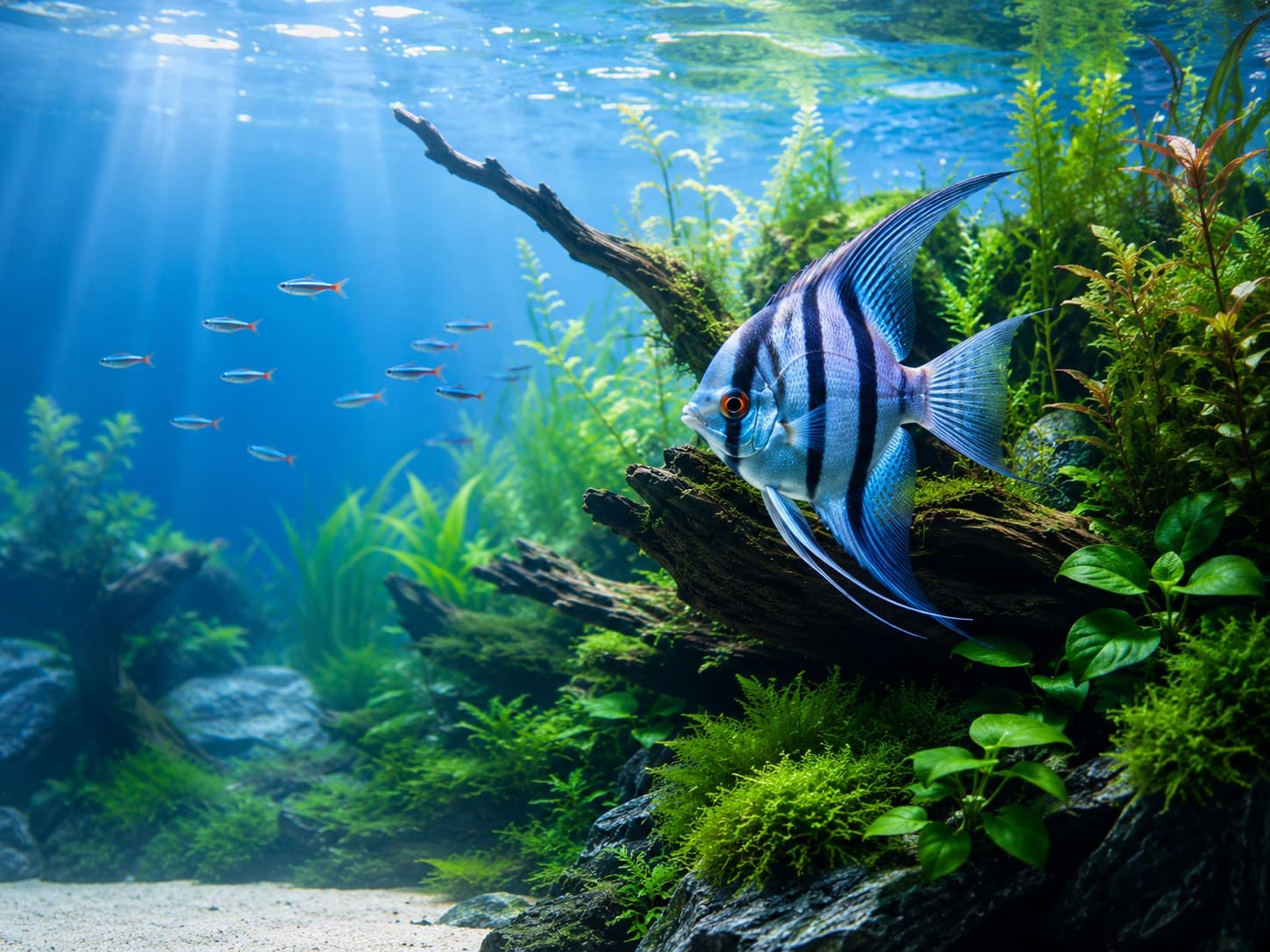
The background is the zone along the back wall and sides of the tank. Taller plants grow there to give a sense of depth, hide filter pipes and the heater, and offer fish a place to shelter. On Tropica product pages such a plant is marked with the placement “Background”.
A good background does not have to be a dense jungle. A few large plants or a group of stem plants is enough to cover the back wall while leaving light and room for the middle and the front. Height that steps down from back to front looks natural and keeps maintenance simple.
2. Plant height and tank height
The product page gives height as a range, for example 20–30 cm or 15–30 cm. This is only a guide: the real height depends on light, nutrients and how often you trim. Measure the water height in your tank before you buy.
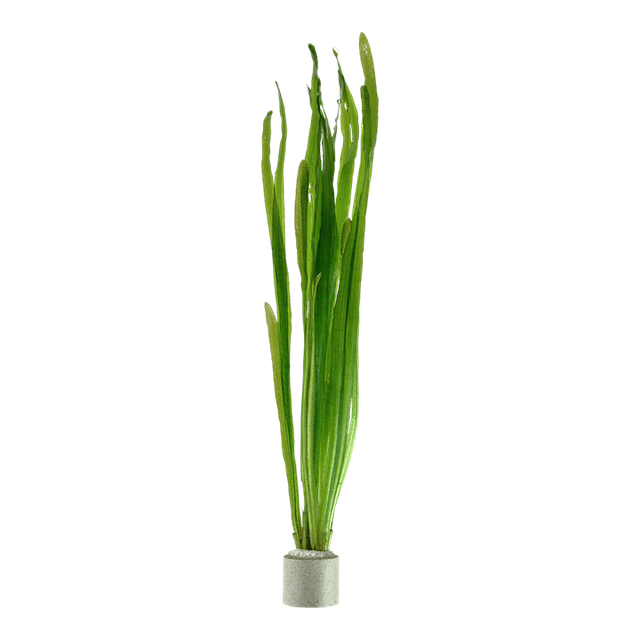
In a shallow tank a 20–30 cm plant soon reaches the surface and spreads there, shading the others. In a tall tank the same plant stays low by the back wall, so larger species fit there. Some can grow taller still: according to Wikipedia, typical Vallisneria spiralis forms are about 30–60 cm and giant forms, sold as V. gigantea, are often over a metre. They are the right choice for large tanks; in small ones stem plants have to be trimmed.
3. Easy background species
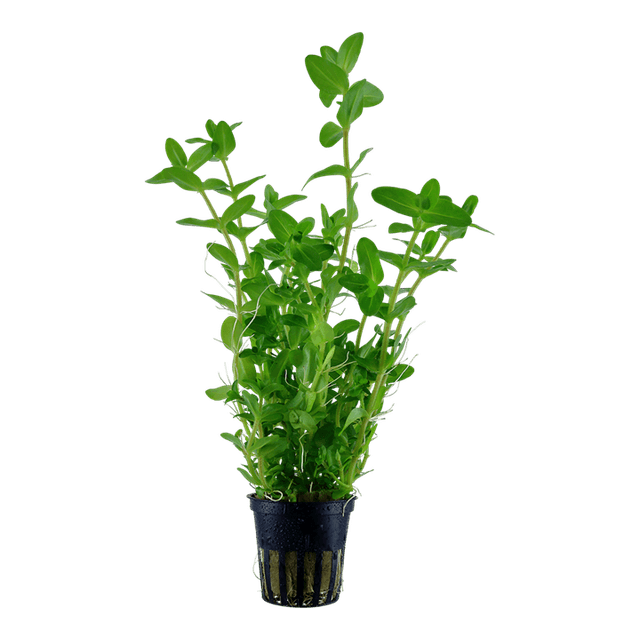
Beginners do best with species whose data show low light demand, low CO2 demand and difficulty Easy. Vallisneria americana 'Natans' is a narrow ribbon-leaved plant that spreads by runners. It is supplied as a bundle: split it and plant the plants a little apart. Hygrophila difformis grows fast and takes up nutrients well, while Bacopa caroliniana grows slowly and needs little pruning.
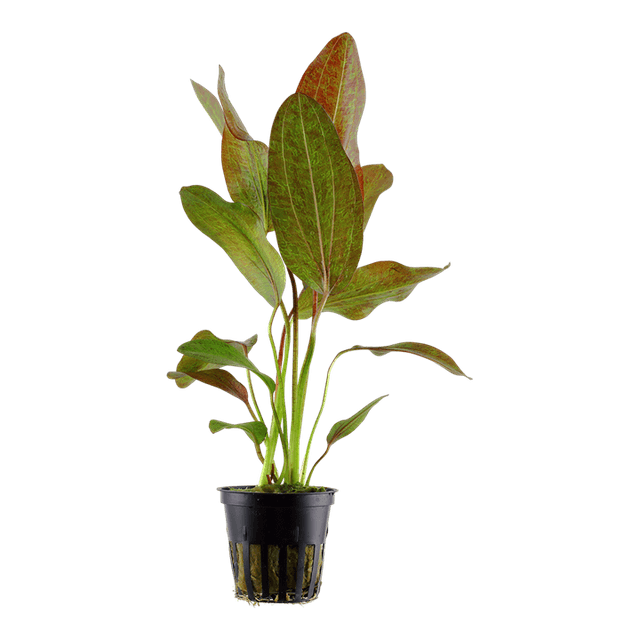
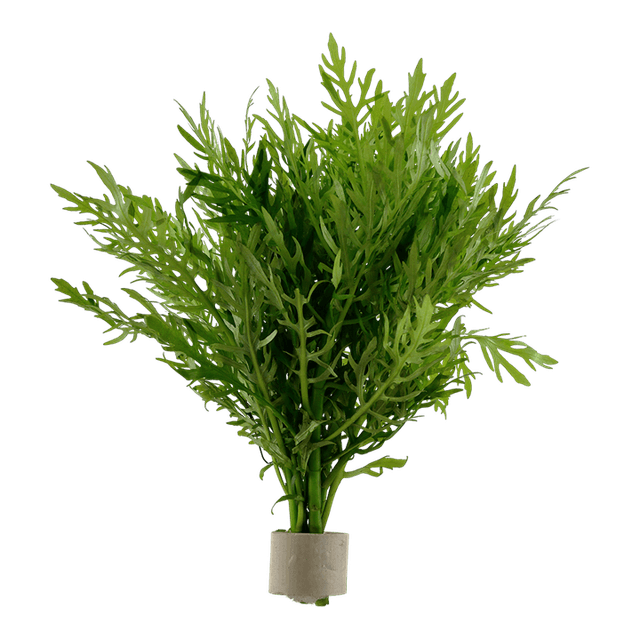
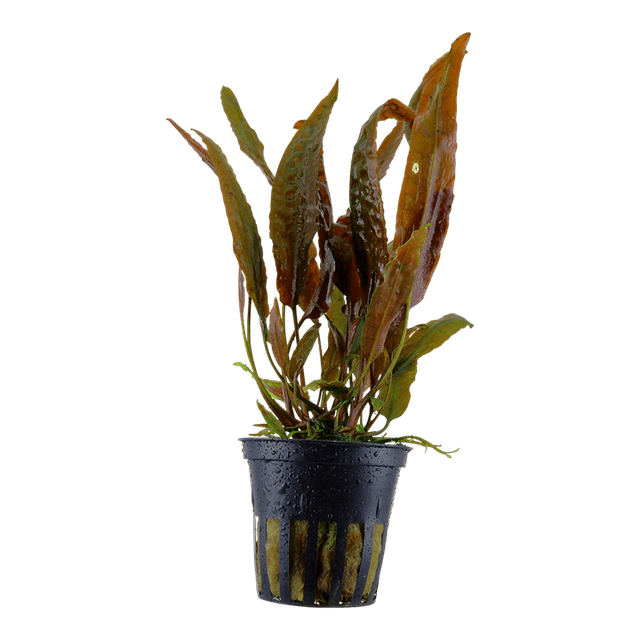
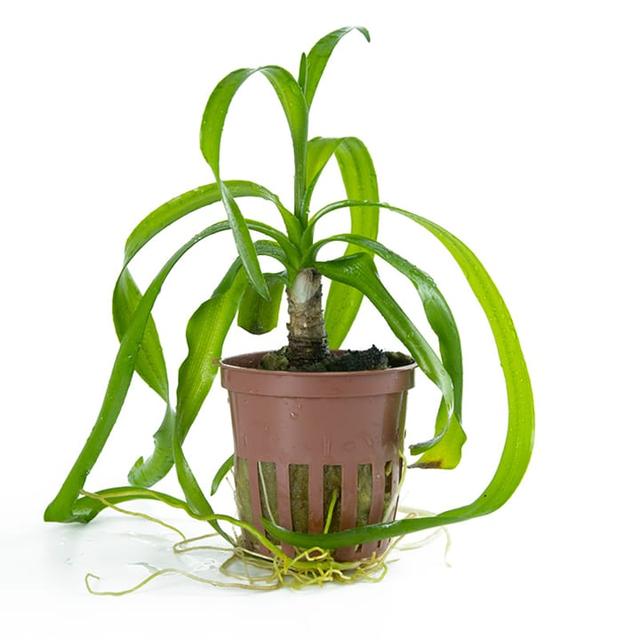
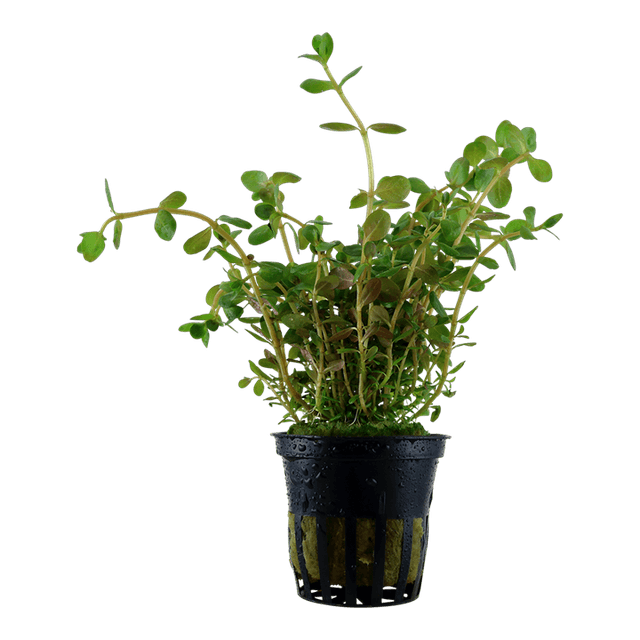
Echinodorus 'Ozelot' keeps its dark spots even in low light. Cryptocoryne usteriana is a large Cryptocoryne with long, hammered leaves. Crinum thaianum wants a big tank: leave the top two-thirds of the bulb above the substrate so it does not rot. Rotala rotundifolia forms a dense bush with frequent trimming. The table below shows their data.
4. Planting and spacing
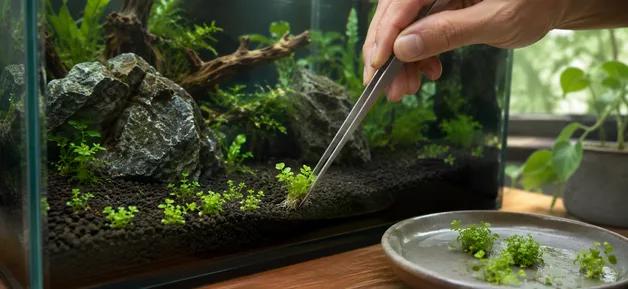
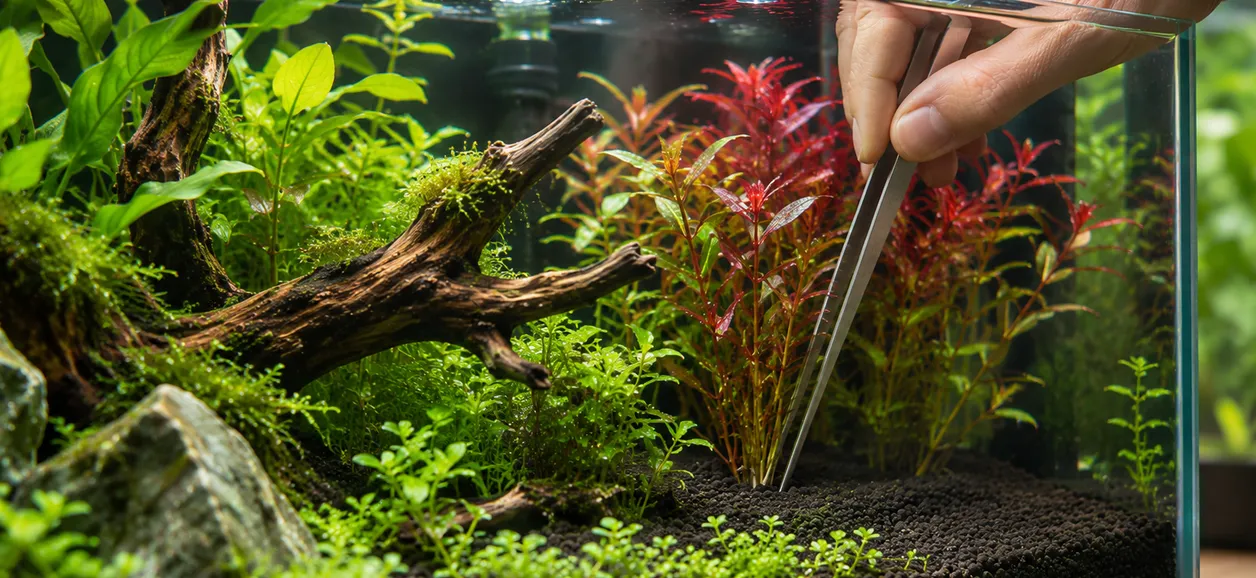
Leave room for rosette plants such as Echinodorus, because they grow wide and shade whatever sits beneath them. Plant stem plants in small groups rather than one by one: that gives a dense backdrop sooner. Plants sold as a bundle should be split and planted a little apart so each stem gets light.
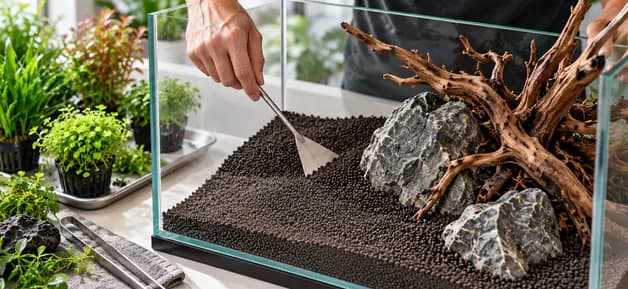
Put the taller plants at the back and in the corners and the lower ones in the middle. Keep the front and centre open so light reaches the bottom. When plants start to spread over the surface, trim the stems shorter and replant the tops. After planting, the background fills in over a few weeks.
5. Light, CO2 and nutrients
Most of the species above are listed with low light and CO2 demand, so standard aquarium lighting and a nutrient-rich substrate are usually enough. Tall plants shade lower ones, though, so aim the light so that it also reaches beneath the background. If you add CO2, the fast growers grow faster still and need trimming more often.
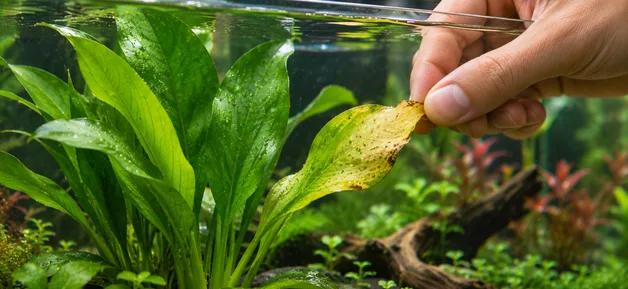
Add liquid fertiliser when needed and watch the leaves: yellow or transparent leaves often point to a nutrient shortage. Background plants also feed through their roots, so Vallisneria and Echinodorus like a nutrient-rich substrate. New plants need time to settle in.
Background plants: data from the product pages
| Plant | Height | Light / CO2 | Growth / difficulty |
|---|---|---|---|
| Vallisneria americana 'Natans' | 20–30 cm | low / low | fast / Easy |
| Echinodorus 'Ozelot' | 20–30 cm | low / low | medium / Easy |
| Hygrophila difformis | 20–30 cm | low / low | fast / Easy |
| Cryptocoryne usteriana | 20–30 cm | low / low | slow / Easy |
| Crinum thaianum | 20–30 cm | low / low | medium / Easy |
| Bacopa caroliniana | 20–30 cm | low / low | slow / Easy |
| Rotala rotundifolia | 15–30 cm | low / low | medium / Easy |
Checklist
- Measure the water height in the tank before choosing plants.
- Pick plants whose product page says placement Background.
- For beginners: low light, low CO2 and difficulty Easy.
- Split plants sold as a bundle and plant them a little apart.
- Put tall plants at the back and in the corners, keep the middle open.
- Aim the light so it also reaches beneath the background.
- Trim stems that reach the surface and replant the tops.
Products for this guide
| Plant | Height | Light | CO2 | Growth | Difficulty | Placement |
|---|---|---|---|---|---|---|
| Vallisneria americana 'Natans' | 20–30 cm | low | low | fast | easy | background |
| Echinodorus 'Ozelot' | 20–30 cm | low | low | medium | easy | background |
| Hygrophila difformis | 20–30 cm | low | low | fast | easy | background |
| Cryptocoryne usteriana | 20–30 cm | low | low | slow | easy | background |
| Crinum thaianum | 20–30 cm | low | low | medium | easy | background |
| Bacopa caroliniana | 20–30 cm | low | low | slow | easy | background |
| Rotala rotundifolia | 15–30 cm | low | low | medium | easy | background |
Size, light and CO2 demand are manufacturer data; real results depend on your aquarium.
Frequently asked questions
How tall will a background plant really get?
The range on the product page, such as 20–30 cm, is a guide. The real height depends on light, nutrients and trimming, and some species can grow taller.
Do background plants need CO2?
The species above are listed with low CO2 demand, so standard light and a nutrient-rich substrate are enough for a beginner. CO2 can speed up growth.
What if the plants reach the surface?
Trim the stems shorter and replant the tops. That keeps the background dense and lets light reach the lower leaves.
Do background plants suit a small aquarium?
In a small tank pick species whose height fits the water height and trim them regularly. Large species such as giant Vallisneria or Crinum need a bigger volume.