
1. Why plants need trimming
In a healthy aquarium plants grow, and that is a good sign. Over time, though, fast stem plants start to shade their own lower leaves and block light for plants below them. Trimming keeps the layout in shape, lets light reach the bottom and gives you new cuttings.
Tropica describes scissors and tweezers as tools for planting and for weekly trimming. That does not mean every plant must be cut every week: slow plants need cutting rarely, fast ones often.
A good rule is to cut a little, but regularly. One big trim is a shock for the plant and puts a lot of decaying material into the water, which can encourage algae.
2. Stem plants: cut the top and replant
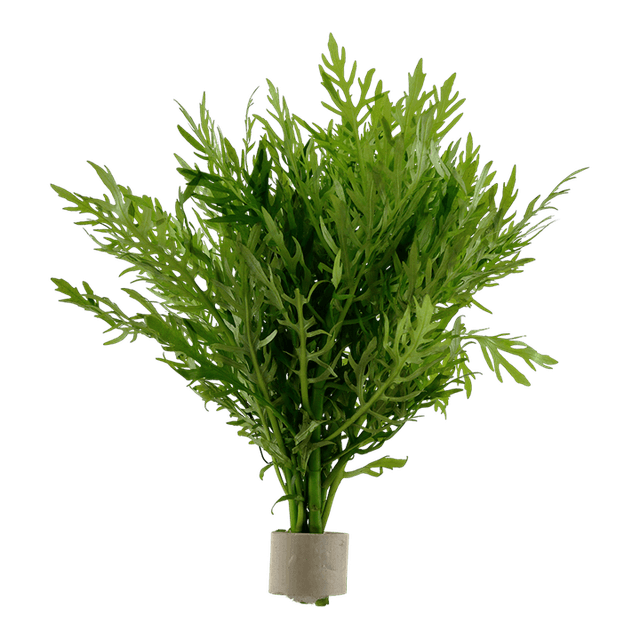
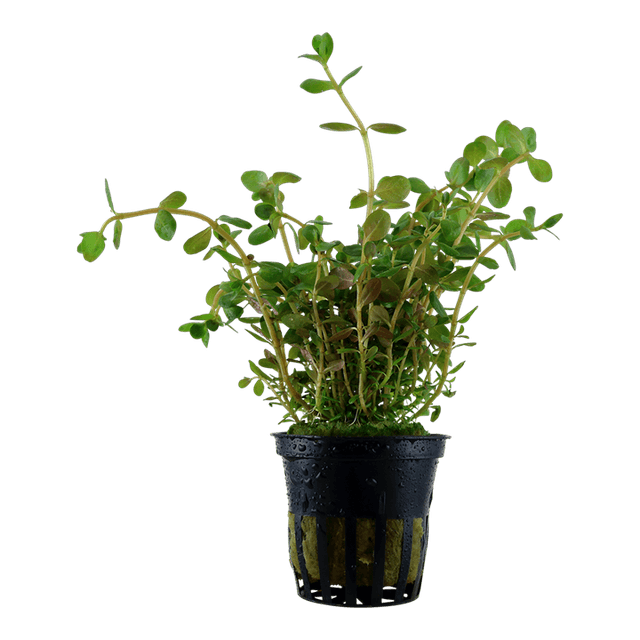
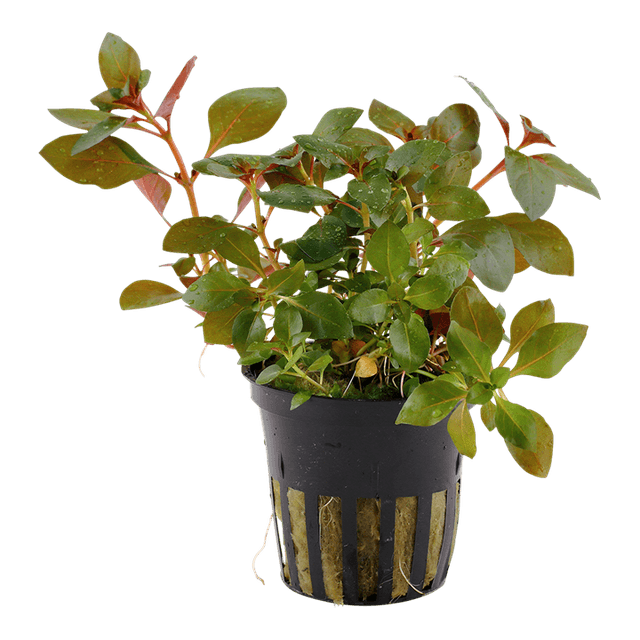
Stem plants, such as Hygrophila difformis, Rotala rotundifolia and Ludwigia repens Rubin, grow upward. When the stem is too tall, cut off the top a few nodes above the lower leaves. The lower part stays in the substrate and sends out side shoots, so the plant becomes denser.
Do not throw away the cut top. Remove the lower leaves so the stem is bare, and replant it into the substrate with tweezers, a few centimetres from the old plant. This way you build a dense group.
Tropica notes that Rotala rotundifolia grows dense and bushy when trimmed often, and that Ludwigia should be pruned regularly for a bushy look. Stronger light intensifies the colour of Ludwigia leaves.
3. Rhizome plants and rosette plants
On rhizome plants, such as Microsorum pteropus and Anubias, cut off only old, damaged or yellow leaves, close to the rhizome. Do not cut the rhizome itself: Tropica describes that Java fern can be propagated by splitting the rhizome.
Vallisneria and other rosette plants send out runners, which can fill the whole bottom. When the young plant has rooted by itself, you can cut the runner and move the new plant elsewhere. If growth is excessive, remove whole plants.
Vallisneria americana natans is a fast grower that spreads by runners. When it starts to take over, thin the group with tweezers or scissors.
4. Carpets and the foreground
Carpet plants, such as Eleocharis acicularis, form a dense lawn over time. According to Tropica’s description, a carpet that has grown too tall can be carefully trimmed to the height you want. Cut horizontally and collect all the cut material so that it does not decay in the water.
Soft, low carpets, such as Hydrocotyle tripartita, stay dense when trimmed. Short spring scissors are often easier here: they suit small aquariums and tight spaces.
If a carpet loses density or grows unevenly, trim it evenly and let it regrow for a couple of weeks. Do not cut everything short at once if the plants are not strong.
5. Tools: scissors and tweezers
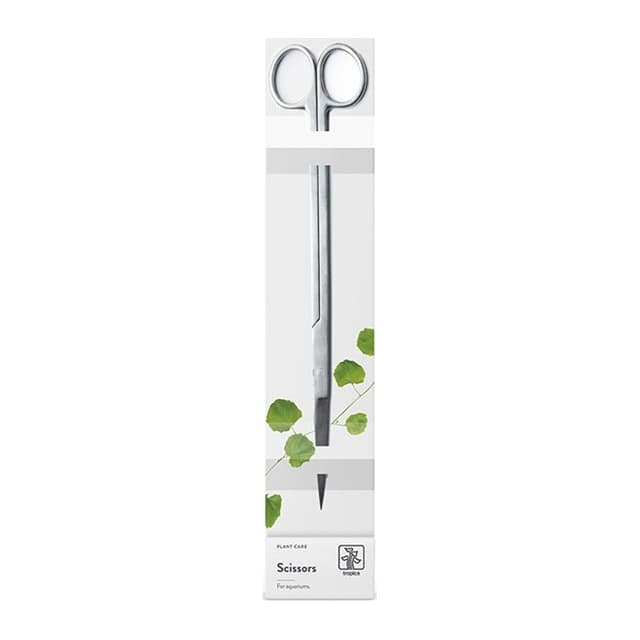
Tropica Scissors 25 cm are S-shaped, brushed stainless steel scissors. Thanks to the S-shape they also suit smaller aquariums, for trimming both foreground carpets and stem plants.
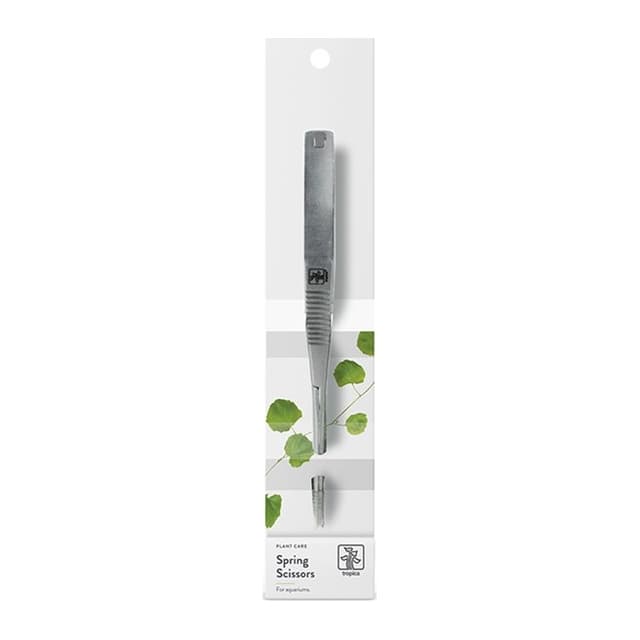
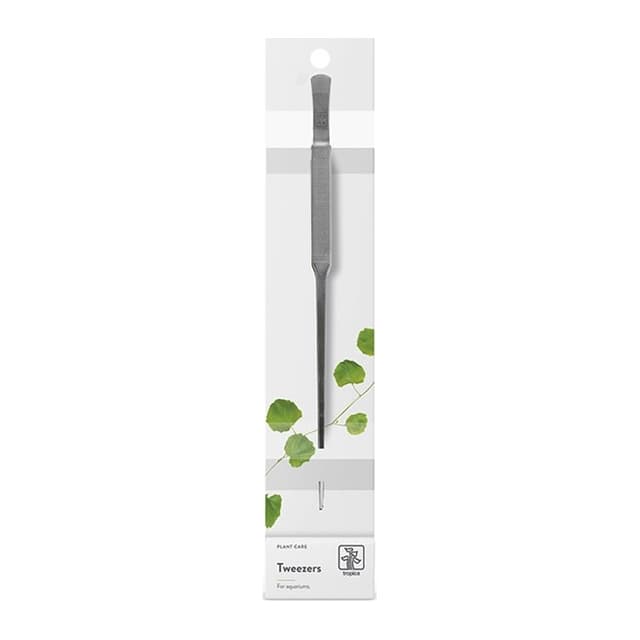
Tropica Spring Scissors 15 cm are short and spring-loaded, so they are easy to handle even in a small aquarium. Tropica Tweezers 25 cm make planting easier in new and established aquariums and help place Nutrition Capsules in the substrate.
After trimming, collect all the cut pieces with a net and take them out of the water. This reduces decaying material and keeps the water cleaner.
6. After trimming
After a larger trim, watch the water for a couple of days. If many plants have been removed, the tank consumes fewer nutrients, so a small water change can make sense and it is better not to over-feed right away.
Do not trim plants right before a long absence. It is better to trim a week before the trip, so you can see how the plants react and correct if needed.
Your scissors should be clean and dry. After use, rinse them under tap water and wipe them dry, so that the stainless steel stays in good condition.
Growth rate and trimming (A-SCAPE data)
| Plant | Placement and height | Growth / difficulty | Trimming |
|---|---|---|---|
| Hygrophila difformis | Background, 20–30 cm | Fast / Easy | Cut the top, replant |
| Rotala rotundifolia | Background, 15–30 cm | Medium / Easy | Frequent trimming gives dense growth |
| Ludwigia repens Rubin | Background, 20–30 cm | Medium / Easy | Prune regularly |
| Vallisneria americana natans | Background, 20–30 cm | Fast / Easy | Cut runners, thin out |
| Eleocharis acicularis | Foreground, 10–15 cm | Medium / Easy | Trim the carpet horizontally |
| Microsorum pteropus | Middleground, 15–30 cm | Slow / Easy | Remove only old leaves |
Checklist
- Cut a little, but regularly
- For stem plants, cut the top and replant it
- Do not cut the rhizome; remove old leaves
- Trim carpets horizontally to an even height
- Use sharp, clean scissors
- Collect all cut pieces out of the water
- A new cutting needs light and time to root
- Do not cut a whole plant group very short at once
Products for this guide
| Plant | Height | Light | CO2 | Growth | Difficulty | Placement |
|---|---|---|---|---|---|---|
| Hygrophila difformis | 20–30 cm | low | low | fast | easy | background |
| Rotala rotundifolia | 15–30 cm | low | low | medium | easy | background |
| Ludwigia repens 'Rubin' | 20–30 cm | medium | low | medium | easy | background |
| Eleocharis acicularis | 10–15 cm | low | low | medium | easy | foreground |
Size, light and CO2 demand are manufacturer data; real results depend on your aquarium.

Frequently asked questions
How often do aquarium plants need trimming?
It depends on growth rate. Fast stem plants need trimming often, slow ones such as Microsorum pteropus rarely. Check each plant’s growth rate on its product page.
Can I replant the cut top?
Yes, with stem plants the top can be replanted. Remove the lower leaves and press the stem into the substrate with tweezers.
Can trimming encourage algae?
Decaying plant parts can add nutrients to the water, so remove the cut pieces. Trimming less and more regularly keeps the effect smaller.
Do I need separate scissors and tweezers for trimming?
Scissors give a clean cut and spare the plant, while tweezers help you plant cuttings and reach deeper in larger tanks. For a beginner one pair of scissors and one pair of tweezers is enough.