
1. Why measure salinity
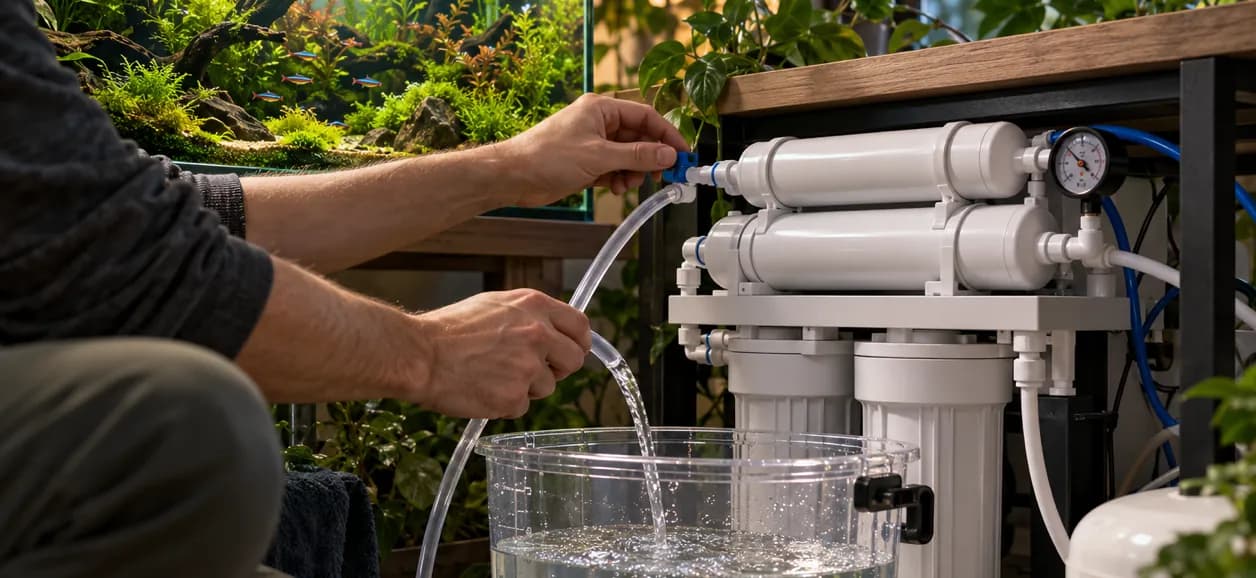
The water in a marine aquarium is mixed at home from sea salt and pure osmosis water. Fish, corals and invertebrates are used to a steady salinity, so you check it both when mixing new water and in the aquarium itself.
You need a salinity meter before the tank even starts, because the first water is mixed from salt too. According to Aquaforest, the first fish and corals go into a new aquarium no earlier than 10–14 days after setup, once the water parameters are stable.
Only water evaporates from the tank; the salt stays behind. If you top up evaporated water with salt water, salinity creeps up over time. That is why evaporation is replaced with pure RO water and salinity is measured regularly, so a change does not go unnoticed for long.
2. ppt and SG: two units
Salinity is expressed in two ways. ppt (parts per thousand) tells you how many grams of salt are in a litre of water. SG (specific gravity) tells you how much denser the salt water is than pure water. Both describe the same thing, only through a different way of measuring.
According to Aquaforest, 33 ppt corresponds to SG 1.025 and 30 ppt to SG 1.022. Density depends on temperature: warm water is less dense than cold. That is why specific gravity is always given at a set temperature, and the ARKA hydrometer reading is taken at 25 °C.
3. Hydrometer
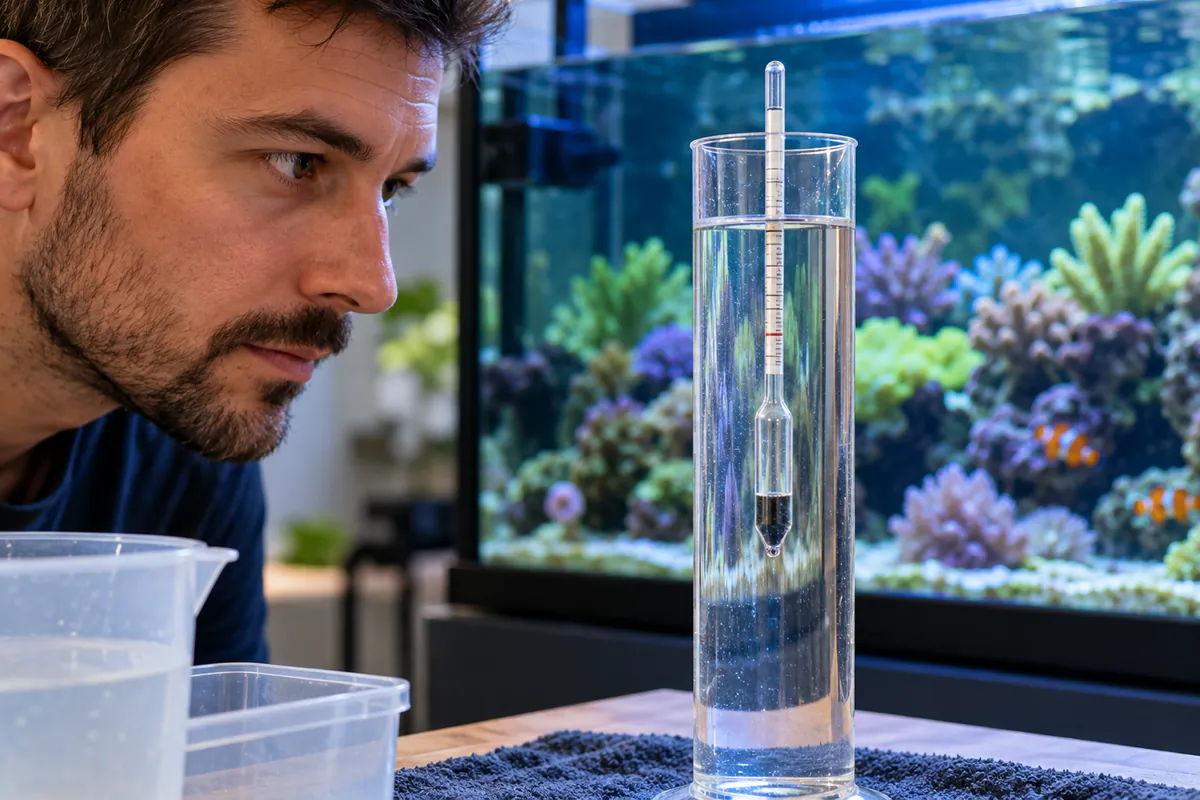
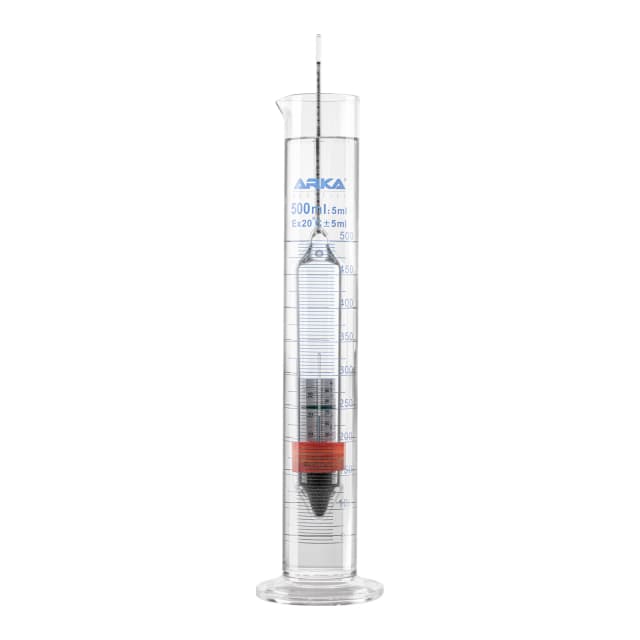
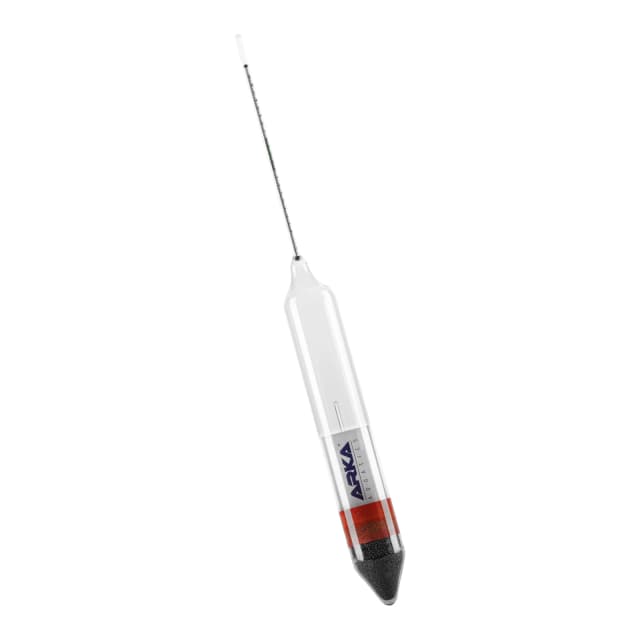
A hydrometer is a glass float that measures density: the saltier the water, the higher it floats. You read the value on the scale at the waterline. According to the manufacturer, the ARKA hydrometer reads 1.018–1.028 with a resolution of 0.0001 and a maximum deviation of ±0.0002 at 25 °C. The recommended range is marked green on the scale.
The hydrometer has a built-in thermometer for 8–35 °C. The manufacturer advises measuring in a large vessel where the hydrometer floats freely and taking the thermometer's deviation scale into account. The set includes a borosilicate glass measuring cylinder: fill it with aquarium water, wait for the temperature to settle and make sure the hydrometer does not touch the wall.
A hydrometer works without a battery, but it is made of glass and needs careful handling. Rinse it with fresh water after measuring so no salt layer is left on the scale.
4. Refractometer
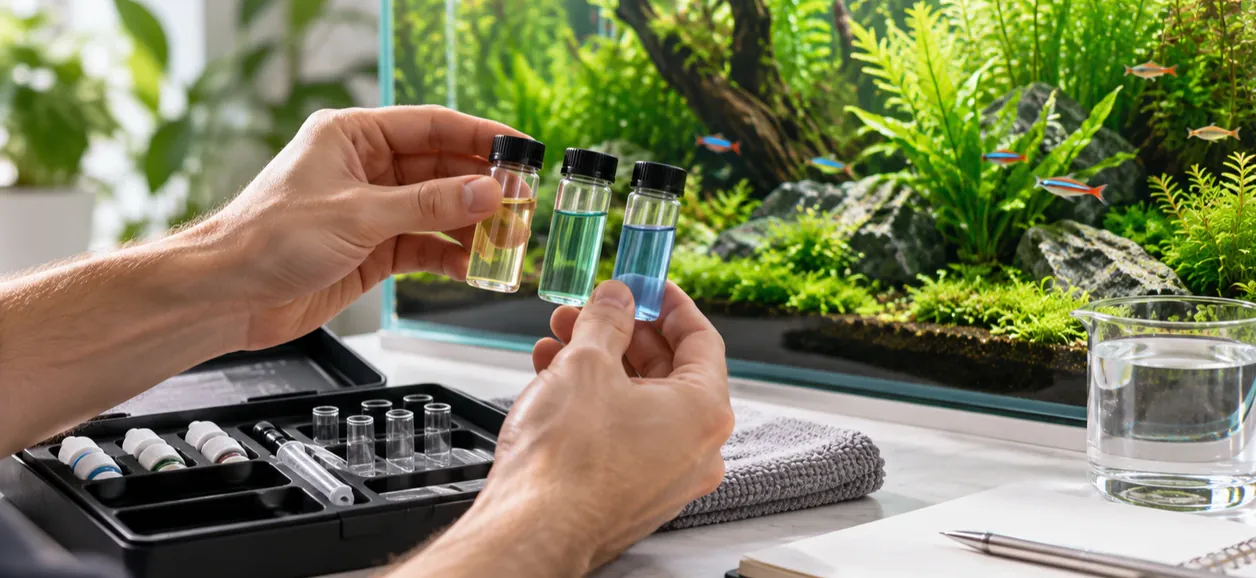
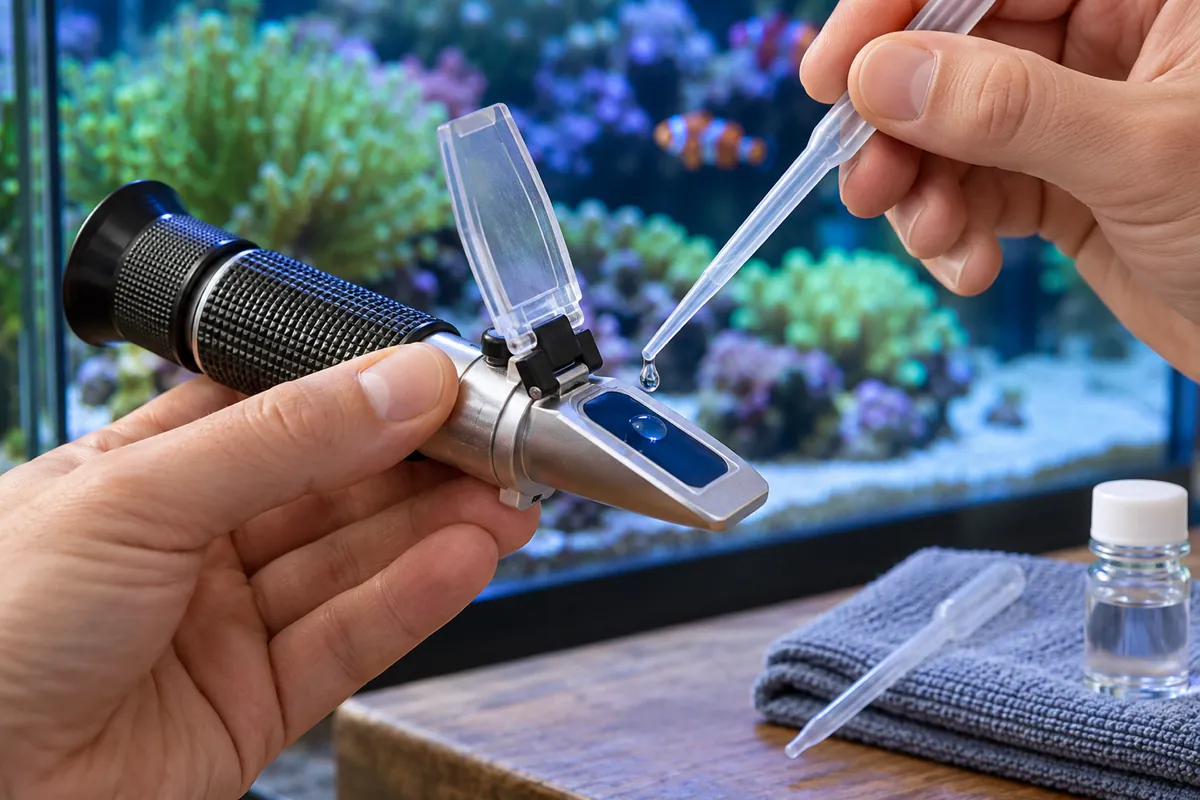
A refractometer measures how much light bends in water. Light bends more in saltier water. A few drops are enough: you place a drop on the prism, close the cover and read the value through the eyepiece on a scale that often shows both ppt and SG.
Temperature affects a refractometer reading too. Many models have automatic temperature compensation (ATC). Calibrate the refractometer before measuring as its manufacturer instructs, and wipe the prism with a soft cloth afterwards.
Aquaforest recommends checking the salinity of mixed water with a refractometer before use. If you have a hydrometer, measure carefully with it at 25 °C and compare the result with the salt maker's recommendation.
5. Mixing sea salt
Salt is mixed in a separate container, not in the aquarium. Aquaforest recommends starting with RO/DI water at about 24 °C, adding the salt and stirring vigorously for about 15 minutes until the salt has fully dissolved and the water is clear.
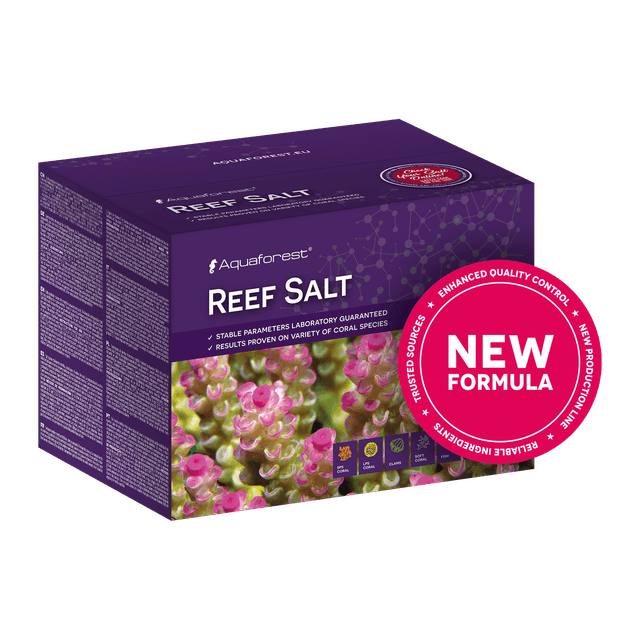
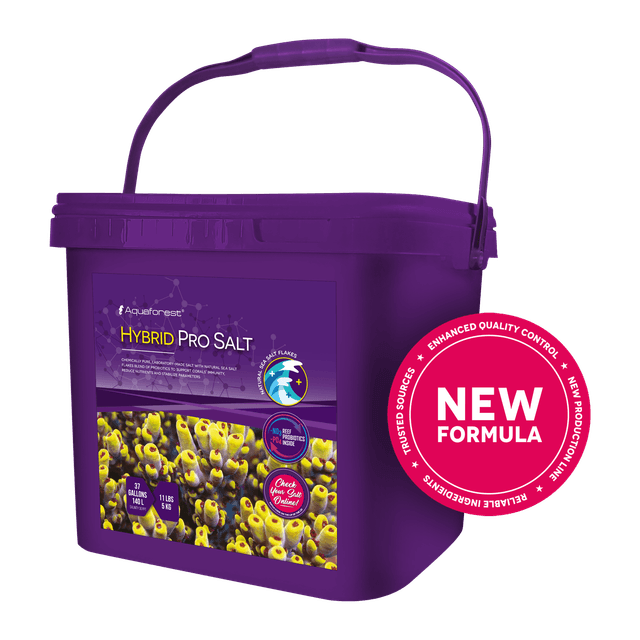
According to the manufacturer, about 390 g of Reef Salt, Reef Salt+ or Hybrid Pro Salt in 10 litres of water gives 33 ppt (SG 1.025). For Sea Salt, meant for tanks with fish and soft corals, the recommendation is 30 ppt (SG 1.022), about 345 g per 10 litres. Measure the salinity before use and adjust with salt or water.
The manufacturer says mixed water should be used within three days and kept in a tightly closed container, as evaporation changes the water parameters. If the water stands for several days, measure the salinity again. The ready-made AF Perfect Water needs no mixing; use an opened container within 5 days.
Hydrometer and refractometer compared
| Hydrometer (ARKA) | Refractometer | |
|---|---|---|
| What it measures | Density (by buoyancy) | Refraction of light in a drop |
| Water needed | A measuring cylinder full | A few drops |
| Temperature | Read at 25 °C, thermometer included | Many models have ATC |
| Accuracy | ±0.0002 SG at 25 °C (manufacturer) | Depends on model and calibration |
| Care | Rinse with fresh water, handle with care | Calibrate as instructed, clean the prism |
Checklist
- Mix salt in a separate container with RO/DI water
- Measure salinity every time you mix new water
- Take the hydrometer reading at 25 °C
- Top up evaporation with pure RO water, not salt water
- Keep mixed water in a closed container and use it within three days
- Rinse the hydrometer with fresh water after measuring
- Calibrate a refractometer as its manufacturer instructs
Products for this guide
from€12.50
Unit price: €6.25 / kg

from€26.99
Unit price: €3.60 / kg
from€28.99
Unit price: €5.80 / kg

from€9.90
Unit price: €1.98 / l
Frequently asked questions
Which salinity should a reef tank have?
Follow your salt maker's recommendation. Aquaforest recommends 33 ppt (SG 1.025) for Reef Salt and 30 ppt (SG 1.022) for Sea Salt in tanks with fish and soft corals.
Is a hydrometer enough?
A hydrometer does the job if you measure at the right temperature and it floats freely. According to the manufacturer, the ARKA hydrometer's maximum deviation is ±0.0002 SG at 25 °C. A refractometer needs less water, and many models have temperature compensation.
Why does salinity rise in the aquarium?
Water evaporates but the salt stays in the tank. If evaporation is topped up with salt water, salinity rises. Top up with pure RO water and measure salinity regularly.