1. What reverse osmosis is
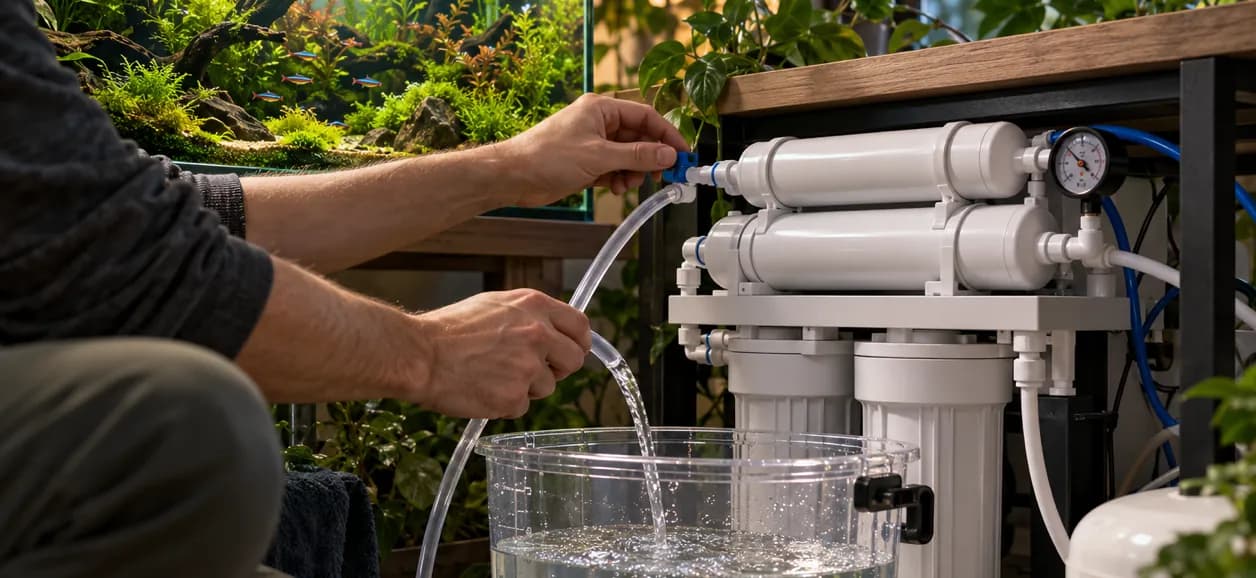
Reverse osmosis (RO) is a water purification method in which water is pushed through a membrane with extremely fine pores. The membrane lets water through but holds back most dissolved salts and other substances. For the ARKA myAQUA 380 membrane, the manufacturer states that it removes up to 99% of salts, heavy metals and bacteria.
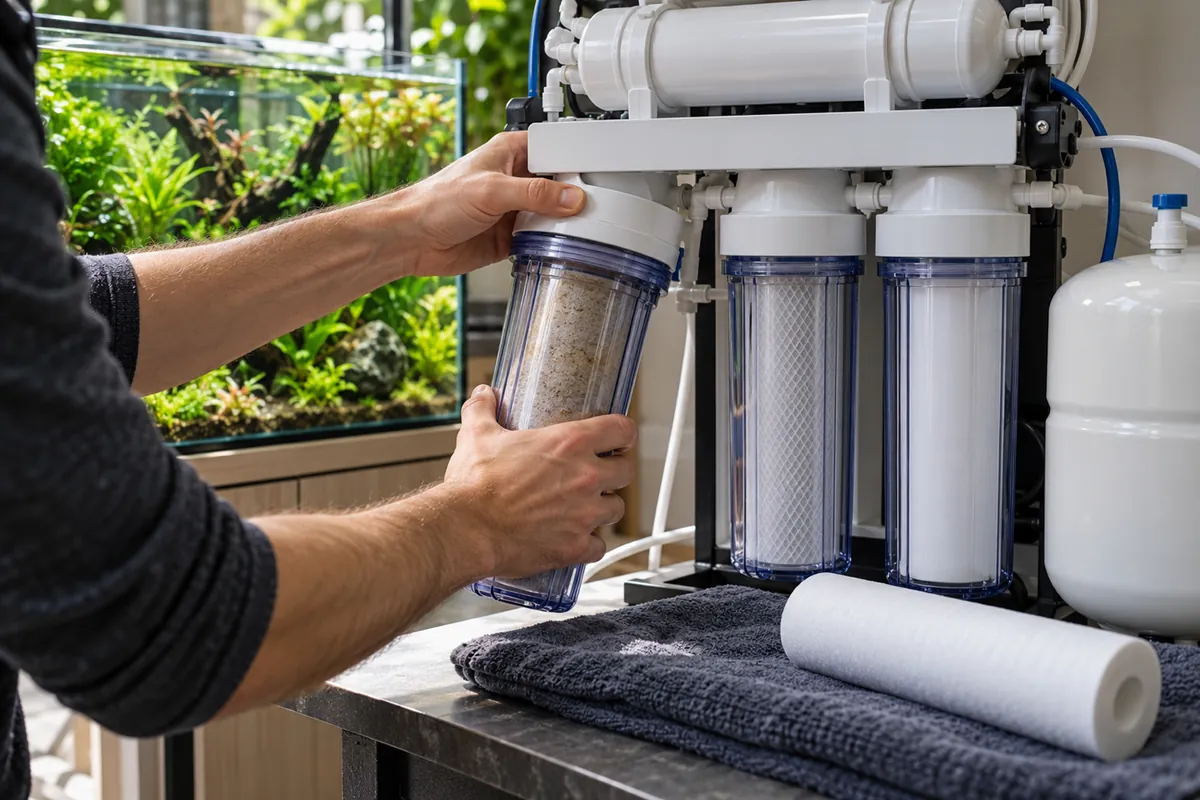
An RO unit usually has several stages. First a fine filter that catches sand and rust particles, then a carbon filter that removes chlorine and protects the membrane, and finally the membrane itself. Some aquarists add a deionising resin filter at the end, which removes the last dissolved substances.
The membrane does not work like an ordinary filter that all the water flows through. Part of the water passes through the membrane and becomes osmosis water, while the rest carries the rejected substances away as waste water. That is why every litre of pure water also produces a certain amount of waste water.
2. When an aquarium needs RO water
In a marine aquarium RO water is almost always needed. Sea salt is mixed with pure water, and Aquaforest recommends using RO or demineralised water with its salts. Evaporated water in a marine tank is also topped up with pure RO water.
In freshwater RO water is needed mainly when you want soft water. Caridina shrimp such as Bee and Crystal Red need it, for example, as do many soft-water fish and plants. If your tap water is very hard, mixing RO water with tap water is an easy way to lower the hardness.
RO water also helps when tap water contains a lot of nitrate, phosphate or silicate, which encourage algae. Not every aquarium needs RO water, though. Neocaridina shrimp and many common fish do well in conditioned tap water. The hardness of tap water in Estonia varies a lot from region to region, so measure GH and KH with a test before you decide.
3. How to choose an RO unit
The first question is how much water you need. A smaller unit is enough for water changes in a smaller tank, while a large marine tank needs more. According to the manufacturer, the ARKA myAQUA 380 produces up to 380 litres of osmosis water a day, needs no electricity and runs on mains water pressure alone. Its yield, according to the manufacturer, is about 1 : 3–4, meaning 3–4 litres of waste water for every litre of osmosis water.
A larger, faster unit uses a booster pump. According to the manufacturer, the ARKA myAQUA 1900 produces up to 1,900 litres a day with a yield of about 1 : 1, which means much less waste water. According to the manufacturer, the unit switches itself off after 12 hours of continuous operation and needs 1–4 bar of water pressure to run.
Before buying, check that your water pressure is high enough and decide where the unit will go. An RO unit connects to the cold water pipe, and the waste water is led into the drain. To store the pure water you need a clean container made of food-safe material.
If you need especially pure water, for example for a marine tank with corals, a resin filter is added after the membrane. According to the manufacturer, the ARKA myAQUA Resin Filter 300 ml is filled with cation and anion resin, fits the ARKA myAQUA 190, 380 and 1900 and many other RO units, and removes the last traces of silicate, nitrate and other dissolved substances. The manufacturer gives an average conductivity of about 0.1 µS/cm for the water produced.
4. Adding minerals back
Pure RO water is almost free of minerals and is not suitable for a freshwater aquarium as it is. Fish, shrimp and plants need calcium, magnesium and other minerals, and water without carbonate hardness does not keep the pH stable. That is why minerals have to be added back to RO water or it has to be mixed with tap water.
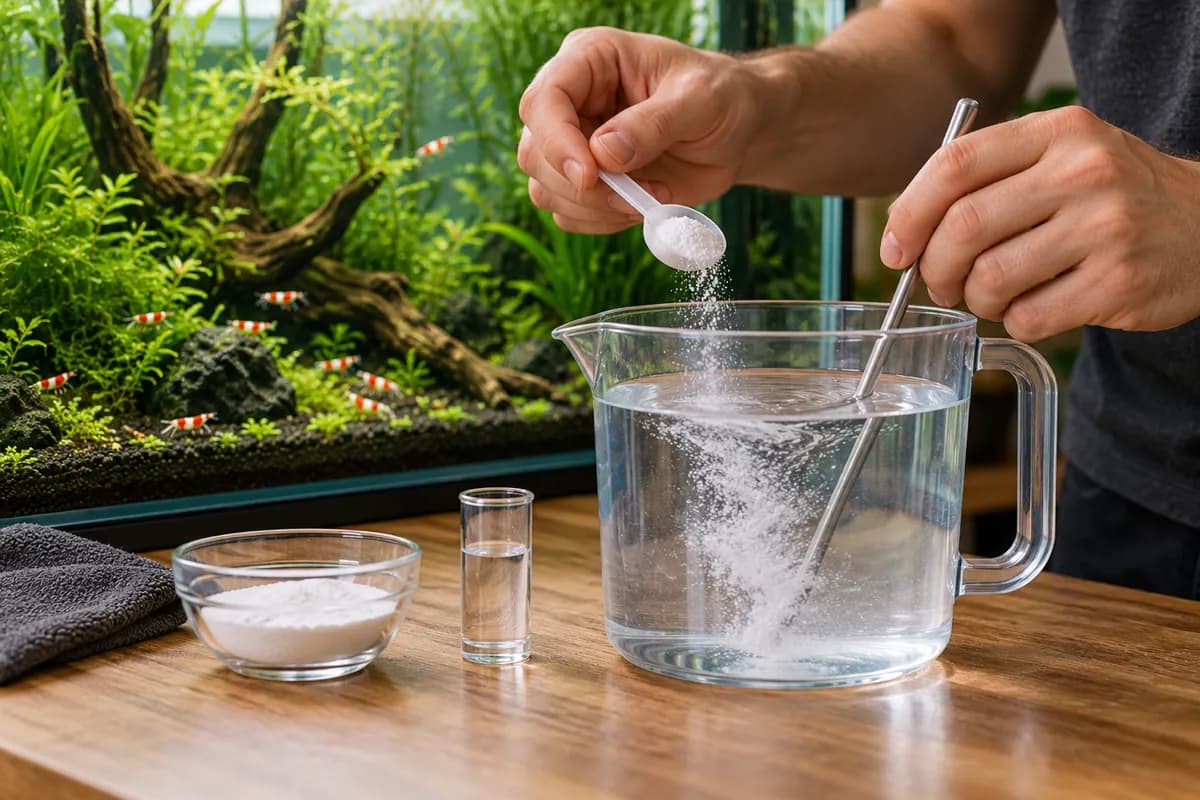
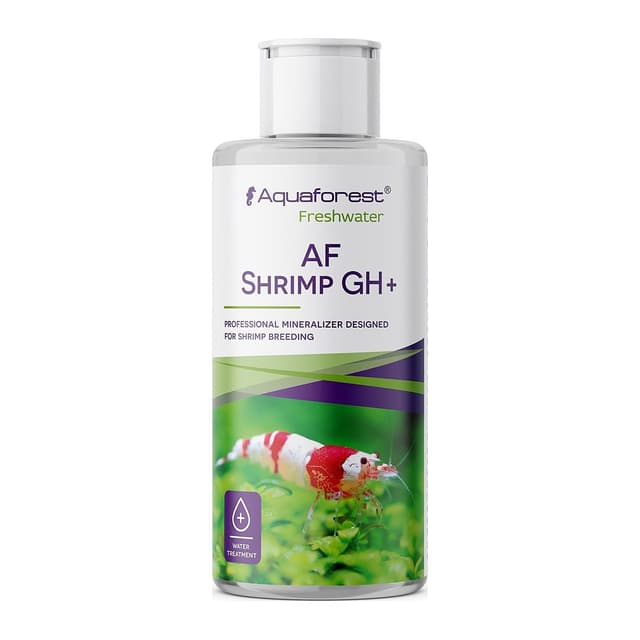
Remineralisers are made for exactly this. According to the manufacturer, 2Hr Aquarist APT Sky replenishes the minerals of RO water without changing NPK, KH or pH: 5 ml (3.5 g) per 60 litres raises general hardness by about 2.5 dGH, and the recommended amount is 15 ml per 60 litres of RO water. Aquaforest Shrimp GH+ is a mineraliser made for shrimp which, according to the manufacturer, raises GH but leaves KH unchanged.
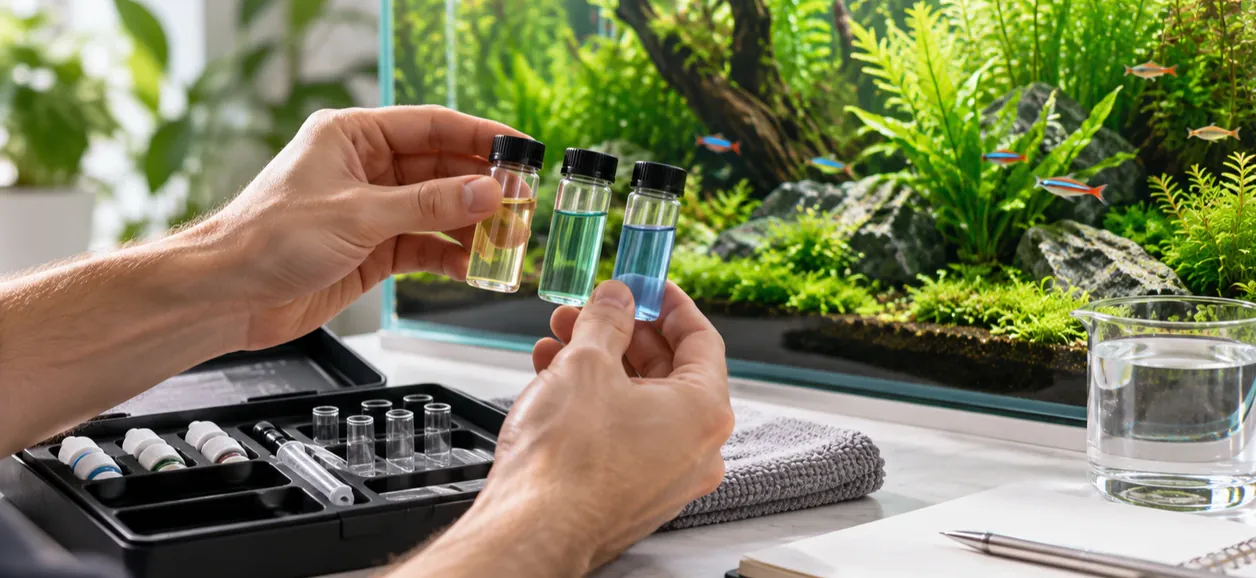
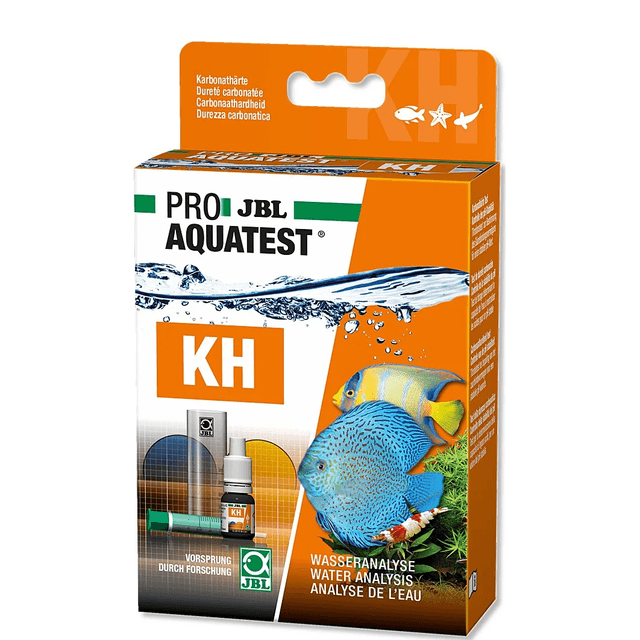
After adding minerals, measure GH and KH with a test. The JBL Test PRO KH measures carbonate hardness. Write down the amount you used and the result you got: that way you prepare the same water every time, and water changes do not shift the aquarium conditions abruptly.
5. Looking after the filters and membrane
The pre-filters of an RO unit wear out and are replaced as the manufacturer instructs. When the fine and carbon filters are clogged or spent, the water output drops and chlorine can reach the membrane and damage it. Manufacturers sell spare filters and membranes to fit each model.
The easiest way to follow the condition of the membrane is a TDS meter, which shows the amount of dissolved substances in the water. The ARKA myAQUA In-Line TDS meter is fitted into the line and measures TDS continuously. When the TDS of the osmosis water starts to rise, it is time to check the pre-filters and, if needed, replace the membrane.
Resin filters get used up as well. According to the manufacturer, the ARKA myAQUA resin filter has a colour indicator that shows its consumption, and it can be refilled. Keep the osmosis water container covered and clean it regularly.
6. Common mistakes
The most common mistake is using pure RO water in a freshwater tank without minerals. Such water does not keep the pH stable and lacks the minerals animals and plants need. The second mistake is changing the water chemistry in one big step: if you switch from tap water to RO water, do it gradually over several water changes.
In a marine tank a common mistake is replacing evaporated water with salt water, which raises salinity. Top up evaporation with pure RO water only and measure salinity regularly.
Do not forget the pre-filters or wait until the membrane is completely worn out. A TDS meter and notes on replacements help keep the unit in working order. If you are not sure your aquarium needs RO water at all, measure your tap water first and look at what your animals and plants actually need.
RO water in different aquariums
| Use | What to do with RO water | Example from the shop |
|---|---|---|
| Marine aquarium | Mix with sea salt | Aquaforest Reef Salt, Sea Salt |
| Topping up a marine tank | Add pure, without salt | ARKA myAQUA 380 |
| Caridina shrimp | Add a GH mineraliser | Aquaforest Shrimp GH+ |
| Soft-water plants and fish | Remineralise or mix with tap water | 2Hr Aquarist APT Sky |
| Checking the unit | Measure TDS | ARKA In-Line TDS meter |
Checklist
- Measure tap water GH and KH before deciding
- Choose the unit by how much water you need
- Check water pressure and where the unit will go
- Do not use pure RO water in a freshwater tank
- Add minerals and measure the result
- In a marine tank, top up with RO water only
- Replace pre-filters as the manufacturer instructs
- Watch the membrane with a TDS meter
Products for this guide



from€14.99
Unit price: €99.93 / kg
from€5.80
Unit price: €46.40 / l
Frequently asked questions
Does a freshwater aquarium need reverse osmosis?
Not always. Many fish, plants and Neocaridina shrimp do well in conditioned tap water. RO water is needed mainly for soft-water species or when tap water contains a lot of nitrate, phosphate or silicate.
Can RO water go straight into the aquarium?
Not into a freshwater tank without minerals: add a remineraliser or mix it with tap water. In a marine tank pure RO water is used to top up evaporation, but for water changes it is mixed with salt first.
How much waste water does an RO unit produce?
It depends on the unit and the water pressure. According to the manufacturer, the ARKA myAQUA 380 has a yield of about 1 : 3–4, and the ARKA myAQUA 1900 with a booster pump about 1 : 1.
When should the membrane be replaced?
When the TDS of the osmosis water rises even after the pre-filters have been replaced. A TDS meter shows this most accurately; the exact replacement interval is in the manufacturer's manual.