1. What foreground plants are
Foreground plants are low plants placed near the front glass of the aquarium. In our data they are usually 3–15 cm tall and create the ground level that leaves the background to taller plants. They include true carpets and small dense bushes.
The foreground gives the aquarium depth: low plants in front and taller ones behind make the picture look bigger. It is also where fish swim, so it should have space and good light.
The choice of foreground depends on your light. With low light and no CO2, plants such as Staurogyne repens suit, but a denser carpet, for example Monte Carlo or Glossostigma, needs stronger light and carbon dioxide.
2. Easy foreground plants
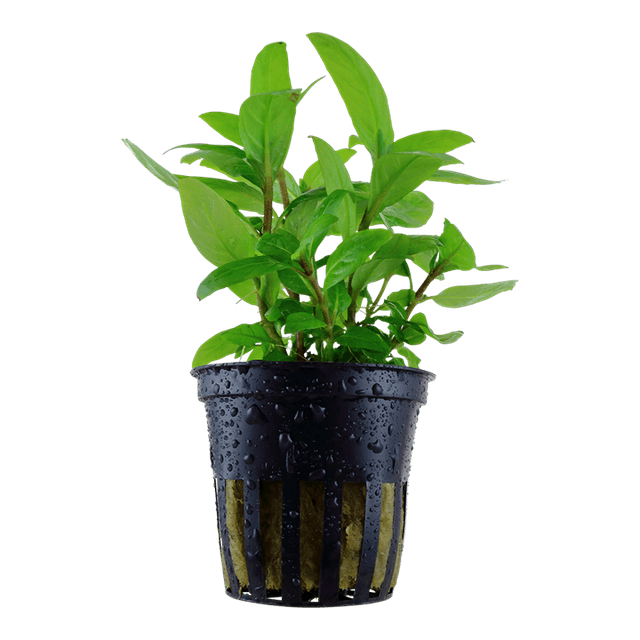
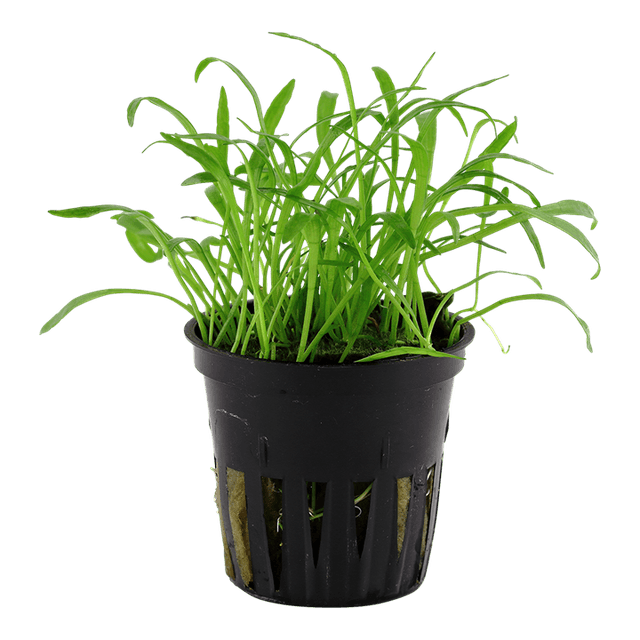
Our data list Staurogyne repens as easy, with low light and CO2 demand and medium growth. Tropica describes it as compact and hardy: it stays about 5–10 cm tall and is bushy rather than a true carpet.
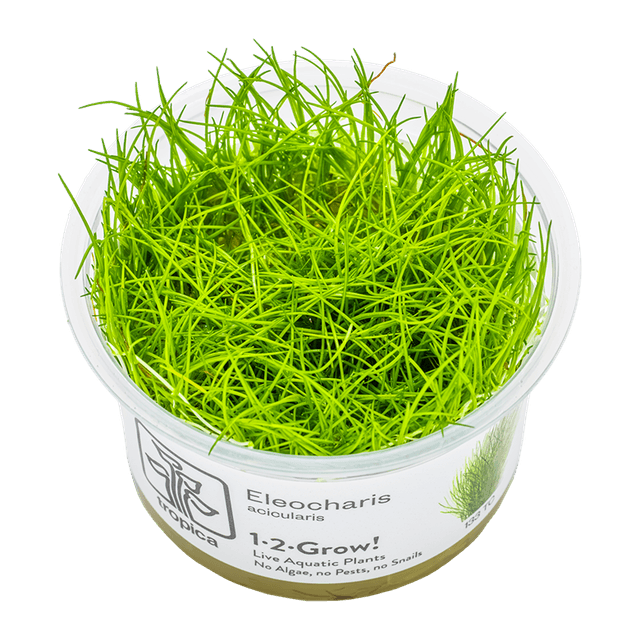
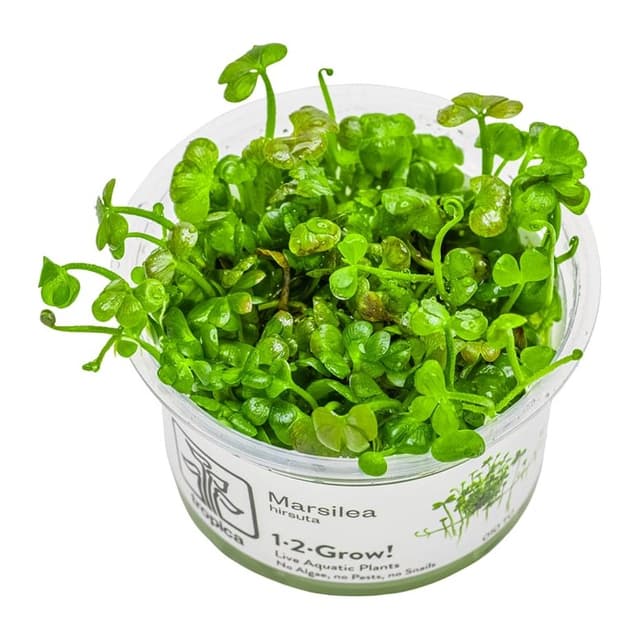
Eleocharis acicularis, hairgrass, gives a fine carpet. According to Tropica’s description the carpet is 6–15 cm high: after planting, the roots spread through the substrate and the tufts join up. Marsilea hirsuta is an Australian carpet fern that slowly spreads.
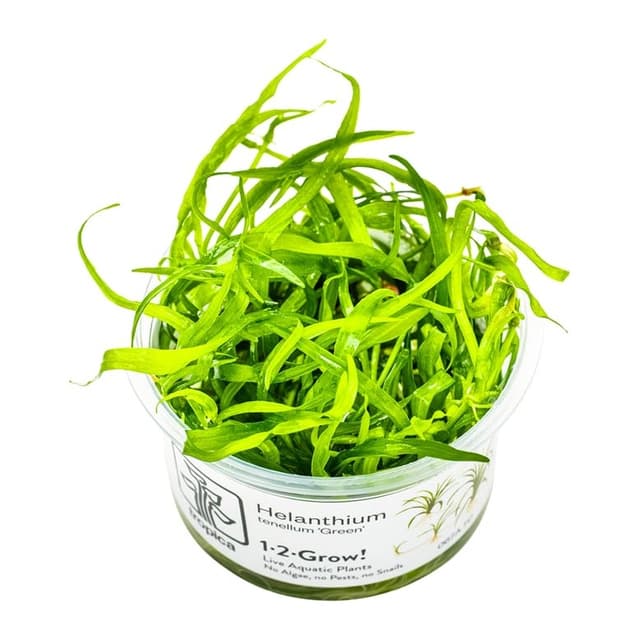
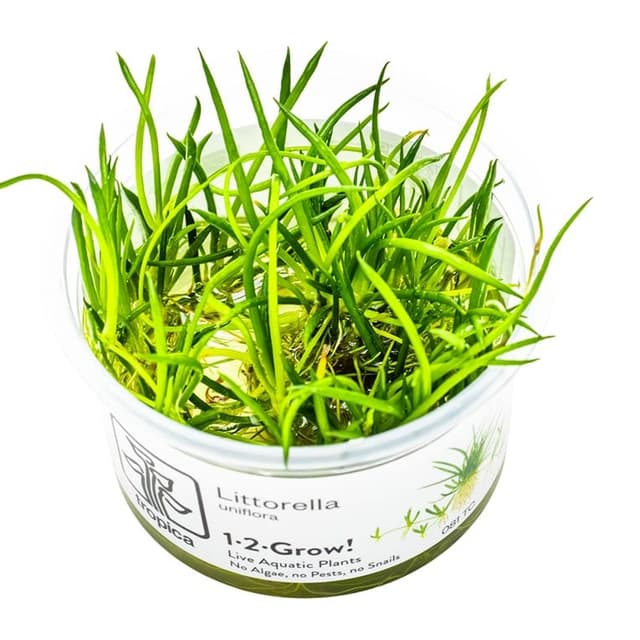
Helanthium tenellum Green and Littorella uniflora grow in low light, but slowly. Be patient with them: the carpet takes several months to form.
3. More demanding carpets: Lilaeopsis, Monte Carlo and Glossostigma
Lilaeopsis brasiliensis can form a dense lawn of 4–7 cm, but only in strong light. Plant small clumps a few centimetres apart in an open, unshaded spot, so they grow together faster.
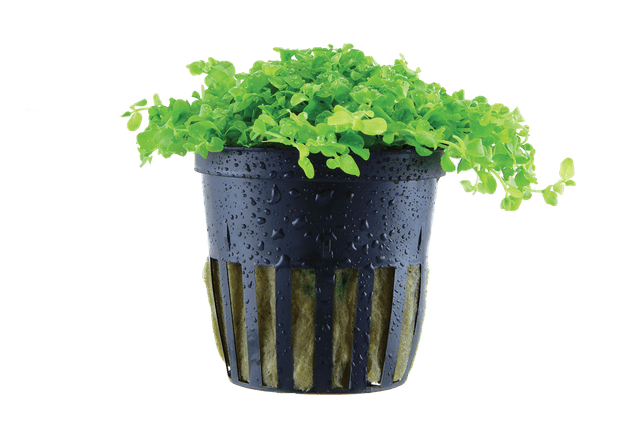
Micranthemum tweediei Monte Carlo forms a fast-growing foreground carpet on creeping stems. It tolerates light shade, but good light and CO2 give the densest carpet.
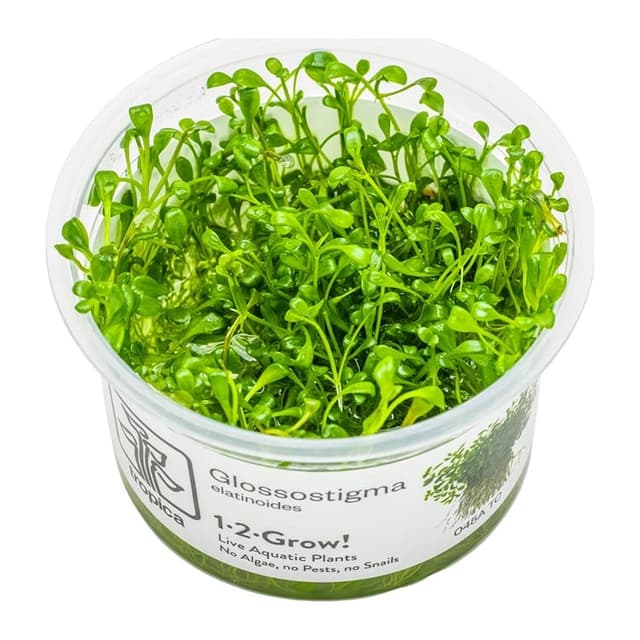
Glossostigma elatinoides is one of the smallest aquarium plants and needs a lot of light. When light is short it grows upward. Do not let taller plants shade it. Our data mark it as Advanced, so leave it for later.
4. Planting density and technique
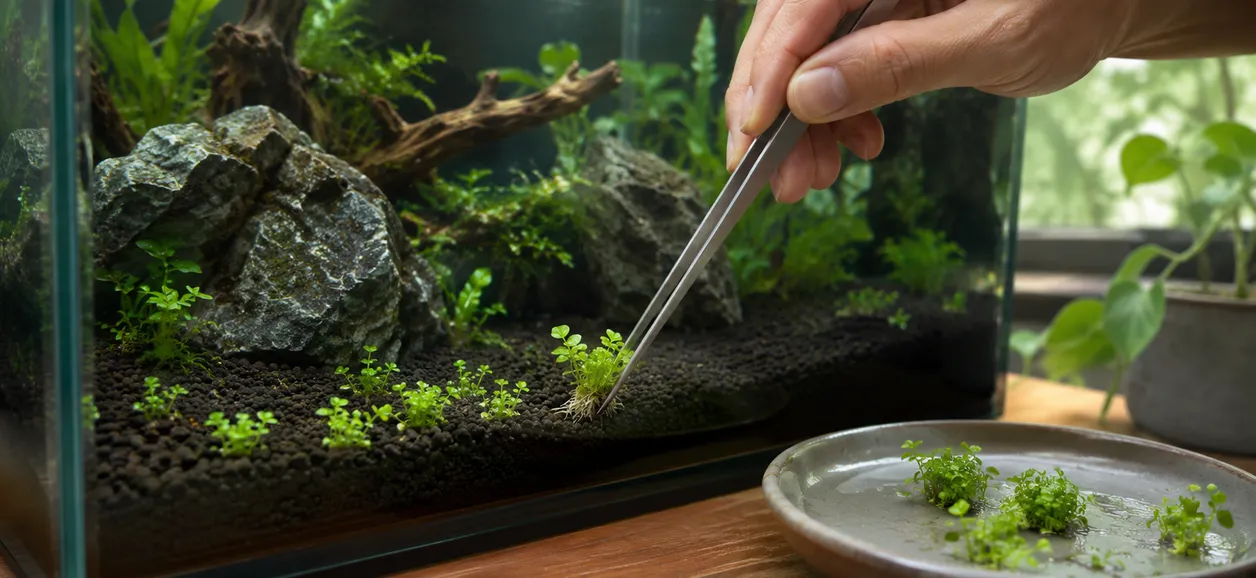
Foreground plants are planted as small tufts. According to Tropica’s descriptions, Littorella and Lilaeopsis are planted a few centimetres apart, and Cryptocoryne parva plants join into a low lawn after about six months. The denser you plant, the faster the carpet forms, but the more plants you need.
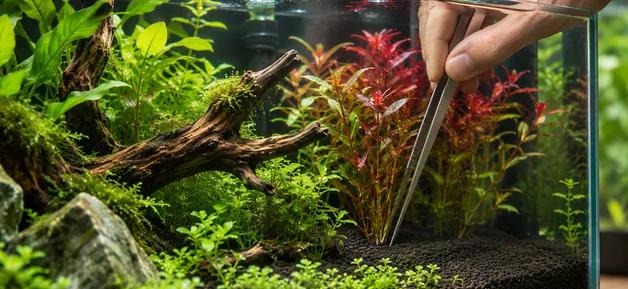
Use tweezers: with them you can press small tufts into the substrate so the roots are not left at the surface and the plant does not float out. Tweezers also help to maintain the carpet later.
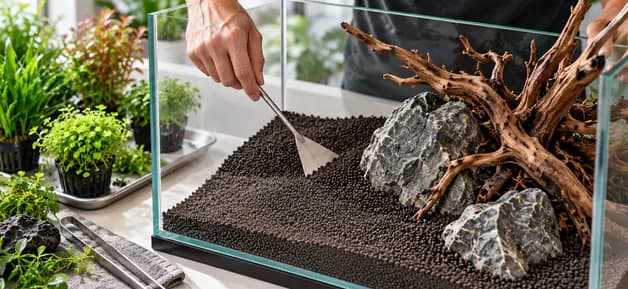
Place plants in an unshaded spot and make sure taller plants do not take the light. Level the substrate before planting so the carpet grows evenly.
5. Light, nutrients and care
Foreground plants sit near the substrate, the furthest from the light. According to the data Staurogyne and Littorella need little, Lilaeopsis and Monte Carlo medium and Glossostigma a lot. Check each plant’s light and CO2 demand on its product page.
Carpets take nutrients from the substrate, so a nutritious substrate or root fertiliser helps. After carpets have grown, trim them regularly so that the lower leaves do not stay in shade and rot.
If algae appear on a carpet, check light and the nutrient balance first; a treatment alone is not enough. You will find more in the guides about algae and trimming.
6. Designing the foreground
Do not cover the whole foreground with one plant. Leave some sand or gravel open and make the carpet a clearly defined area. That contrast gives the aquarium depth and leaves the fish swimming space.
Combine two or three species of different heights: for example taller Eleocharis toward the back and Lilaeopsis or Monte Carlo in front. This creates a smooth transition from the foreground to the middleground.
Start with a smaller area. When the carpet has rooted and begins to grow, you can easily extend it by dividing the plants. That costs less, and fewer weak plants are lost.
Foreground plants (A-SCAPE data, placement “Foreground”)
| Plant | Height | Light / CO2 | Growth / difficulty |
|---|---|---|---|
| Staurogyne repens | 3–10 cm | Low / low | Medium / Easy |
| Eleocharis acicularis | 10–15 cm | Low / low | Medium / Easy |
| Marsilea hirsuta | 5–20 cm | Low / low | Medium / Easy |
| Helanthium tenellum Green | 5–15 cm | Low / low | Slow / Easy |
| Littorella uniflora | 3–5 cm | Low / low | Slow / Easy |
| Lilaeopsis brasiliensis | 3–5 cm | Medium / medium | Slow / Easy |
| Micranthemum tweediei Monte Carlo | 3–5 cm | Medium / medium | – / Medium |
| Glossostigma elatinoides | 3–5 cm | High / high | – / Advanced |
Checklist
- Choose plants to match your light and CO2
- Start with easy ones: Staurogyne, Eleocharis, Marsilea
- Plant in small tufts a few centimetres apart
- Use tweezers so roots are in the substrate
- Place plants in an unshaded spot
- Use a nutritious substrate or root fertiliser
- Trim the carpet regularly
- Be patient: a carpet forms over months
Products for this guide
| Plant | Height | Light | CO2 | Growth | Difficulty | Placement |
|---|---|---|---|---|---|---|
| Staurogyne repens | 3–10 cm | low | low | medium | easy | foreground |
| Eleocharis acicularis | 10–15 cm | low | low | medium | easy | foreground |
| Marsilea hirsuta | 5–20 cm | low | low | medium | easy | foreground |
| Helanthium tenellum 'Green' | 5–15 cm | low | low | slow | easy | foreground |
| Lilaeopsis brasiliensis | 3–5 cm | medium | medium | slow | easy | foreground |
| Micranthemum tweediei 'Monte Carlo' | 3–5 cm | medium | medium | — | medium | foreground |
| Glossostigma elatinoides | 3–5 cm | high | high | — | advanced | foreground |
| Littorella uniflora | 3–5 cm | low | low | slow | easy | foreground |
Size, light and CO2 demand are manufacturer data; real results depend on your aquarium.
Frequently asked questions
Which foreground plant suits a beginner?
Easy options are Staurogyne repens, Eleocharis acicularis and Marsilea hirsuta: according to the data they need little light and CO2. A dense carpet still takes time.
Does Monte Carlo need CO2?
According to the data its CO2 demand is medium. Tropica says it tolerates light shade, but good light and CO2 give the densest carpet.
How long does a carpet take to grow?
It depends on the plant and conditions. Slow plants such as Cryptocoryne parva join up in about six months according to Tropica, faster ones such as Monte Carlo often sooner.