
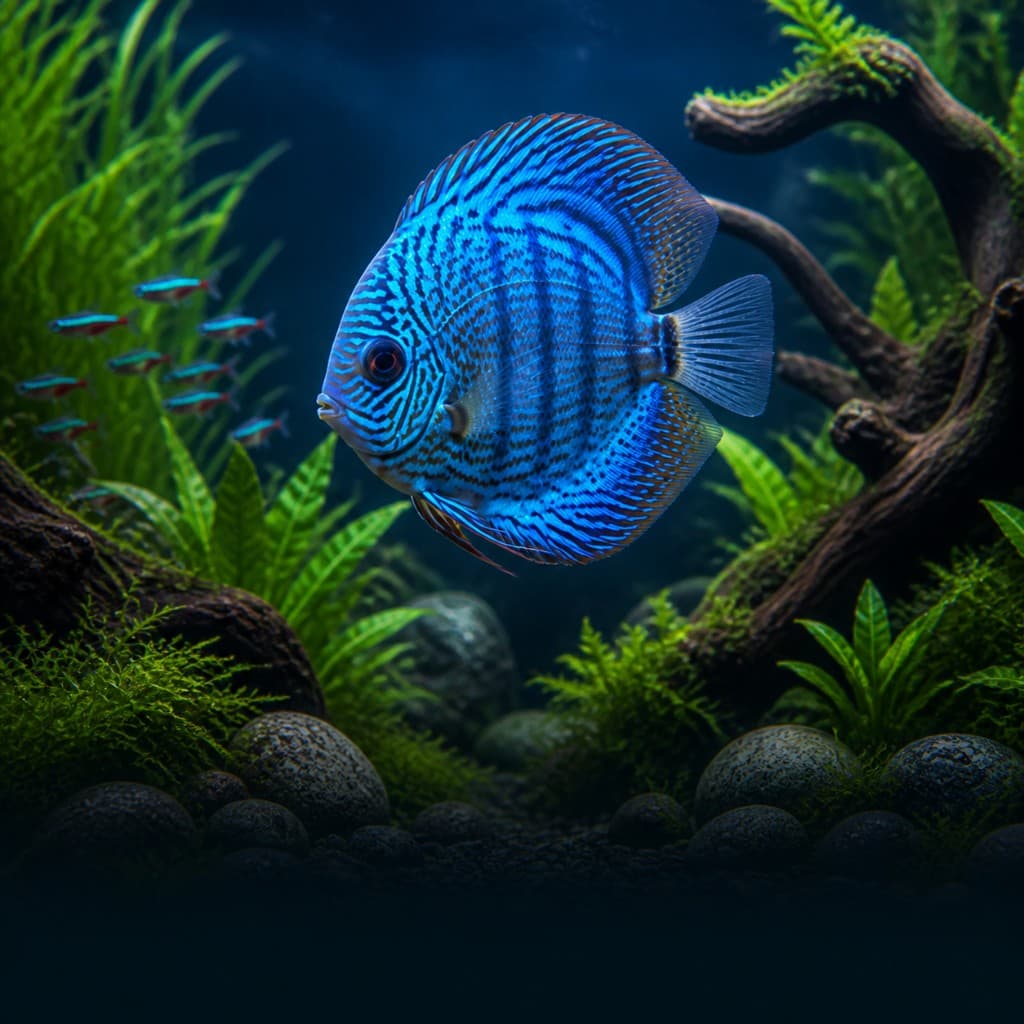

1. Nutrient soil vs gravel
Ordinary gravel or sand is inert: it gives plants no nutrients and leaves feeding the roots to the water and fertiliser. That works well for a tank with few plants or only epiphytes tied to stone and wood. A nutrient soil, on the other hand, is meant to feed plant roots from below.
If you want dense planting, especially rosette plants, Cryptocoryne and a foreground carpet, a nutrient soil is a convenient solution because roots feed from it directly. For a beginner who does not want to start with thorough fertilising straight away, it is often the easier path. It is not mandatory, though: plants can be grown successfully in gravel if you add root capsules or liquid fertiliser.
Think also about which plants you have. Plants attached to stone and wood, such as Anubias and Java fern, take their food from the water and do not need a nutrient substrate at all. The choice of soil matters when you plan to plant several plants in the substrate.
2. Which soils to choose
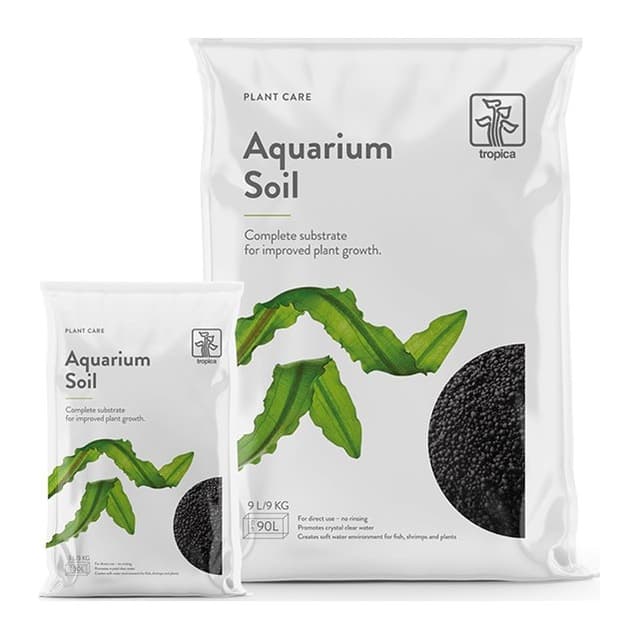
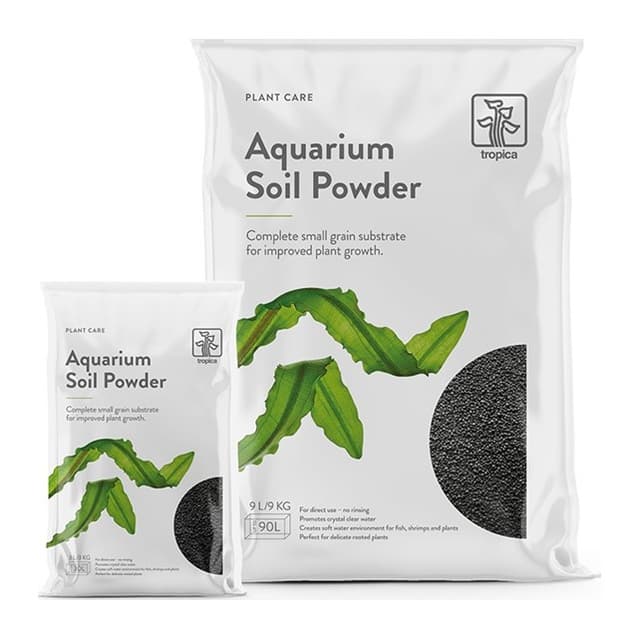
Tropica Aquarium Soil is a complete substrate of volcanic minerals for setting up a new aquarium: no extra bottom layer is needed. Its 2–3 mm grain makes planting easy and supports root development. Tropica Aquarium Soil Powder is the same material with a finer 1–2 mm grain, particularly suited to small and foreground plants.
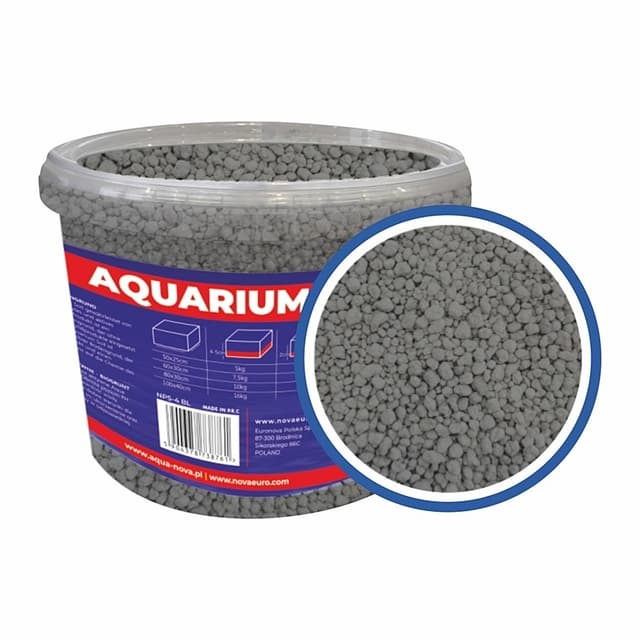
Both soils lower pH, so Tropica recommends changing 25–50% of the water at least twice a week during the first four weeks. Aqua Nova Plant Soil Black NPS-4 is light and porous and does not compact: roots spread through it easily and nitrifying bacteria colonise the large surface. Its description says it supports a neutral to slightly acidic pH and does not colour the water.
3. Tropica Substrate and layer depth
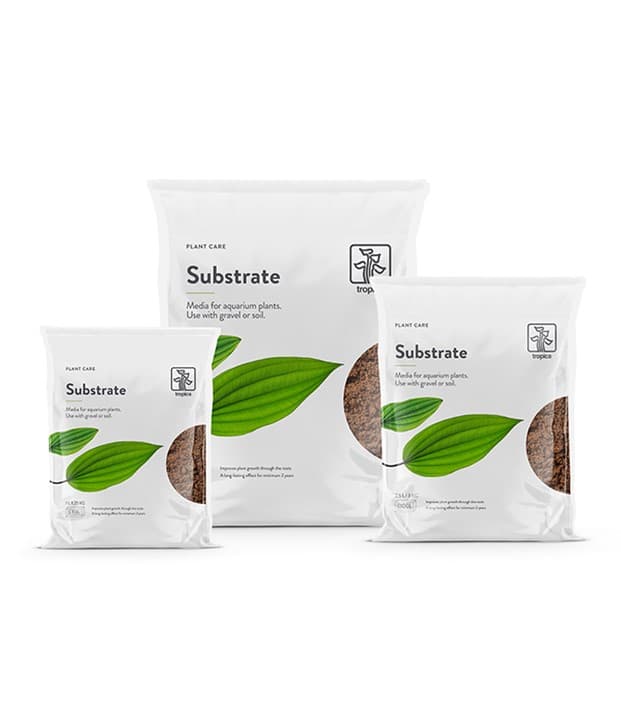
If you want to use your own gravel or sand, the solution is a base layer. Tropica Substrate is a concentrated nutrient layer laid about 1 cm thick under the gravel when the aquarium is set up. It absorbs nutrients and makes them available to plant roots. According to the description it is neutral: it does not affect the water's KH or pH.
The overall depth of gravel or soil should be judged by the tank size and the plants: the layer is usually thicker at the back than at the front, so that larger roots have room. You will find the exact recommendation on each product's packaging. Do not make the layer so thick that the bottom goes bad: a layer that is too thick and dense can become low in oxygen.
4. Setup step by step
Put the nutrient soil on the clean bottom of the aquarium before the hardscape and plants. Fill the tank slowly so the water does not lift the soil; place a plate on the soil and pour the water onto it. At first the soil will cloud the water a little, and that is normal.
During the first weeks change water more often, as the manufacturer advises, and check the water with tests. A nutrient soil releases plenty of nutrients at first, so algae may start to grow if there are few plants. So plant at once and plant plenty. If you use the 2Hr Aquarist APT Start pouch, the principle is the same: spread the pouch evenly over the bottom and add the substrate.
5. When to renew or add nutrients
A nutrient soil does not last forever: over time plants use up the nutrients. The manufacturer data fixes no renewal period, and it depends on the number of plants and the conditions in the tank. If plants turn pale and growth drops despite fertiliser, that is a sign the soil is spent.
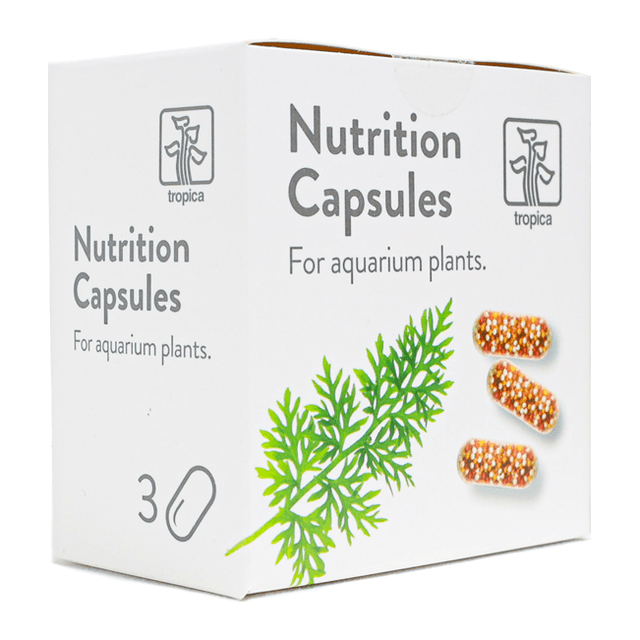
Nutrients can be added without replacing the soil: Tropica Nutrition Capsules are pushed in near the roots with tweezers and release nitrogen, phosphorus and micronutrients over 1–2 months. Liquid fertiliser helps too. When the soil finally does need replacing, do it in stages or accept that plants must be replanted.
Before buying new soil, measure the floor area of the aquarium and take the layer thickness you plan into account, so you know how much you need. The manufacturer states on the pack how large an area it covers, and that is worth following. Buying a little extra avoids a thin layer at the back.
Substrate comparison (from manufacturer descriptions)
| Product | Type | Grain / layer | Effect on water |
|---|---|---|---|
| Tropica Aquarium Soil | Complete substrate | 2–3 mm | Lowers pH |
| Tropica Aquarium Soil Powder | Complete substrate | 1–2 mm | Lowers pH |
| Tropica Substrate | Base layer | about 1 cm under gravel | Neutral, no effect on KH or pH |
| Aqua Nova Plant Soil NPS-4 | Complete substrate | Light, porous | Neutral to slightly acidic pH |
| 2Hr Aquarist APT Start | Substrate enrichment | 45 g per 60 × 30 cm | – |
| Tropica Nutrition Capsules | Root supplement | 1–2 months | – |
Checklist
- Decide: nutrient soil or gravel plus capsules
- Check whether the soil lowers pH
- Lay the soil on a clean bottom before hardscape
- Fill slowly onto a plate
- Change water more often in the first weeks
- Plant at once and plant plenty
- Watch plant colour and growth
- Add nutrients with capsules or liquid fertiliser
Products for this guide

Frequently asked questions
Is a nutrient soil necessary?
No. Plants can also grow in gravel if you add root capsules and liquid fertiliser, but a nutrient soil makes the start simpler.
Is a nutrient soil right for all fish?
Because the soil can lower pH, check your fish's needs before buying and follow the manufacturer's advice on water changes in the first weeks of a new tank.
Can I add soil later?
Adding a full soil layer later is difficult, but root capsules can be added at any time.


