1. What makes a plant suit a nano tank
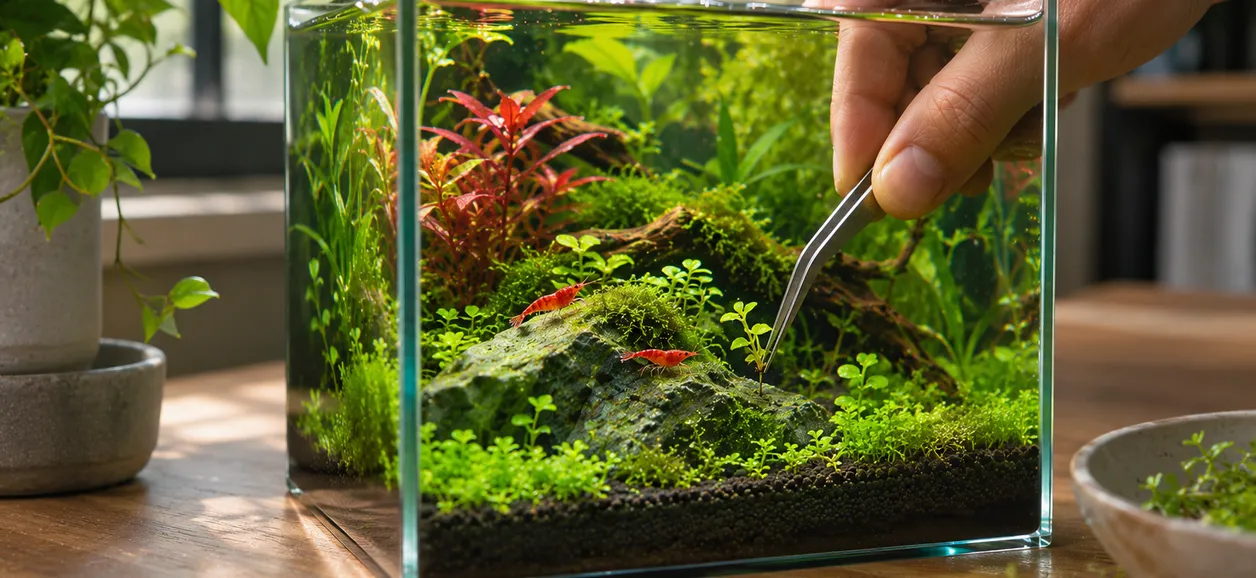
In a small tank every centimetre counts. A nano aquarium plant should stay low and grow slowly, otherwise it takes over the whole space in a few weeks and shades the others. For this guide we picked species from Tropica’s data with a height of up to 15 cm.
The second factor is light and CO2. In a small volume nutrient and CO2 levels change quickly, so plants whose product pages list low light and low CO2 demand are easier to look after. These include, for example, Anubias 'Petite', Bucephalandra 'Needle Leaf' and several foreground plants.
2. Anubias and Bucephalandra on rock
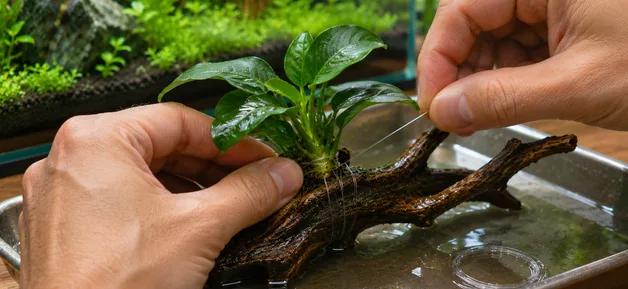
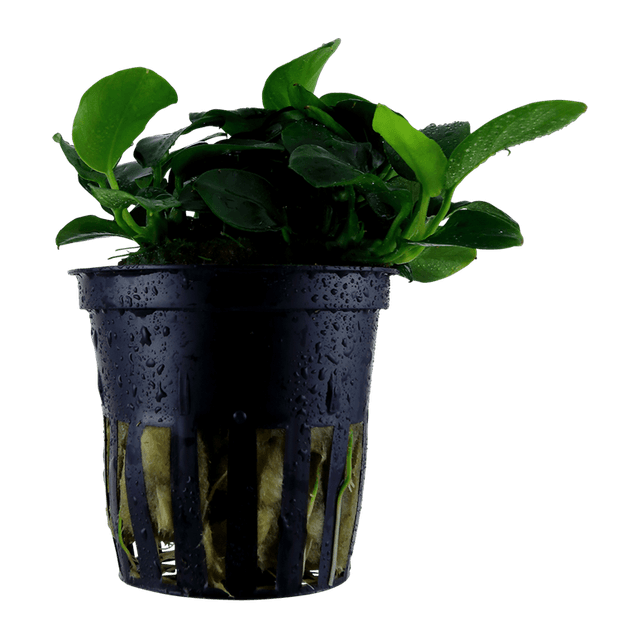
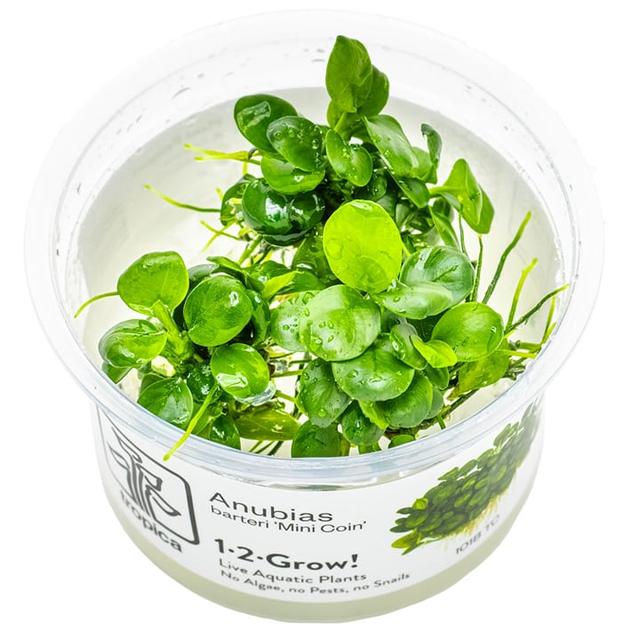
By Tropica’s description Anubias barteri 'Petite' is one of the smallest Anubias: suited to miniature landscapes, height 3–5 cm, low light and CO2 demand, slow growth. Anubias 'Mini Coin' is a bit taller, 3–10 cm, and is supplied in a 1-2-Grow cup. With both, never bury the rhizome in the substrate; tie it to a stone or root with fishing line.
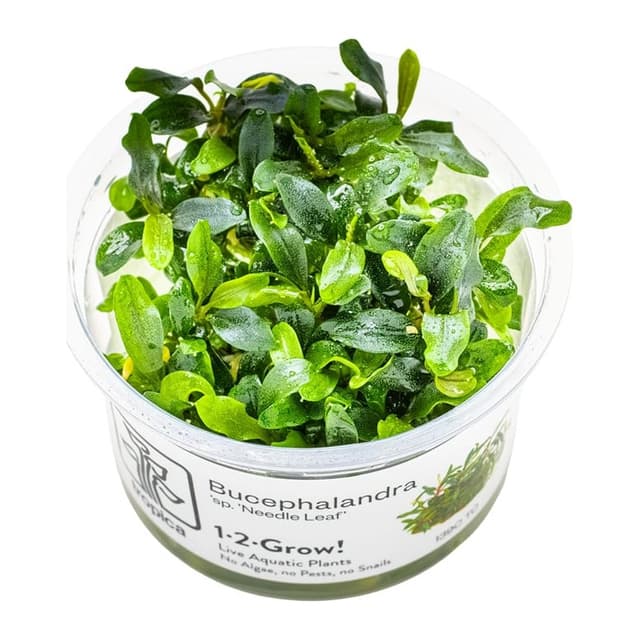
Bucephalandra 'Needle Leaf' has very narrow, needle-like leaves and is also only 3–5 cm tall. Its difficulty is Medium, yet low light and slow growth suit a nano. It too grows on rock or wood. Such plants do not need a substrate and keep the bottom free for a foreground carpet.
3. Foreground plants and 1-2-Grow
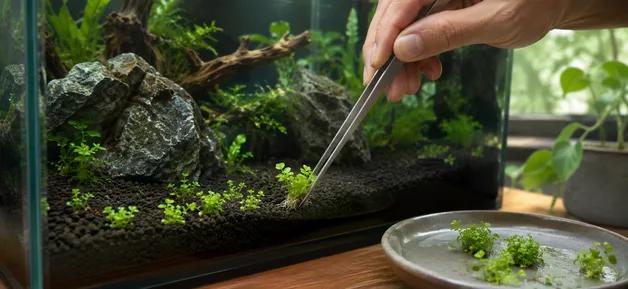
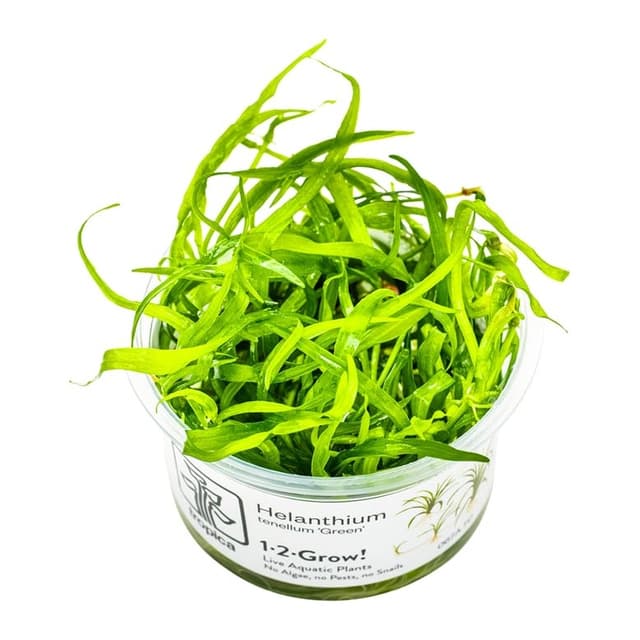
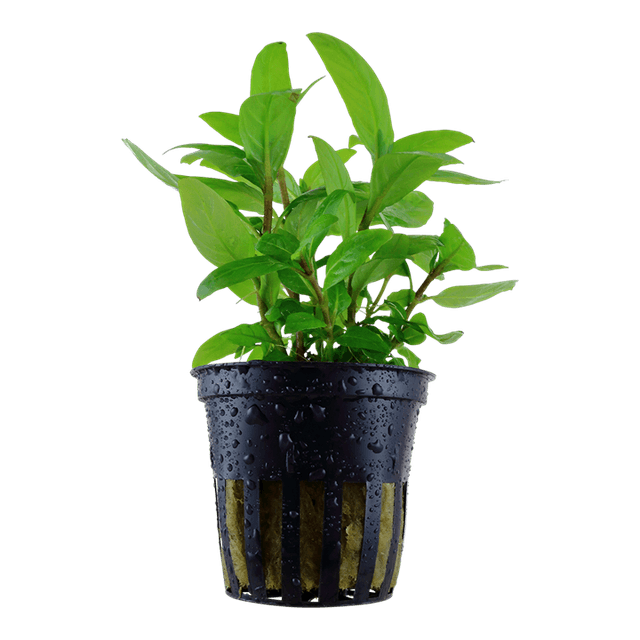
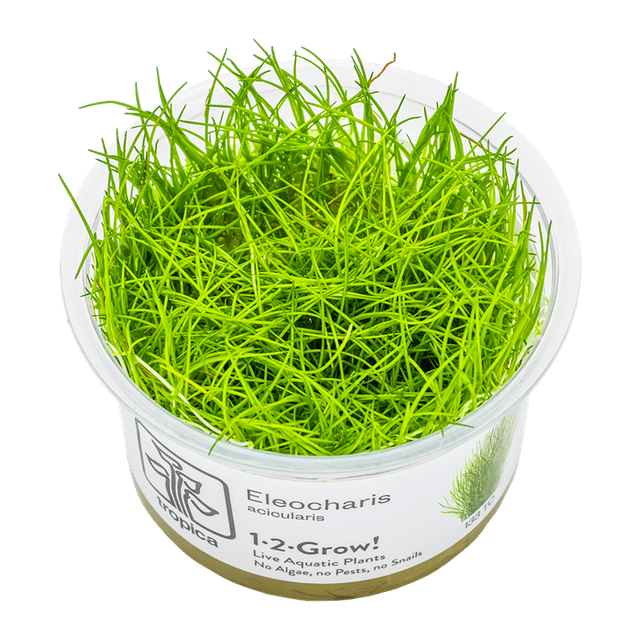
Suitable foreground plants are Staurogyne repens (3–10 cm, low light and CO2, medium growth), Helanthium tenellum 'Green' (5–15 cm, slow growth) and Eleocharis acicularis (10–15 cm), which forms fine hairlike carpets. Cryptocoryne parva is the smallest Cryptocoryne: slow growing, 5–10 cm, and by Tropica’s description it takes about six months to join into a lawn.
1-2-Grow cups hold plants grown from tissue culture in a closed cup, which Tropica states are free of snails and algae. In a small tank this matters even more, because one snail or algae spore can quickly become a problem. See the guide on 1-2-Grow cup plants for details.
4. Light in a small tank
Low to medium light is usually enough for a small tank. Stronger light speeds up the growth of plants and algae alike, and in a small volume algae are harder to bring back under control. Choose an LED light that matches the tank’s size and use a timer so the photoperiod is the same every day.
If you place plants on rocks and roots, light reaches them well and you do not need to enrich the substrate. In a tank with low plants light reaches the bottom easily, so it does not have to be strong.
5. CO2 in a small volume
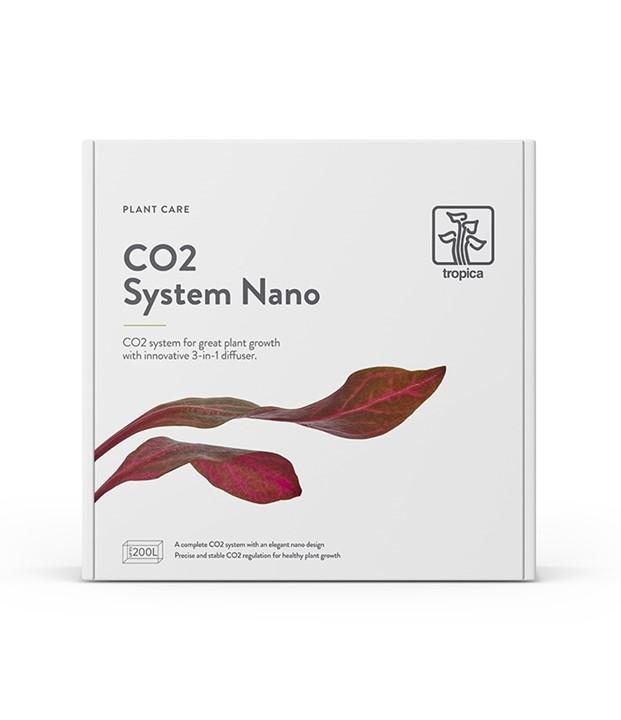
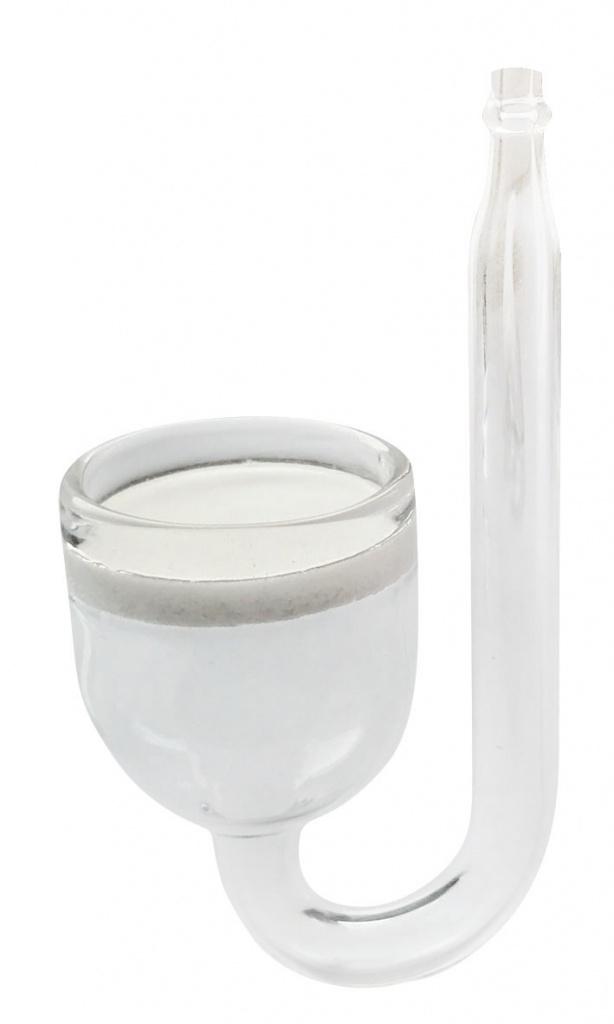
The Tropica plant-care page recommends System Nano for nano aquariums. The Tropica CO2 System Nano is a complete system for small aquariums: a disposable aluminium cylinder with 95 g of CO2, a regulator and a 3-in-1 diffuser. In a larger tank with more demanding plants a nano cylinder will not last long.
The Nano glass diffuser is very small and almost invisible in the water. In a small volume CO2 acts quickly, so start with a low dose and watch the fish. See also the guide to setting up CO2.
6. Care in a small volume
Water in a small tank changes faster than in a large one, so regular, calm maintenance matters more than big interventions. Change water more often and in small amounts, and use a conditioner so the new water suits fish and plants.
When fertilising, start with a small dose: nutrient levels rise quickly in a small volume and too much feeds algae. Slow-growing plants need little, so a small amount of liquid fertiliser is usually enough. Trim mainly Staurogyne and Eleocharis so they do not overgrow the others.
Nano aquarium plants: data from the product pages
| Plant | Height | Light / CO2 | Placement |
|---|---|---|---|
| Anubias barteri 'Petite' | 3–5 cm | low / low | on rock or wood |
| Anubias barteri 'Mini Coin' | 3–10 cm | low / low | on rock or wood |
| Bucephalandra 'Needle Leaf' | 3–5 cm | low / low | on rock or wood |
| Cryptocoryne parva | 5–10 cm | medium / low | foreground |
| Helanthium tenellum 'Green' | 5–15 cm | low / low | foreground |
| Staurogyne repens | 3–10 cm | low / low | foreground |
| Eleocharis acicularis | 10–15 cm | low / low | foreground |
Checklist
- Choose plants up to 15 cm tall.
- Prefer low light and low CO2 demand.
- Tie Anubias and Bucephalandra to rock; do not bury the rhizome.
- 1-2-Grow cups are the easiest choice for a small tank.
- Use a timer so the photoperiod stays the same.
- With CO2 start with a small dose and watch the fish.
- Trim and clean a little at a time so changes stay small.
Products for this guide
| Plant | Height | Light | CO2 | Growth | Difficulty | Placement |
|---|---|---|---|---|---|---|
| Anubias barteri 'Petite' | 3–5 cm | low | low | slow | easy | on rock or wood |
| Anubias barteri 'Mini Coin' | 3–10 cm | low | low | slow | easy | on rock or wood |
| Bucephalandra sp. 'Needle Leaf' | 3–5 cm | low | low | slow | medium | on rock or wood |
| Helanthium tenellum 'Green' | 5–15 cm | low | low | slow | easy | foreground |
| Staurogyne repens | 3–10 cm | low | low | medium | easy | foreground |
| Eleocharis acicularis | 10–15 cm | low | low | medium | easy | foreground |
Size, light and CO2 demand are manufacturer data; real results depend on your aquarium.
Frequently asked questions
Which plant suits the smallest aquarium?
By the data Anubias barteri 'Petite' and Bucephalandra 'Needle Leaf' stay 3–5 cm tall and grow slowly. Both are attached to rock or wood.
Does a nano tank need CO2?
Not necessarily: many of the species above are listed with low CO2 demand. For more demanding plants there is the Tropica CO2 System Nano.
Why pick 1-2-Grow cups?
Tropica states these plants are grown from tissue culture and are free of snails and algae. In a small tank this helps avoid problems.
How often should I change water in a nano tank?
The exact frequency depends on the number of fish and the plants, but in a small volume frequent small water changes work better. Always use a water conditioner.