1. How much and how often to feed
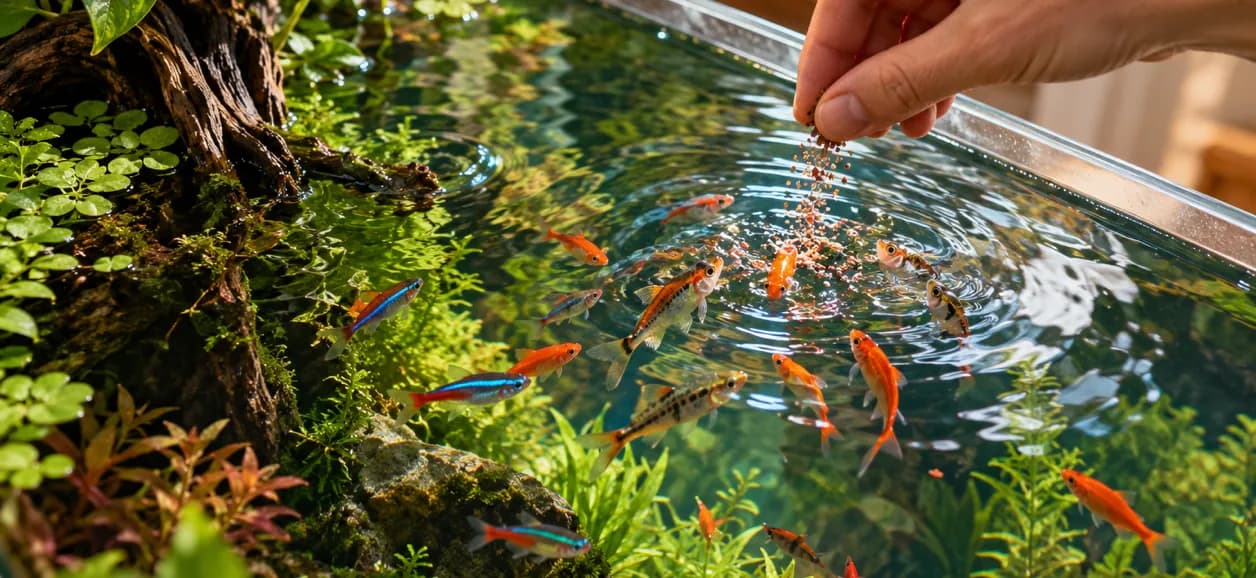
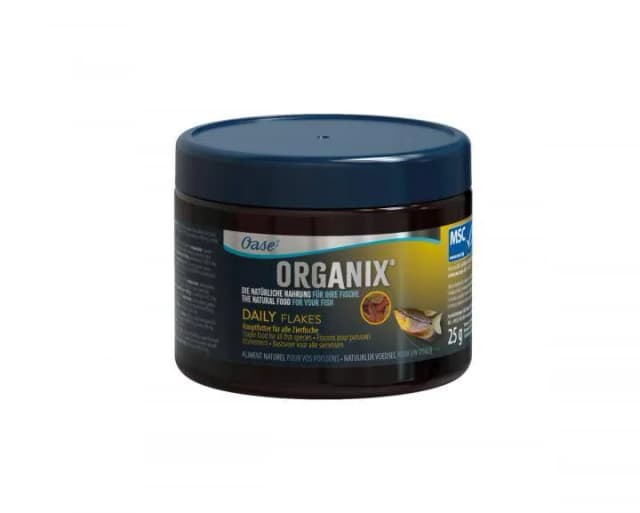
A common rule of thumb is to give as much food at a time as the fish eat within a couple of minutes. Adult fish are usually fed once or twice a day. For Organix Daily flakes, for example, the manufacturer recommends feeding 1–2 times a day.
Fish have small stomachs and are always ready to eat, so begging does not mean hunger. It is better to give less and add more if needed than to tip in a lot at once. If food is left on the bottom, the portion was too big and next time you should give less.
Young and growing fish often need more frequent feeding in small portions. Some species have particular needs: nocturnal bottom dwellers, for example, tend to eat after the lights go out. Check what your fish species need with the seller or a reliable source.
It is a good idea to always feed at the same time of day and in the same part of the tank. Fish learn the rhythm quickly and gather at the feeding spot. That lets you see at a glance whether all the fish are eating and active: feeding time is also the best moment to check on the fish every day.
2. Why overfeeding is risky
Uneaten food breaks down in the aquarium into ammonia, which bacteria turn further into nitrite and nitrate. If there is too much food, the biological filter cannot keep up. The water can turn cloudy, start to smell and become dangerous for the fish.
The extra nutrients also encourage algae. In many cases where a tank has an algae problem, one of the causes is overfeeding combined with too few water changes. Overfeeding is especially risky in a new aquarium, where the bacterial colony is still small.
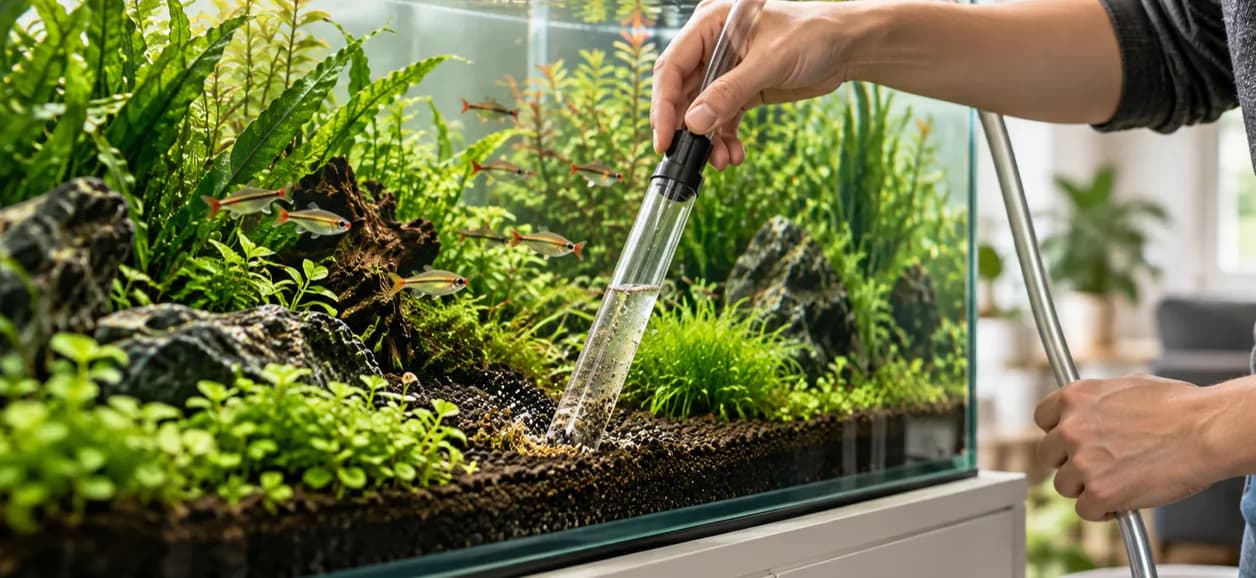
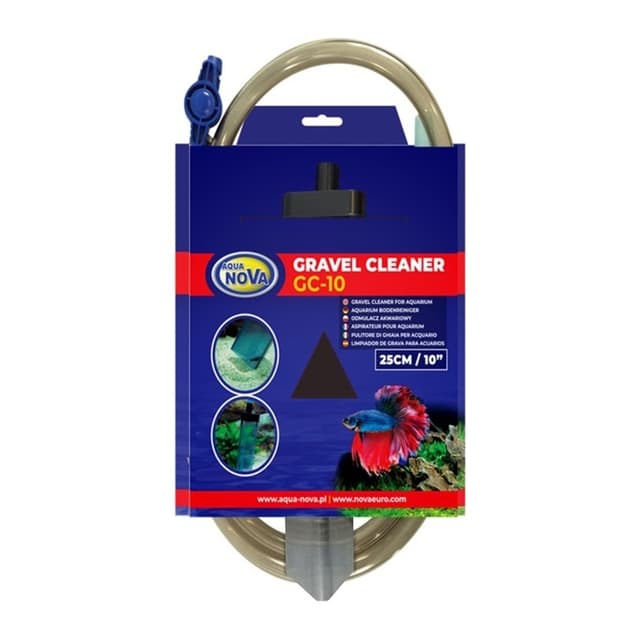
Remove food left on the bottom with a siphon or gravel cleaner. The Aqua Nova GC gravel cleaner has an adjustable valve and cleans the substrate during a water change. A cleaner substrate means less decaying matter and more stable water.
3. Food form: flakes, granules and tablets
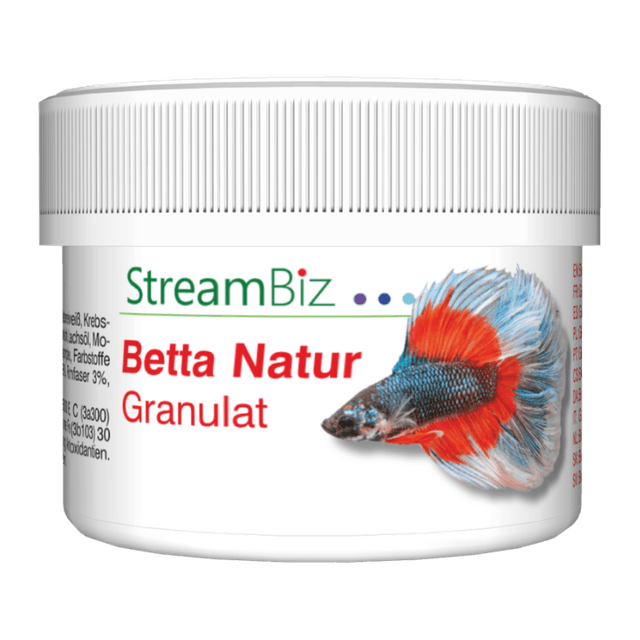
Choose food by where your fish eat. Surface feeders, such as bettas, take food from the water surface. According to the manufacturer, StreamBiz Betta Natural is a floating granule for bettas and other surface-feeding fish.
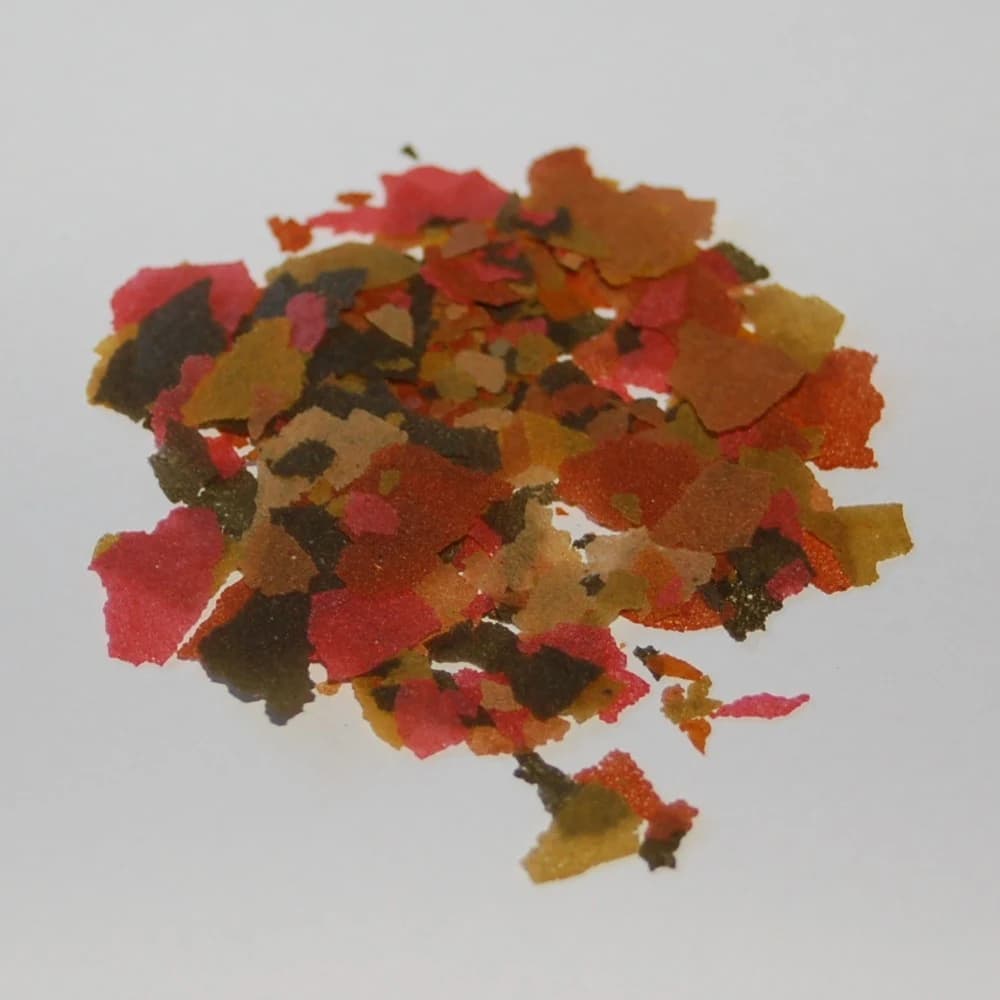
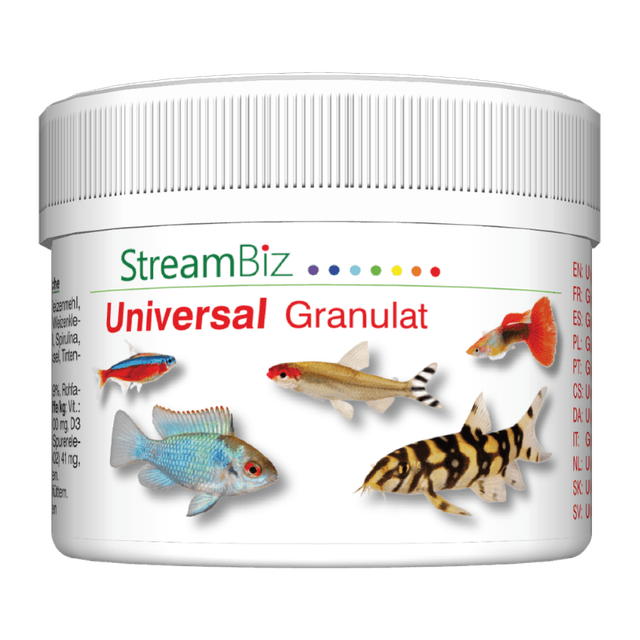
Schooling fish in the middle of the water column eat flakes and small granules well. Flakes float for a while and sink slowly; granules are more compact and cloud the water less. According to the manufacturer, StreamBiz Universal granules are a balanced food for tropical ornamental fish, sized to suit almost all fish.
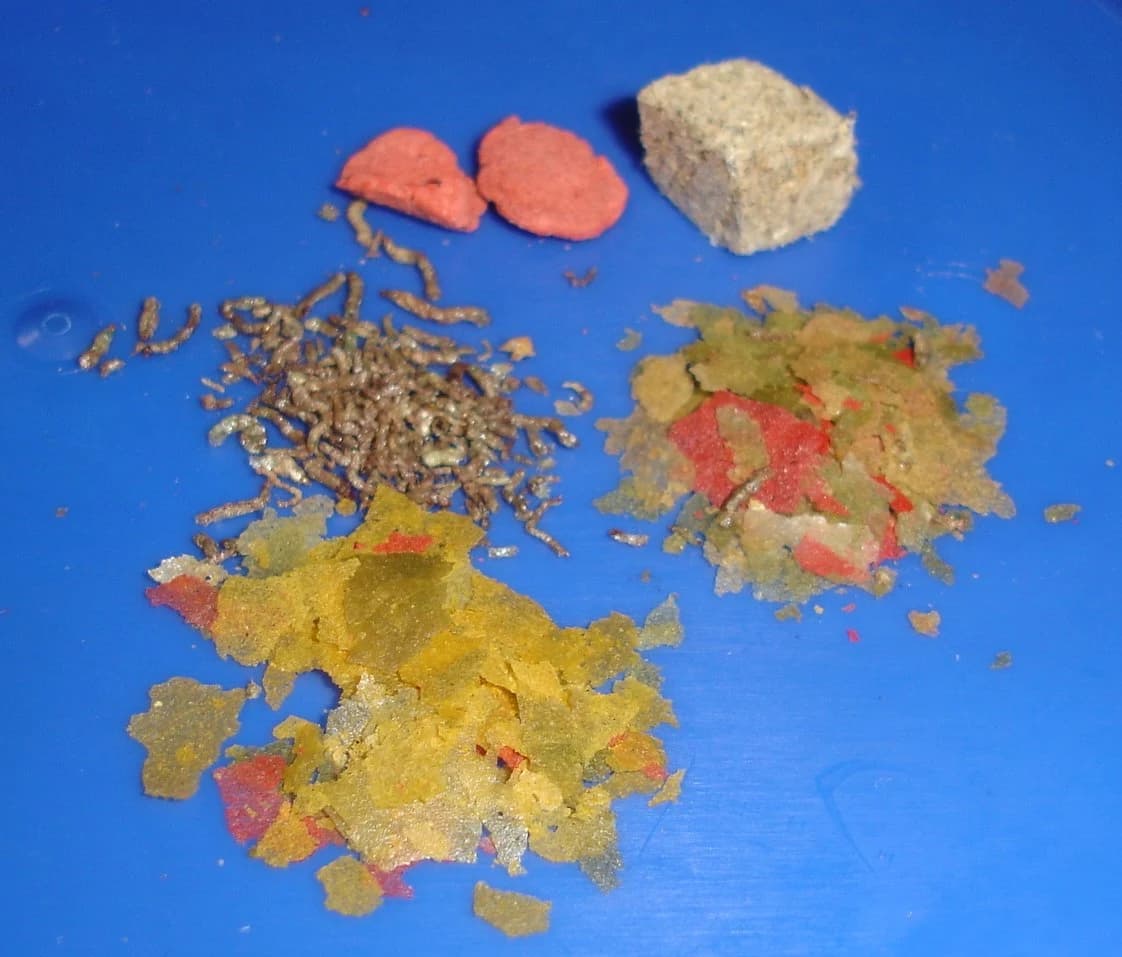
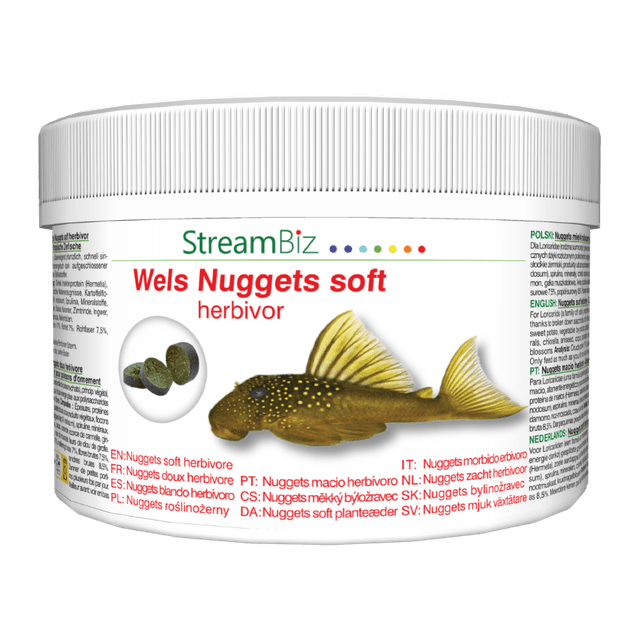
Bottom dwellers such as catfish and bristlenose plecos may not reach the surface or get to the food before the schooling fish. Sinking tablets suit them. According to the manufacturer, StreamBiz Catfish Nuggets Soft Herbivore are soft, fast-sinking nuggets for algae- and plant-eating catfish; there is a Carnivore version for carnivorous catfish.
Consider the size of the food too. Small fish have small mouths and leave large granules uneaten, which means the food sinks and rots. According to the manufacturer, Aquaforest Tiny Fish Feed is a fine-grained food for small ornamental fish. If the tank holds both small and large fish, scatter the food in several places at once so that the shyer fish get their share as well.
4. Variety, frozen-style foods and fry
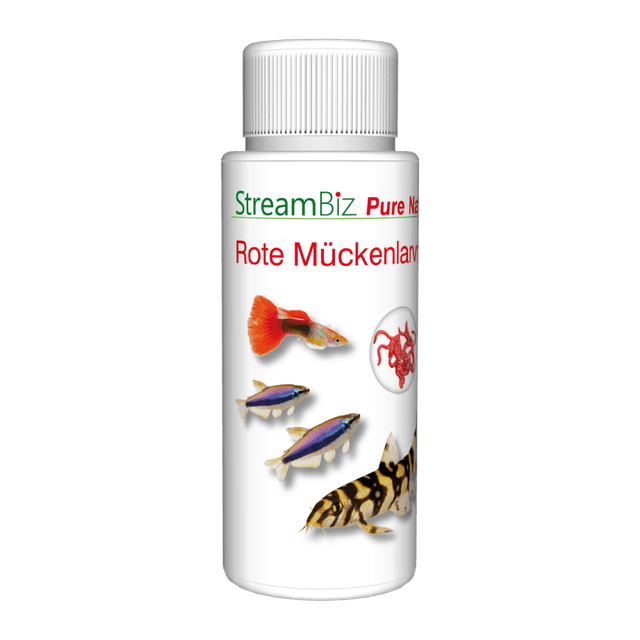
A good dry food can be the staple, but many aquarists offer some variety now and then. According to the manufacturer, StreamBiz Pure Nature red mosquito larvae come in a plant-based nutrient solution without preservatives and are stored like dry food, so nothing has to be thawed. The larvae are rinsed briefly in a sieve before feeding.
Herbivorous fish need a larger plant share, carnivorous fish more protein. Check the pack to see which fish a food is made for. When fish with different diets share a tank, two or three different foods are often used.
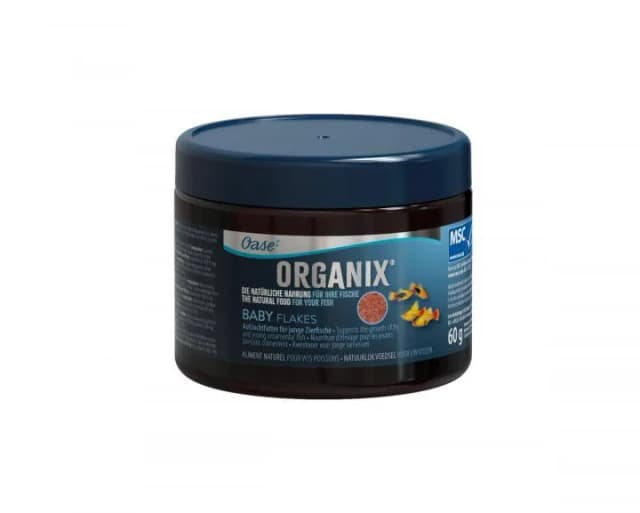
Fry need very fine food. According to the manufacturer, Organix Baby is a rearing food for young fish in the form of micro flakes that spreads quickly in the tank. Fry are fed often and in very small amounts, and water changes matter especially in their tank.
5. Feeding while you are away
Many healthy adult fish cope well with a few days without food, especially in a mature planted tank where some natural food is available. For a short trip there is often nothing more to do than a proper water change before you leave. Fry and young fish, however, need regular food.
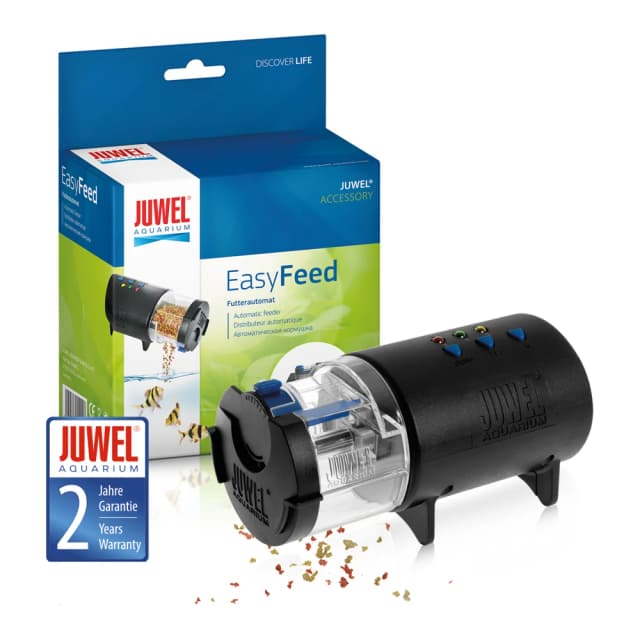
For longer trips an automatic feeder helps. According to the manufacturer, the Juwel EasyFeed can be programmed for two feeds a day, holds food for up to 60 feeds and works best with granules. Try the feeder for a couple of days before your holiday and check that the portion is the right size and no food is left on the bottom.
If you ask someone to feed the fish, leave ready-measured portions, for example in small boxes labelled by day. That way no one can give too much food out of kindness.
6. Storing food and common mistakes
Keep food in a dry, cool place and close the tub after use. Moisture and warmth spoil food faster. Rather buy a pack you can use up within a reasonable time, and do not keep the tub on the aquarium lid, where it is warm and damp. Check the shelf life on the pack and follow the manufacturer's instructions.
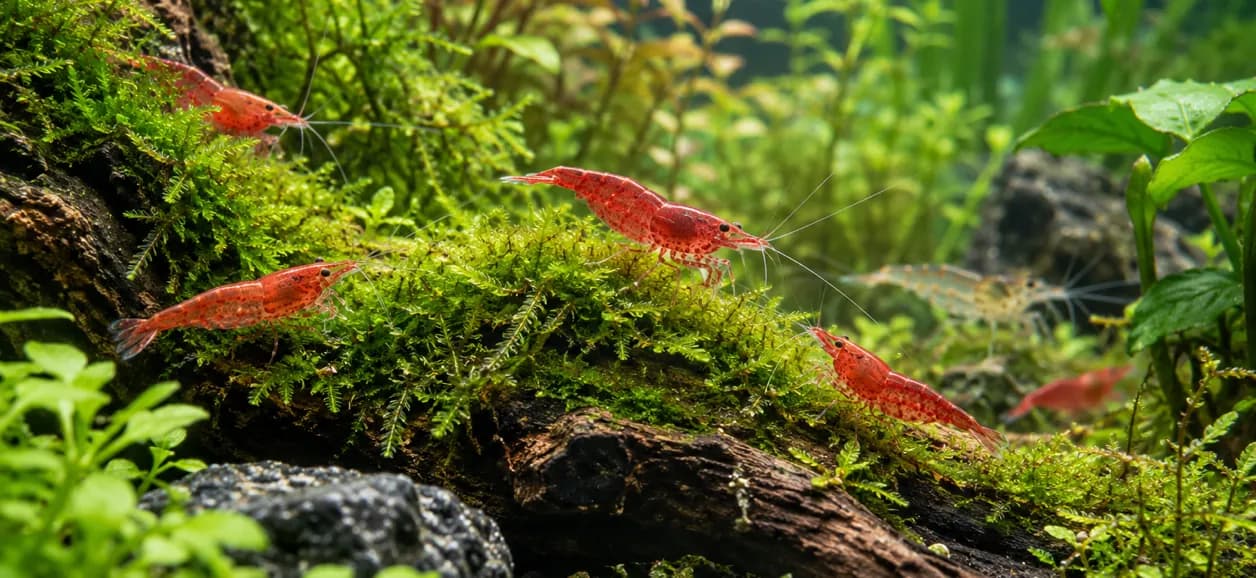
Common mistakes are feeding every time the fish come to the glass, overfeeding a new aquarium, forgetting the bottom dwellers and giving one food to all fish regardless of their diet. If shrimp or snails share the tank, they often eat some of the fish's leftovers; take that into account when sizing portions and do not add extra food for them.
Food is one part of fish welfare, but it does not replace clean water or a suitable environment. If a fish does not eat for several days in a row or behaves unusually, check the water values and temperature first, and ask a specialist for advice if needed.
Which food to choose
| Where the fish eat | Food form | Example from the shop |
|---|---|---|
| At the surface (e.g. bettas) | Floating granules | StreamBiz Betta Natural |
| Mid-water (schooling fish) | Flakes, small granules | Organix Daily, StreamBiz Universal |
| On the bottom (catfish, plecos) | Sinking tablets | StreamBiz Catfish Nuggets |
| Fry | Micro flakes, artemia nauplii | Organix Baby, StreamBiz Pure Nature |
| Variety | Mosquito larvae, brine shrimp | StreamBiz Pure Nature |
Checklist
- Give as much as the fish eat in a couple of minutes
- Feed adult fish 1–2 times a day
- Choose food by where the fish eat
- Do not forget the bottom dwellers
- Remove food left on the bottom
- Feed especially sparingly in a new tank
- Test the automatic feeder before your holiday
- Keep food dry and closed
Products for this guide
from€5.99
from€8.99
from€11.99
Unit price: €133.22 / kg
€15.99
Unit price: €159.90 / l
€6.99
Unit price: €116.50 / kg
from€11.99
Frequently asked questions
How often should aquarium fish be fed?
Adult fish usually once or twice a day, as much as they eat in a couple of minutes. Fry and young fish are fed more often in small portions.
Can fish go a few days without food?
Many healthy adult fish cope with a short break, especially in a mature planted tank. For fry, young fish or a longer absence, use an automatic feeder or ask someone to help with measured portions.
What happens if I overfeed the fish?
Uneaten food breaks down, raises ammonium and nitrate levels and encourages algae. The water can turn cloudy. Reduce the portion, remove leftovers and do a water change.
Do bottom dwellers get food if I feed flakes?
Not always, because schooling fish eat the flakes before they reach the bottom. Give bottom dwellers sinking tablets, preferably after the lights go out.