1. Why a pump when there is a filter
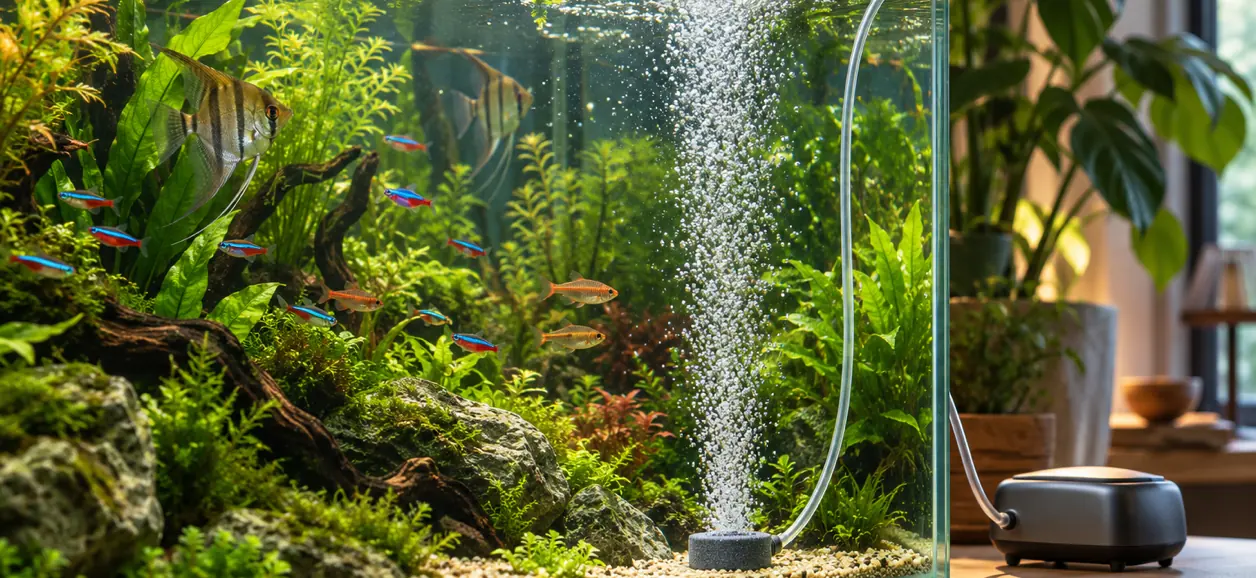
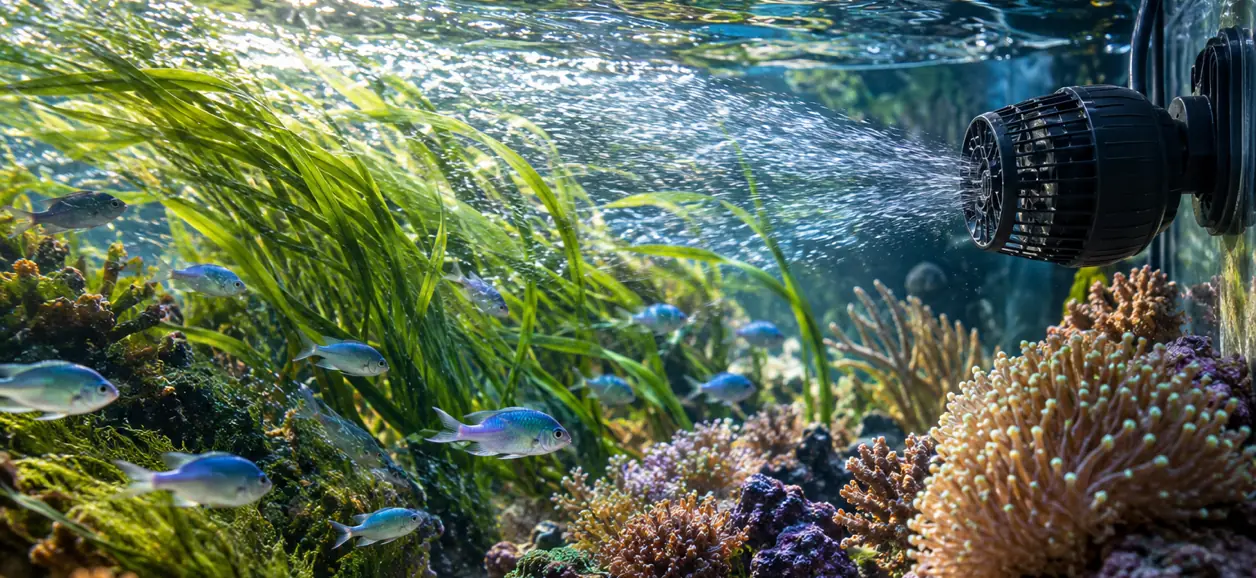
Every filter has its own pump, but its flow may not reach every corner of the tank. An extra pump moves the water where the filter flow does not reach. According to the description of the AquaEL Circulator, the water then gets enough oxygen and its parameters stay the same throughout the aquarium.
A pump can also lift water and drive equipment. A small in-line pump pushes water through an external filter, a cooler, a steriliser or a protein skimmer. In a marine aquarium flow matters even more, because corals and fish need strong and changing flow.
2. Flow rate and head
Pump flow is given in litres per hour (l/h). Head tells you how high the pump can lift water. The higher the water has to be lifted and the longer the hose, the less water the pump actually delivers; at the maximum head given by the manufacturer the flow stops.
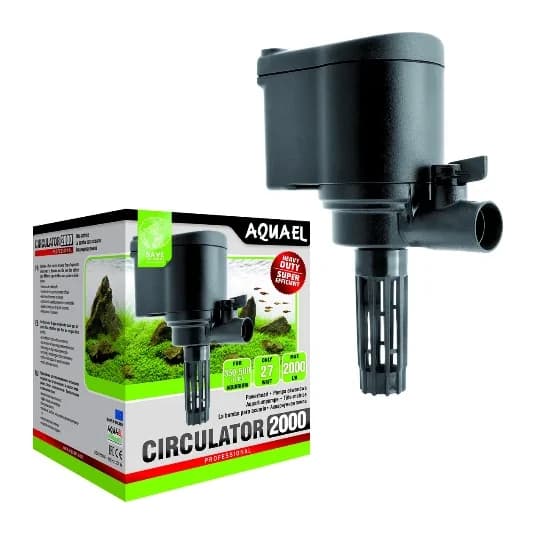
Many manufacturers also give the matching tank volume. According to the manufacturer, the AquaEL Circulator 1000 is for 150–250 litres (1000 l/h, head 110 cm), the Circulator 1500 for 250–350 litres (1500 l/h, 160 cm) and the Circulator 2000 for more than 350 litres (2000 l/h, 190 cm). Choose the pump from the manufacturer's table and prefer a model with adjustable flow.
3. Circulation pump for a freshwater tank
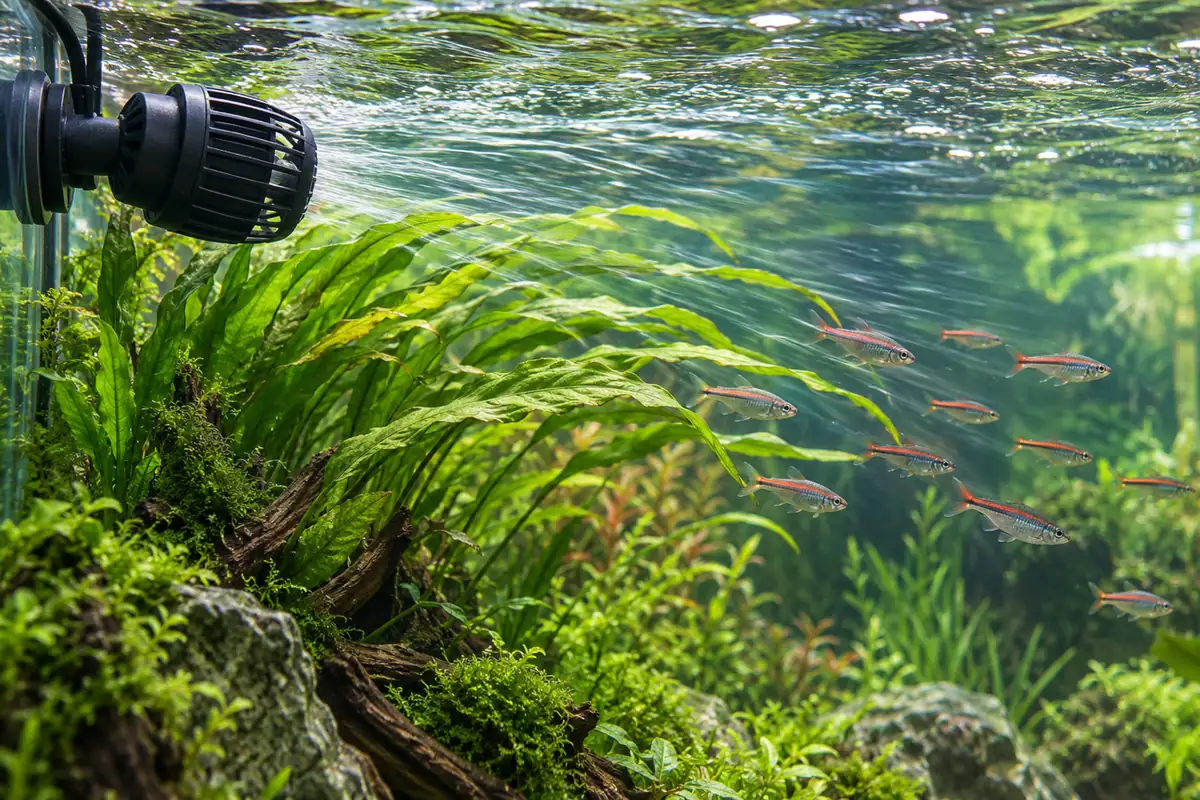
A circulation pump is fixed to the aquarium glass and directs the flow. According to the manufacturer, the flow of the AquaEL Circulator can be turned up to 120°, and its shock-absorbing suction cups reduce vibration on the glass. The pump can also drive biological and undergravel filters.
The Aqua Nova NPH power head gives 1300 or 1800 l/h, and its ceramic shaft suits both freshwater and marine tanks. The OASE StreamMax Classic 5000 gives up to 5000 l/h; the flow angle is changed with an adapter and the flow rate is infinitely adjustable. In a tank with shrimp and small fish use an intake guard: the OASE StreamMax suction protection keeps shrimp, fish and corals away from the pump's intake slots.
4. In-line pumps and filter pumps
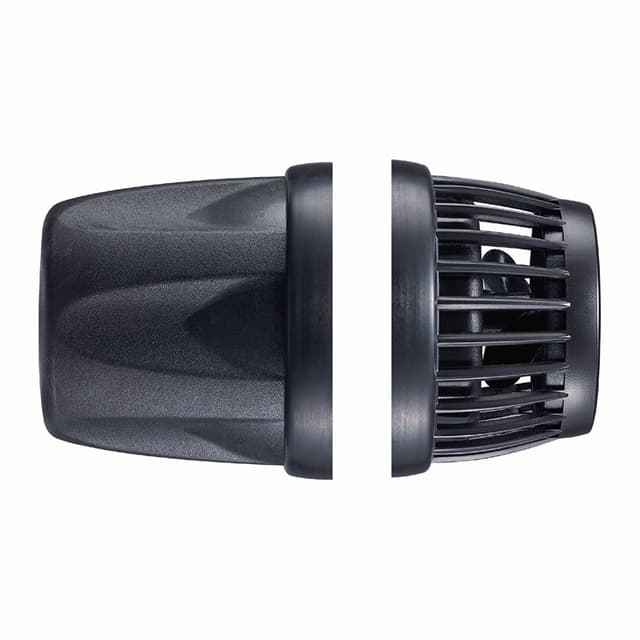
According to the manufacturer, the AquaEL Unipump works both fully submerged and outside the water, connected between hoses. The Unipump 700 gives 700 l/h (9.5 W, hose 14/16 mm) and runs on 12 V low voltage through an adaptor. The Unipump 1000 gives 1000 l/h (15 W, hose 16/22 mm) and needs 230 V. Both have a maximum head of 145 cm.
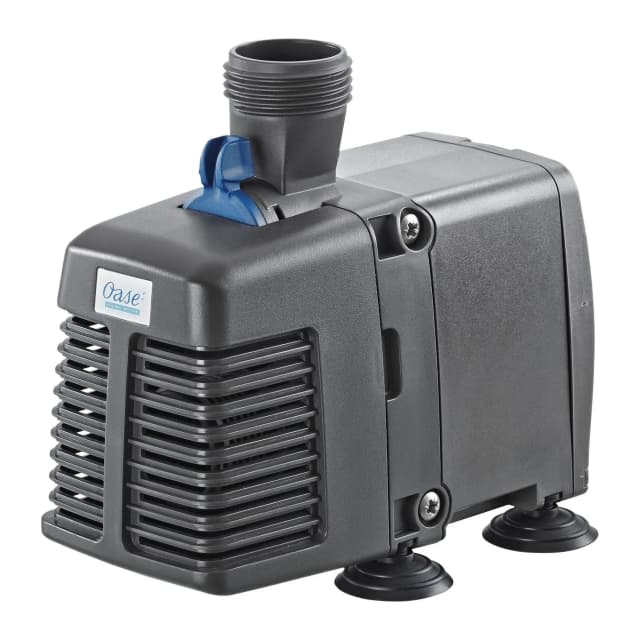
The OASE OptiMax is a multi-purpose pump for moving water or running a filter. It comes in sizes from 300 to 5000 l/h, works under water or installed dry, and the flow rate is continuously adjustable.
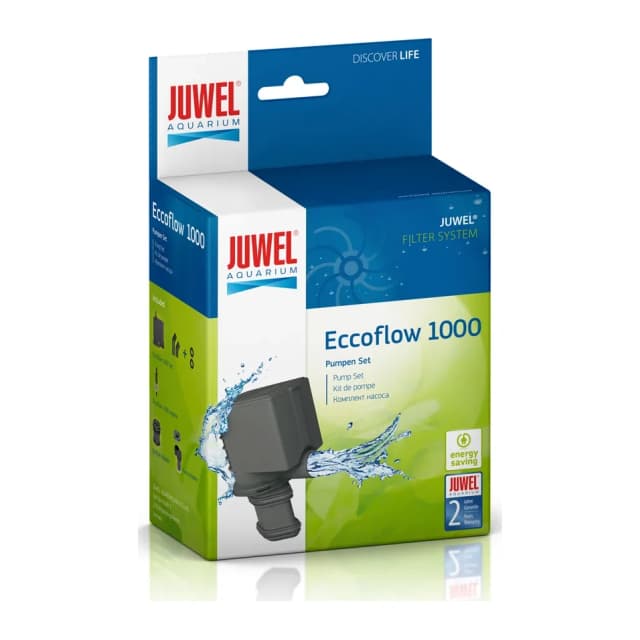
In Juwel aquariums the internal filter is driven by an Eccoflow pump: the Eccoflow 500 gives 500 l/h (5.5 W), the Eccoflow 600 600 l/h (7 W) and the Eccoflow 1000 1000 l/h (8 W). The manufacturer's table shows which pump suits your Juwel aquarium. Juwel recommends cleaning the pump regularly and replacing the impeller, axle and rubber bearings every 12 months.
5. Wave pump for a marine tank
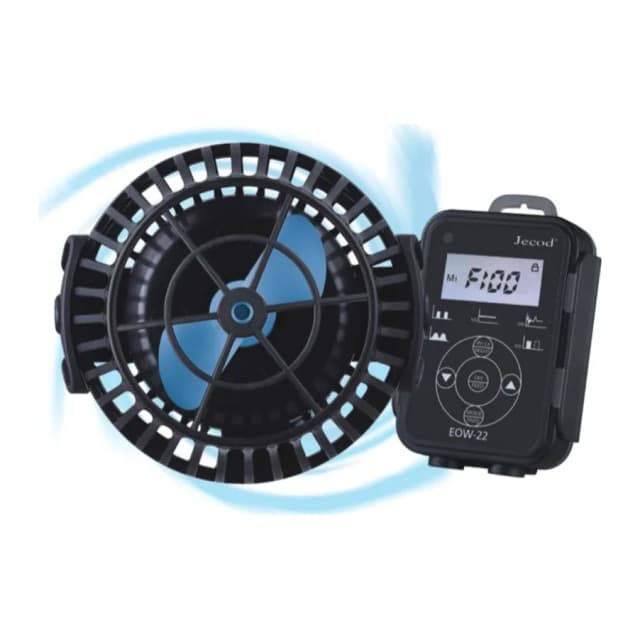
A wave pump creates changing flow and waves. Jecod EOW pumps are chosen from the manufacturer's table: the EOW-3M is for 75–150 litres (500–3000 l/h), the EOW-5M for 150–225 litres, and the larger models up to 570 litres. The pump is controlled with an LCD controller or a Wi-Fi app.
With the Aqua Nova NWA all electrical parts stay outside the aquarium. It has five modes, a dusk sensor lowers the flow at night, and the FEED button stops the pump for 10 minutes while you feed. According to the manufacturer, the NWA suits both freshwater and marine tanks and attaches with a magnet.
6. Installation and care
Place a circulation pump so the flow moves water through the whole tank but does not move the substrate or bend the plants. According to the manufacturer, the AquaEL Unipump is small enough to fit in an aquarium, a sump or a cabinet. The OASE StreamMax Classic attaches with four suction holders; a magnetic bracket is available separately.
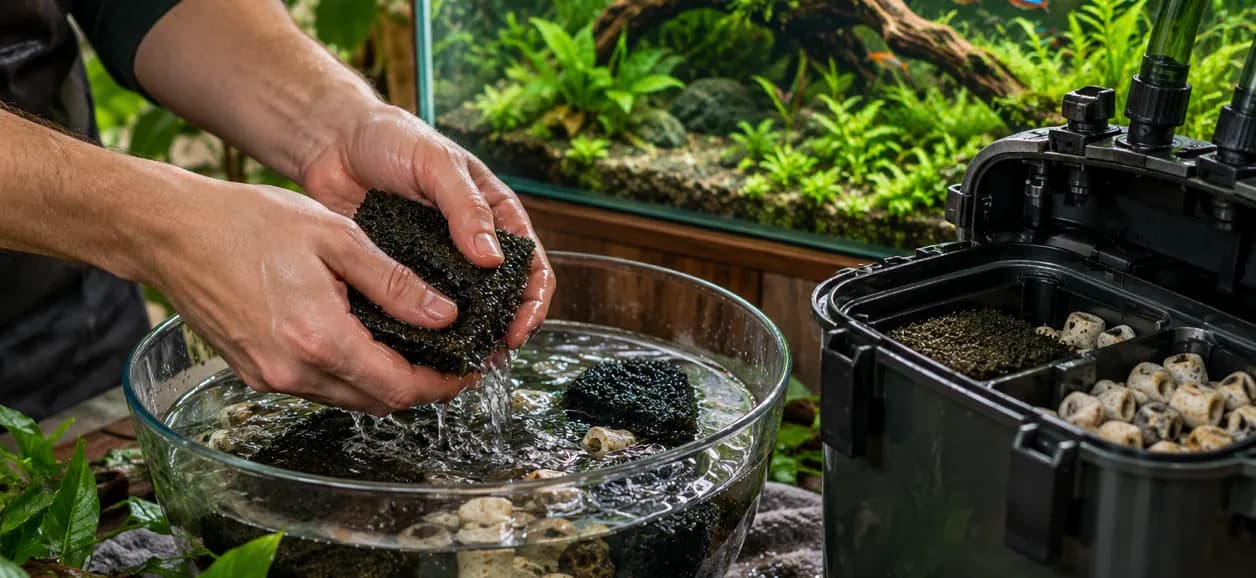
In the Juwel Eccoflow pump a bypass flow keeps the impeller chamber clean continuously. Juwel allows 6–8 weeks for a new filter to run in, so do not replace all filter media at once, and rinse filter sponges in aquarium water, not under the tap.
Pumps and what they are for (manufacturer data)
| Pump | Type | Flow | Use |
|---|---|---|---|
| AquaEL Circulator | Circulation pump | 1000–2000 l/h | 150 l to over 350 l |
| Aqua Nova NPH | Power head | 1300 or 1800 l/h | Freshwater and marine |
| OASE StreamMax Classic 5000 | Circulation pump | Up to 5000 l/h | Freshwater and marine |
| AquaEL Unipump | In-line pump | 700 or 1000 l/h | External filter, cooler, skimmer |
| OASE OptiMax | Multi-purpose pump | 300–5000 l/h | Moving water or a filter |
| Juwel Eccoflow | Filter pump | 500–1000 l/h | Juwel internal filter |
| Jecod EOW | Wave pump | 500–22,000 l/h | 75–570 l |
Checklist
- Choose the pump from the manufacturer's table for your tank volume
- Allow for the head and the hose length
- Prefer a pump with adjustable flow
- Use an intake guard in a tank with shrimp
- Aim the flow so it does not move the substrate or bend the plants
- Clean the pump regularly
- Replace wear parts when the manufacturer advises
Products for this guide



Frequently asked questions
What is the difference between a circulation pump and a wave pump?
A circulation pump gives a steady flow that you can aim and adjust. A wave pump changes the strength and rhythm of the flow by the controller's modes, which is common in marine tanks.
Can a pump run outside the water?
Only if the manufacturer allows it. According to the manufacturers, the AquaEL Unipump and OASE OptiMax work both under water and installed dry, connected between hoses.
How often should a pump be cleaned?
Follow the manufacturer's instructions. Juwel recommends cleaning the Eccoflow pump regularly and replacing the impeller, axle and rubber bearings every 12 months.