
1. What an air pump is for
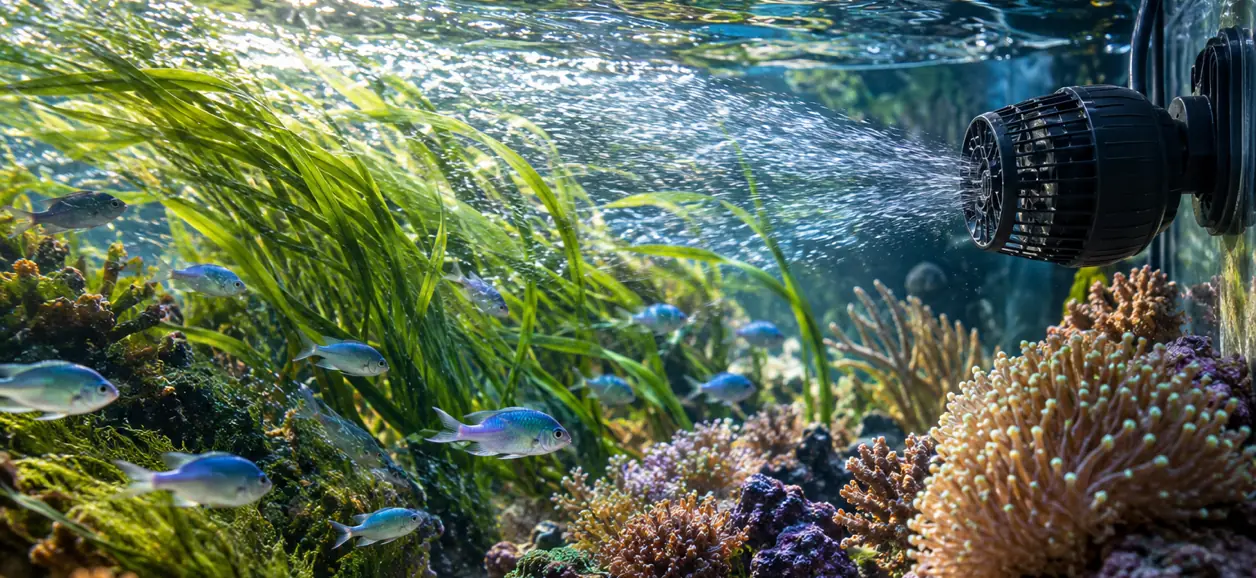
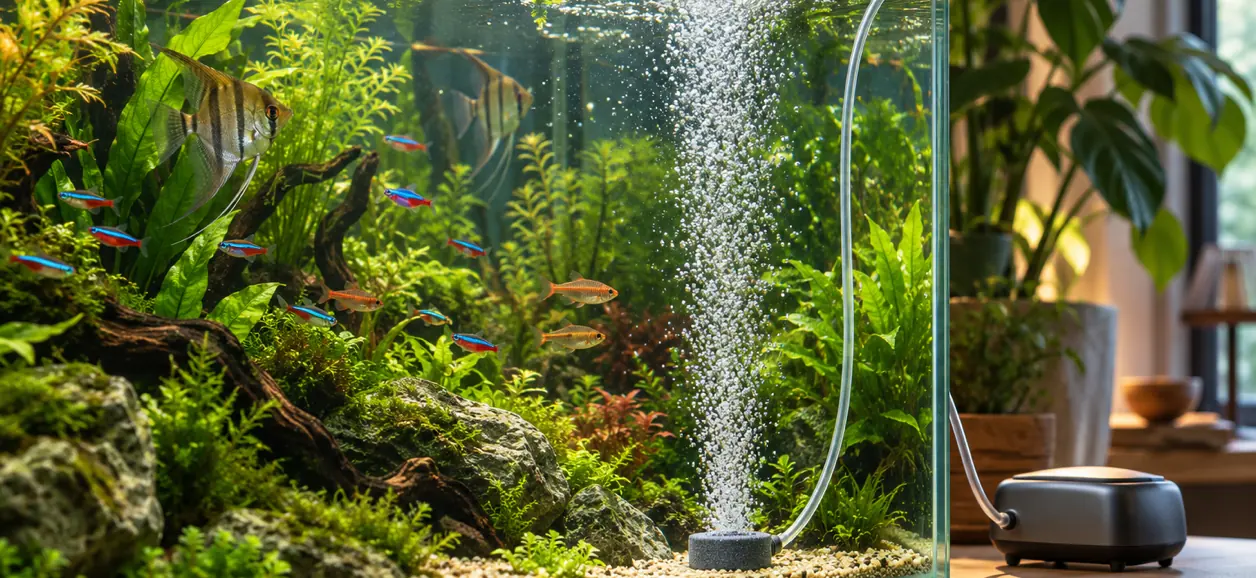
An air pump pushes air along a tube to an air stone, which breaks it into small bubbles. The rising bubbles move the water and the surface, and gas exchange happens at the surface: the water takes up oxygen. AquaEL recommends an air pump in every freshwater aquarium, even when the filter does part of the aeration.
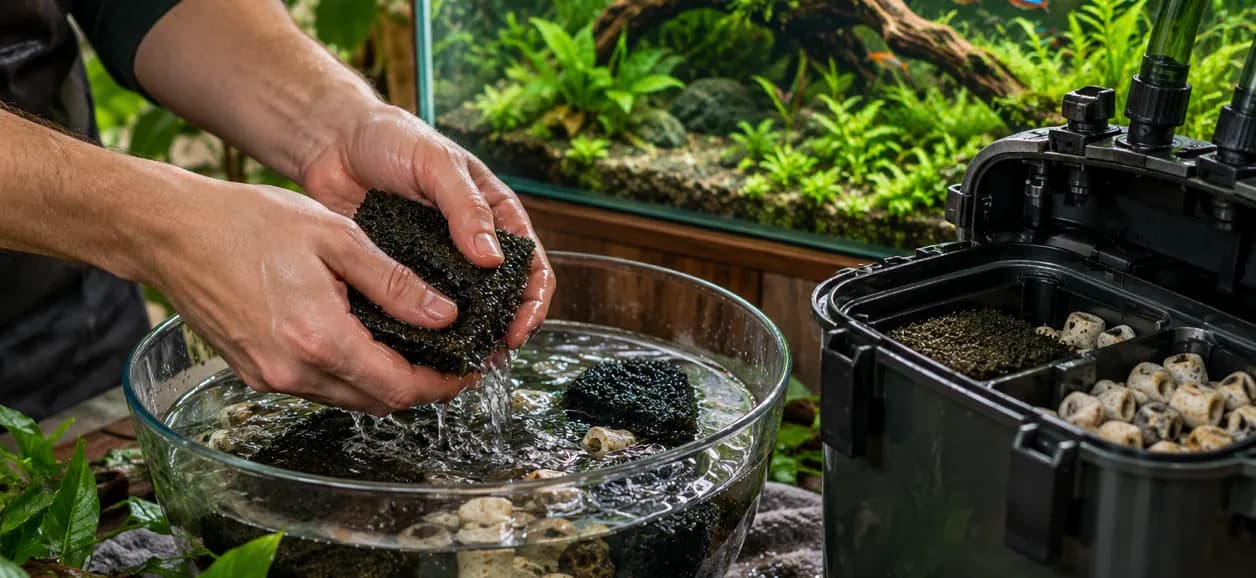
An air pump also drives a sponge filter. In a shrimp tank and when raising fry a sponge filter is a common choice, because it does not suck in small animals. Air pumps also suit undergravel filters and, in a marine tank, a simple tube protein skimmer.
2. Output by tank volume
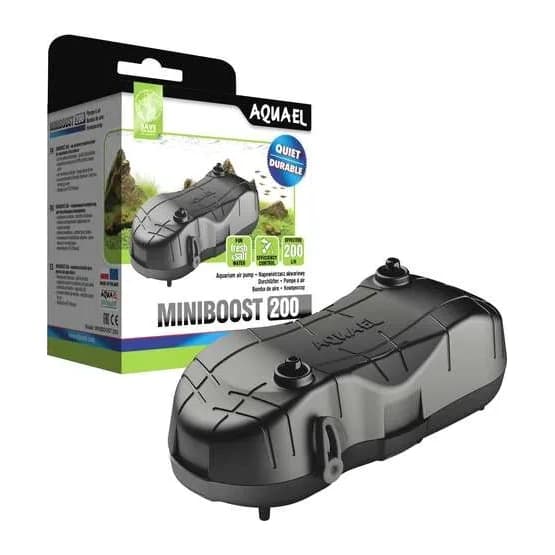
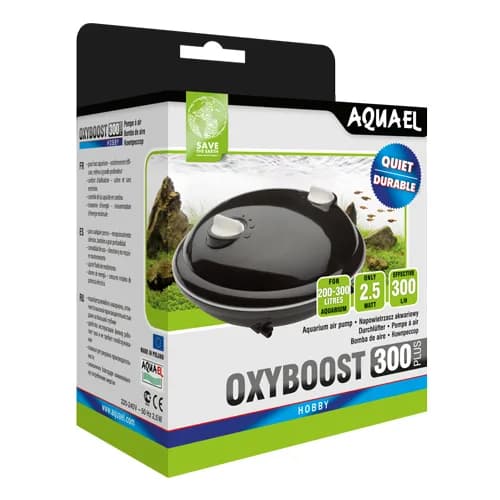
Air pump output is given in litres per hour (l/h), and the manufacturer states which aquarium the pump suits. The AquaEL Miniboost 100 is made for aquariums up to 100 litres and gives 100 l/h. The Miniboost 200 suits 150–200 litres and has two outlets of 100 l/h each. According to the manufacturer, the Oxyboost APR 150 Plus is for 100–150 litres and the APR 300 Plus for 200–300 litres.
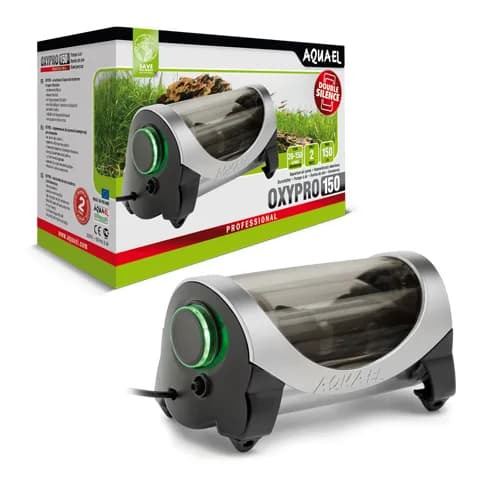
Take depth into account too. The deeper the air stone, the more pressure the pump needs. The manufacturer gives the maximum depth: the Miniboost 100 and APR 150 Plus push air down to 60 cm, the Miniboost 200 and APR 300 Plus to 70 cm, and the AquaEL OxyPro 150 to 2 m.
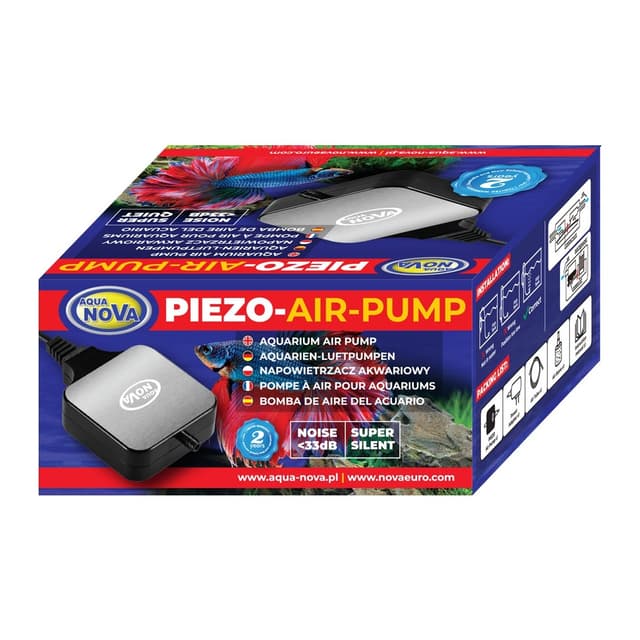
A small aquarium or a shrimp tank needs little air. The Aqua Nova Piezo gives 18 or 36 l/h at 1.5 W; according to the manufacturer that is enough for small and medium aquariums. For a large tank with many fish there is the Aqua Nova Airbox Silent 600, which gives up to 600 l/h.
3. Noise and placement
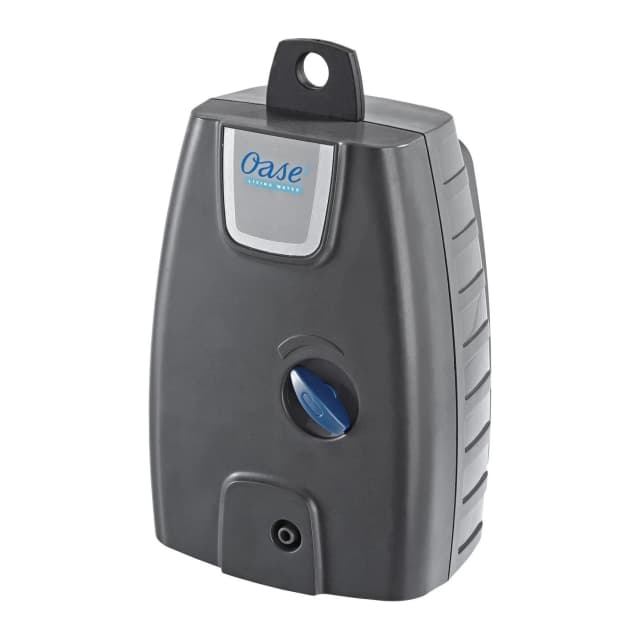
Most aquarium air pumps are diaphragm pumps: an electromagnet moves a membrane that pushes the air. Such a pump can vibrate, so models handle it in different ways. According to the manufacturer, the double housing of the AquaEL OxyPro 150 damps noise and vibration, the rubber feet of the Aqua Nova NA reduce vibration, and the OASE OxyMax 100 can stand or hang.
A piezo pump works on a different principle. According to the manufacturer, the Aqua Nova Piezo is virtually inaudible and free of the vibration of diaphragm pumps, but it gives less air. If the pump stands in a bedroom, that is an important choice.
Put the pump on a stable surface. If the pump sits below the aquarium water level, be sure to fit a check valve on the airline.
4. Airline, check valve and manifold
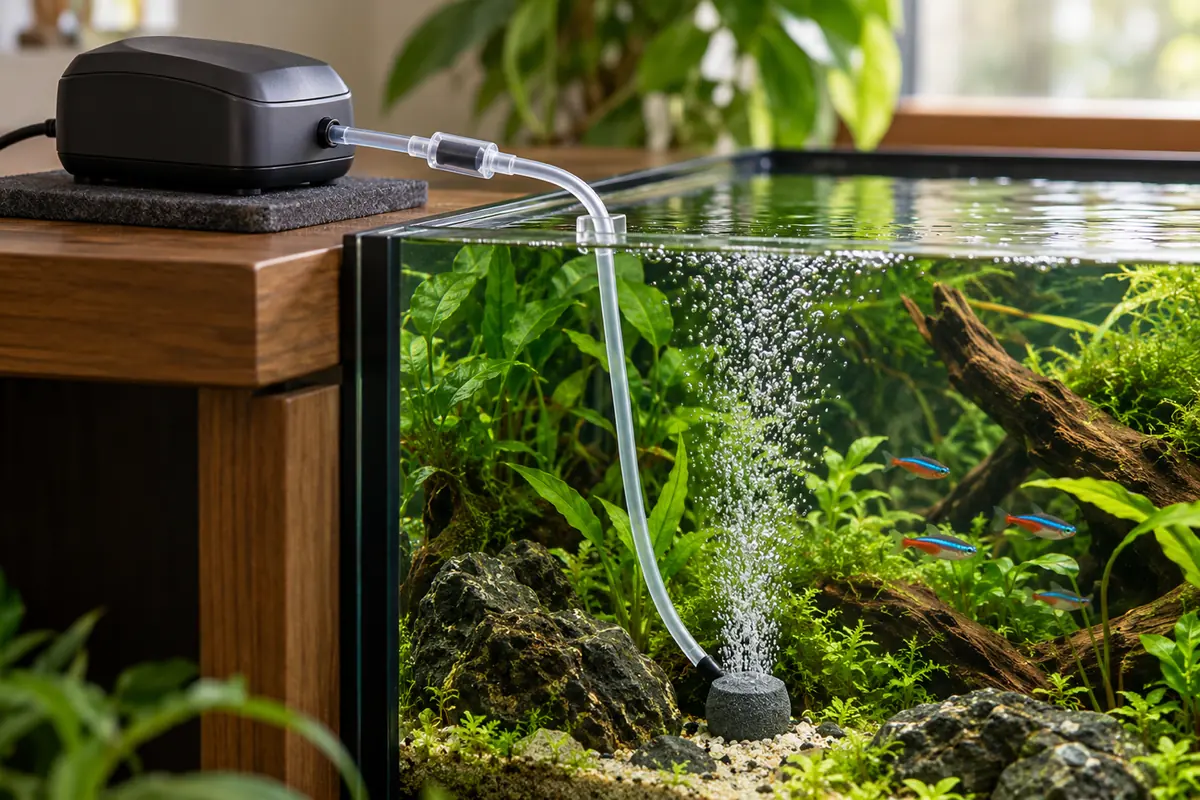
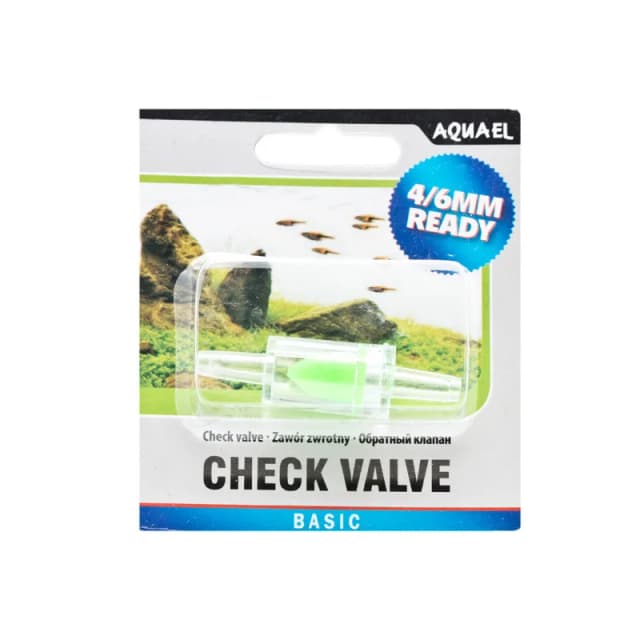
Aquarium air pumps usually use 4/6 mm airline, such as the AquaEL Airline 3 m. A check valve stops water from flowing back along the airline towards the pump when the pump stops. The AquaEL Check Valve is fitted between the pump and the aquarium so that it lets air pass from the pump towards the tank. Aqua Nova also advises a valve for its NA pumps.
If one pump has to supply several points, use a manifold. The Aqua Nova steel air valve has three or four outlets, each with its own tap to set the air flow. A pump with two outlets, such as the Miniboost 200 or APR 300 Plus, can feed two lines without a manifold.
5. Air stones and air bars
An air stone breaks the air into small bubbles. The AquaEL sphere air stone is 20 or 30 mm across and fits straight on the tubing. The Aqua Nova air stone disc is 75, 100 or 125 mm across and, according to the manufacturer, is made for large aquariums and ponds.
An air bar gives an even curtain of bubbles. The straight Aqua Nova AB air bar comes in five lengths from 45 to 105 cm and the flexible AC air curtain in four lengths from 60 to 120 cm, so you can choose by the length of the tank.
The NEO Diffuser Special Curved Air Green M is a diffuser with an acrylic body and a ceramic stone for air pumps and low-pressure CO2 systems, made for aquariums of 100–200 litres according to the manufacturer. Its flexible U-bend holds the 4/6 mm tubing at the rim so it does not kink.
If the bubbles get bigger or less air comes out, check the air stone and the tubing. AquaEL makes the Oxyboost pumps in Poland, and according to the manufacturer their membranes are available as spare parts.
Air pumps by aquarium volume (manufacturer data)
| Pump | Aquarium | Air output | Power |
|---|---|---|---|
| Aqua Nova Piezo | Small and medium | 18 or 36 l/h | 1.5 W |
| AquaEL Miniboost 100 | Up to 100 l | 100 l/h | 1.8 W |
| AquaEL Oxyboost APR 150 Plus | 100–150 l | 150 l/h | 2.2 W |
| AquaEL OxyPro 150 | Up to 200 l | 150 l/h | 2 W |
| AquaEL Miniboost 200 | 150–200 l | 2 × 100 l/h | 2.4 W |
| AquaEL Oxyboost APR 300 Plus | 200–300 l | 2 × 150 l/h | 2.5 W |
| Aqua Nova Airbox Silent 600 | Medium and large | Up to 600 l/h | 8 W |
Checklist
- Choose the pump by tank volume from the manufacturer's table
- Check how deep the pump can push air
- Fit a check valve between the pump and the aquarium
- Use 4/6 mm airline
- For several lines choose a two-outlet pump or a manifold
- Choose the air stone or air bar by tank size
- Put the pump on a stable surface
Products for this guide


Frequently asked questions
Is an air pump needed if the aquarium has a filter?
AquaEL recommends an air pump in every freshwater aquarium even when the filter does part of the aeration. With a sponge filter an air pump is required, because it is what drives the filter.
What is the check valve for?
It stops water from flowing back along the airline towards the pump when the pump stops, for example during a power cut. Fit the valve between the pump and the aquarium in the right direction.
Are there quiet air pumps?
According to the manufacturers, a piezo pump such as the Aqua Nova Piezo is virtually inaudible but gives less air. Among diaphragm pumps, the AquaEL OxyPro 150 has a double housing that damps noise and vibration.