1. Does an aquarium need a heater
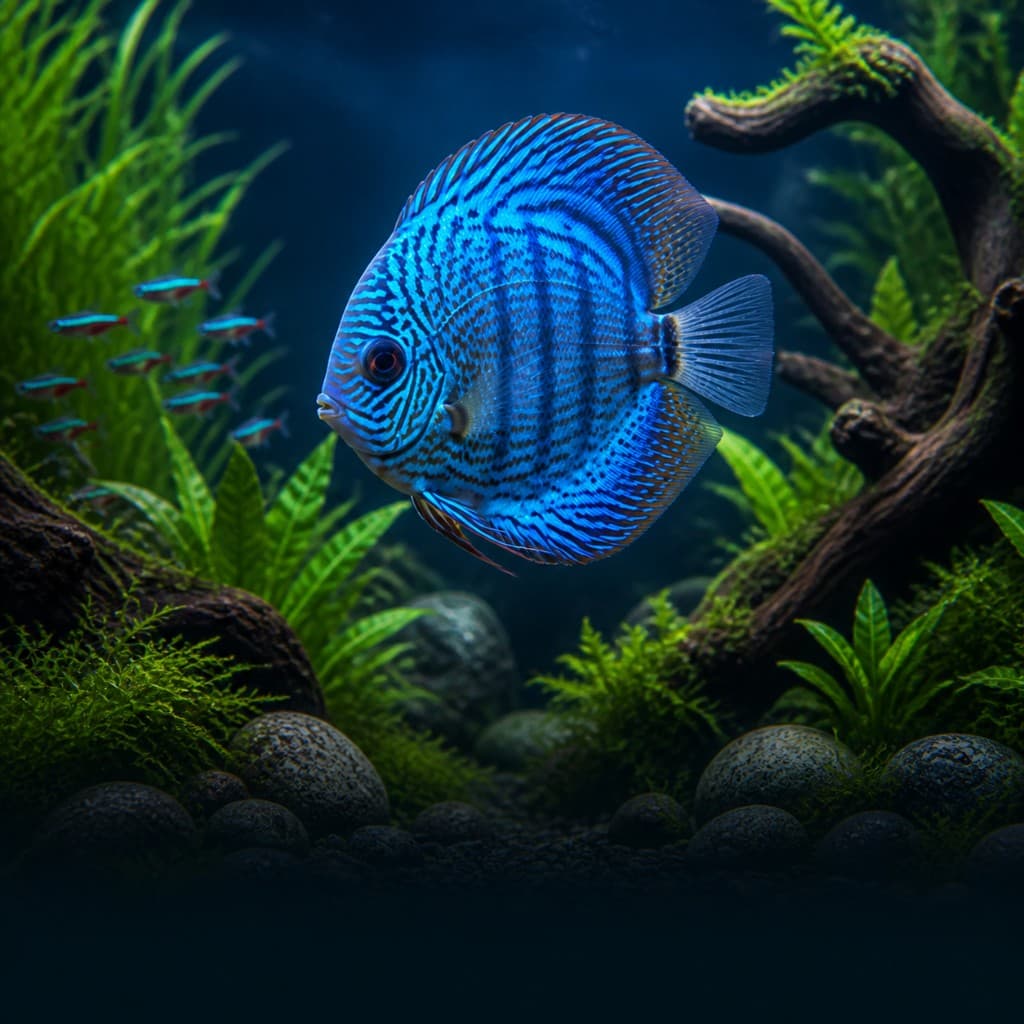
Most tropical fish and plants kept in aquariums prefer a stable temperature, usually around 24–26 °C. In an Estonian flat the room temperature is often lower, and it can swing at night and at the start of the heating season. A heater keeps the water at an even temperature even when the room cools down.
Not every animal needs a heater. Some fish and shrimp cope at room temperature, and goldfish prefer cooler water. Before you buy, check what temperature the species you have chosen need, and pick the equipment to match.
What matters is stability, not a high number. Sudden temperature changes, for example a water change with cold water or a tank standing next to a window, are harder on fish than being a couple of degrees off the ideal. A heater and a thermometer help to avoid these swings.
2. How powerful a heater to choose
Wattage is chosen by tank volume, and manufacturers publish a table for it. According to its manufacturer's table, the AquaEL Platinium is 25 W for 10–25 litres, 100 W for 60–100 litres and 200 W for 130–200 litres. That is where the common rule of thumb comes from: about one watt per litre.
The rule of thumb does not take the room temperature into account. If the tank stands in a cool room, by a window or an outside wall, or has no lid, the heater has more work to do. In that case pick the upper end of the manufacturer's range or the next size up. A heater that is too small runs constantly and may not bring the water up to temperature.
Large tanks often use two smaller heaters instead of one big one. That spreads the heat more evenly, and if one device fails the temperature does not change as abruptly. The combined wattage of the two heaters should match the tank volume.
A small tank holds little water and its temperature changes faster, so a heater that is too powerful can overheat it in a short time. For a nano tank choose a small model with an accurate thermostat. According to the manufacturer, the Aqua Nova Mini Heater has electronic control, a plastic housing that protects it from knocks and a display showing the current water temperature. In a tank with shrimp and fry a protective housing is especially useful, because the animals cannot reach the hot glass.
3. Types of heaters
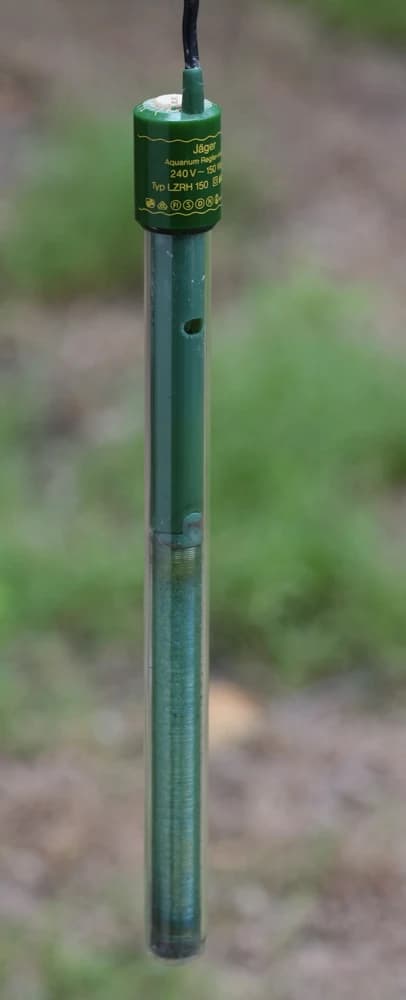
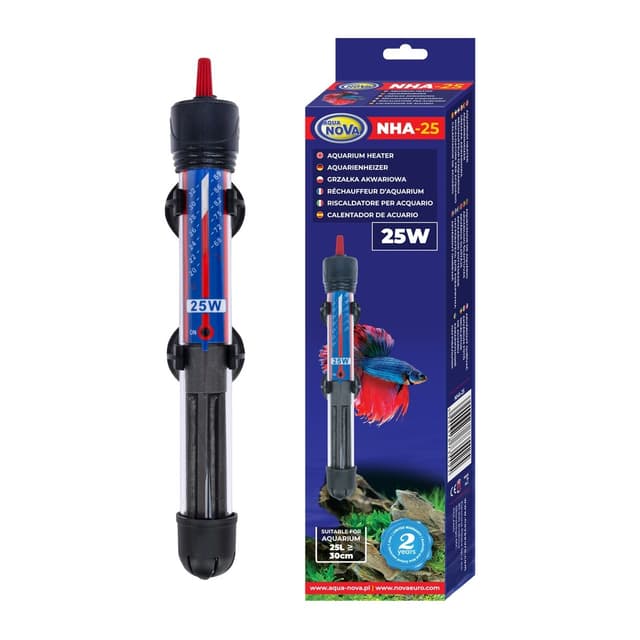
The most common type is a glass or quartz-glass heater with a thermostat, placed inside the aquarium. You set the temperature with a knob and an indicator light shows when it is heating. Examples are the OASE HeatUp and Aqua Nova NHA. According to the manufacturer, the AquaEL Platinium has a fully electronic thermostat with ±0.4 °C accuracy.
Some heaters are preset. According to the manufacturer, the AquaEL Fix 2 automatically holds the water at 25 °C, and its indicator flashes fast to warn that the water is too warm or the heater is not fully under water. The AquaEL Ultra Heater D&N uses a light sensor to let the water cool slightly at night and warm up again in the morning.
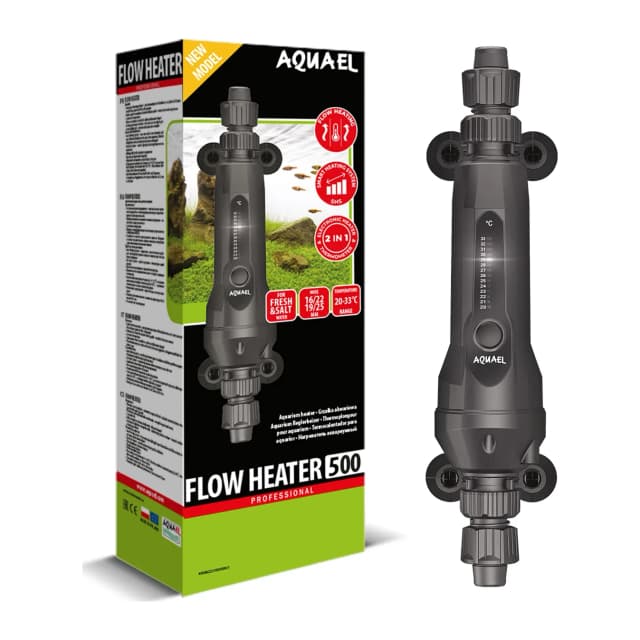
In a tank with an external filter the heater can stay outside the aquarium. The AquaEL Flow Heater 2.0 fits on the external filter hose and, according to the manufacturer, switches off when the water flow stops. Another option is an external filter with a built-in heater, such as the OASE BioMaster² Thermo. That keeps the inside of the tank free of equipment.
4. Where and how to install the heater
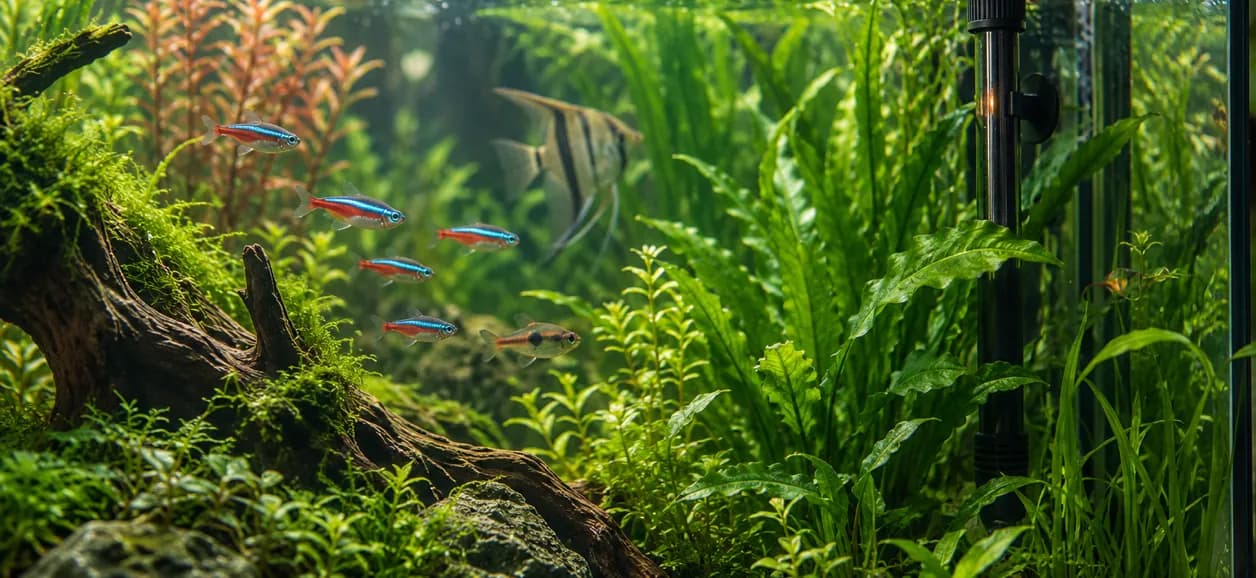
Place the heater where the water moves, for example near the filter outflow or intake. That carries the warm water through the whole tank, so no warm and cold zones form. Fix the heater with the supplied suction cups or bracket so that it does not touch the substrate or the glass.
Read in the manual how deep the heater has to sit under water. Some models must be fully submerged, others have a minimum water line marked on them. Never switch a heater on in air. After installing it, let it stand in the water for about half an hour before switching it on, so the glass and thermostat take on the water temperature; the exact time is in the manufacturer's manual.
Switch the heater off during water changes, so it is not left in air when the water level drops. When you take a heater out of the water, unplug it first and let it cool for a few minutes. Check the cable and plug, and leave a small drip loop in the cable so water cannot run along it into the socket.
5. Thermometer and temperature checks
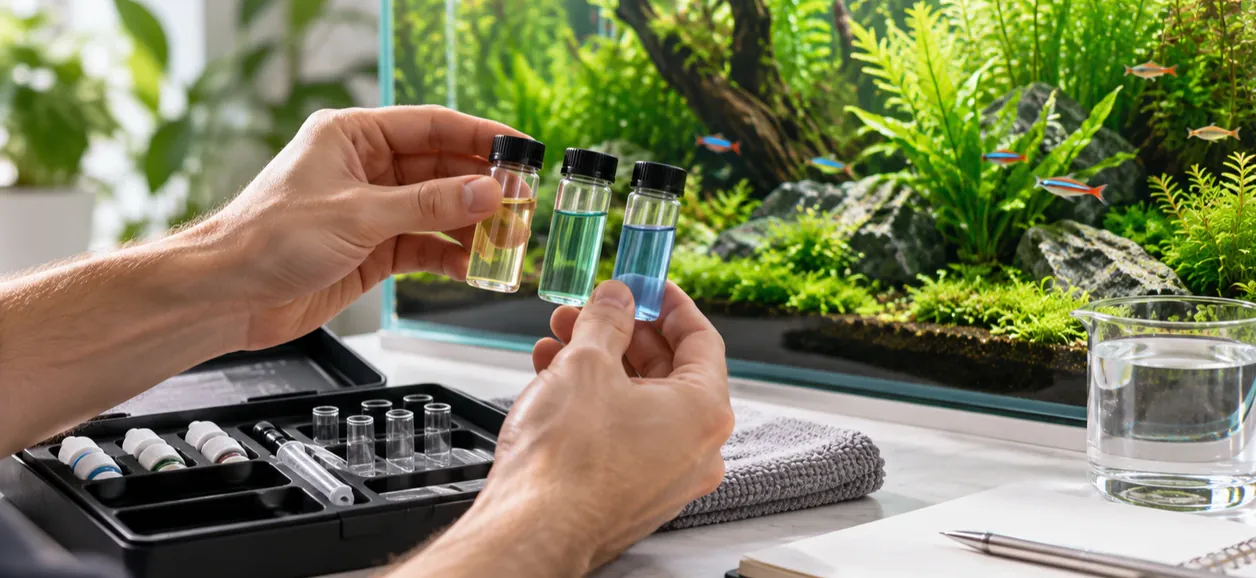
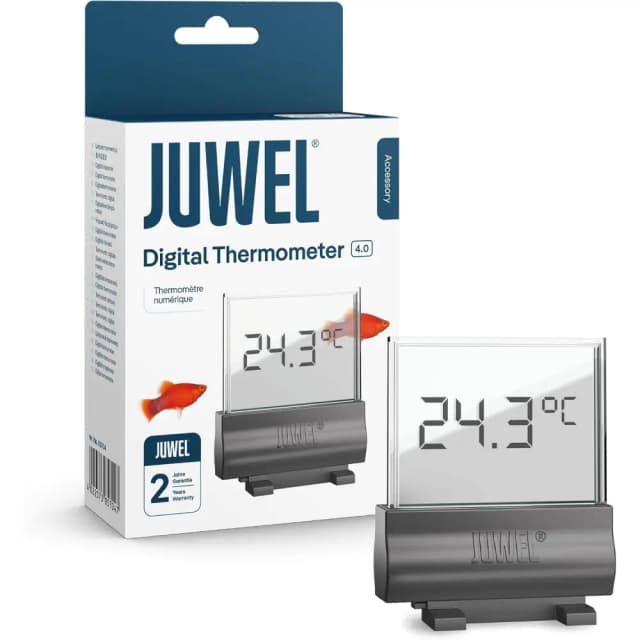
Do not rely on the heater's dial alone. The thermostat setting and the real water temperature can differ, especially with an older or cheaper device. A separate thermometer shows what is actually happening in the water. The Juwel Digital Thermometer 4.0 shows the temperature on a large display while its sensor sits in the tank; the AquaEL glass thermometer is small and discreet.
After installing the heater, check the temperature several times during the first days. If it differs from what you want, adjust the setting in small steps and wait a few hours before changing it again. Place the thermometer away from the heater, so it shows the temperature of the whole tank, not of the area around the heater.
Keep checking the temperature later on as well, for example every time you feed the fish. That way you quickly notice if the heater has failed or if summer heat has warmed the water too much.
6. Summer heat and common mistakes
A heater can only warm the water, not cool it. In a hot summer the room temperature can rise above the tank's. Then it helps to shield the tank from direct sun, shorten the lighting period and open the lid so the water can evaporate. Warm water holds less oxygen, so watch the fish and keep the surface moving.
Common mistakes are a heater that is too small for a large tank, a heater placed in a corner with no flow and having no thermometer. Leaving the heater on during a water change while the level drops is dangerous too, because the glass can overheat in air and crack when it touches the water again.
If you notice the temperature is suddenly too high or too low, do not change it by several degrees at once. Bring it back gradually, for example with small water changes, and check the heater. Replace a device you do not trust, because a faulty thermostat can overheat the water.
Heater wattage by tank volume (AquaEL Platinium, manufacturer's table)
| Wattage | Tank volume |
|---|---|
| 25 W | 10–25 l |
| 50 W | 15–50 l |
| 75 W | 35–75 l |
| 100 W | 60–100 l |
| 150 W | 90–150 l |
| 200 W | 130–200 l |
| 300 W | 230–300 l |
Checklist
- Check what temperature your fish and plants need
- Choose wattage by the manufacturer's table, about 1 W per litre
- In a cool room, go for the upper end of the range
- Install the heater where the water moves
- Never switch a heater on in air
- Switch the heater off during water changes
- Use a separate thermometer
- Change the temperature gradually
Products for this guide




Frequently asked questions
What wattage does a 100-litre aquarium need?
According to manufacturers' tables, usually about 100 W. If the tank stands in a cool room or has no lid, rather choose the next size up or two smaller heaters.
What temperature should an aquarium be?
In a tropical aquarium usually around 24–26 °C. The exact value depends on the species: check what your fish and plants need and keep the temperature stable.
Can the heater stay switched on all the time?
Yes, a heater with a thermostat is made for that: it only heats when the water is cooler than the set temperature. Switch it off only for water changes and before taking it out of the water.
Why does the thermometer show a different temperature from the heater?
The heater's dial is a guide, and the water around the heater is warmer than elsewhere. Trust a thermometer placed away from the heater and adjust the setting in small steps.