1. What hardscape is
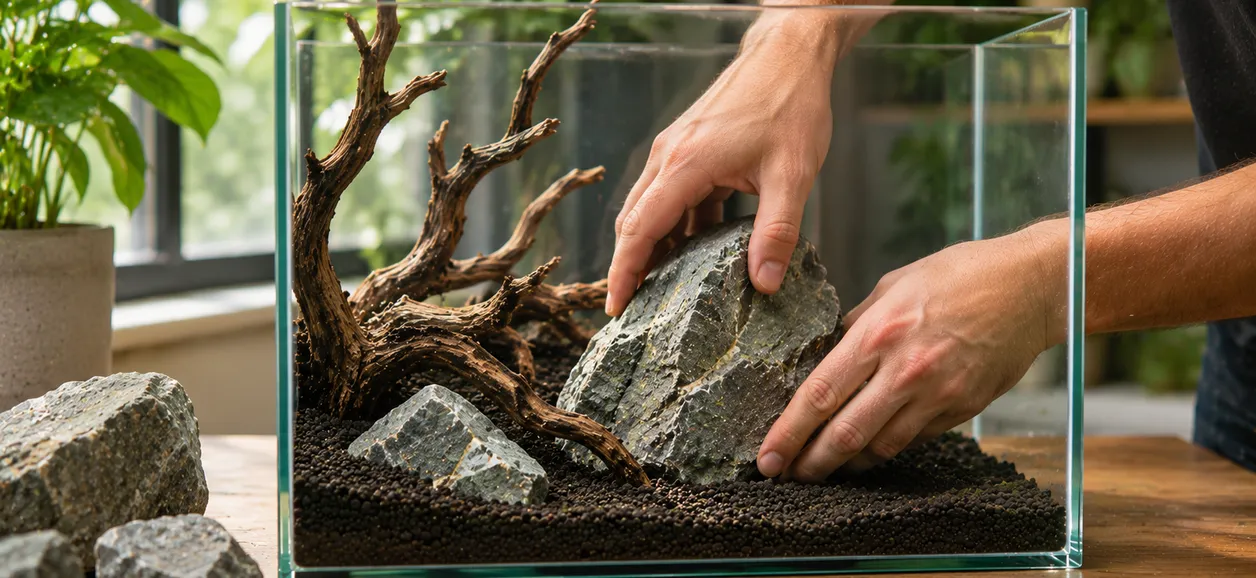
Hardscape is the non-living part of the aquarium: driftwood, rocks and sometimes branches. They create the framework on which you plant. Well-chosen hardscape gives the aquarium depth and a natural look even when there are few plants.
According to Wikipedia, the role of hardscape differs between aquascaping styles: Dutch layouts often leave it out, jungle layouts have little visible hardscape, while a diorama style focuses on it heavily. For a beginner one or two pieces of wood and a few stones are enough.
Before buying, think about what you want: whether plants will grow on rocks, whether the wood will stay visible or whether the aquarium is wide and low. That makes it easier to choose the size and amount.
2. Driftwood: choice and preparation
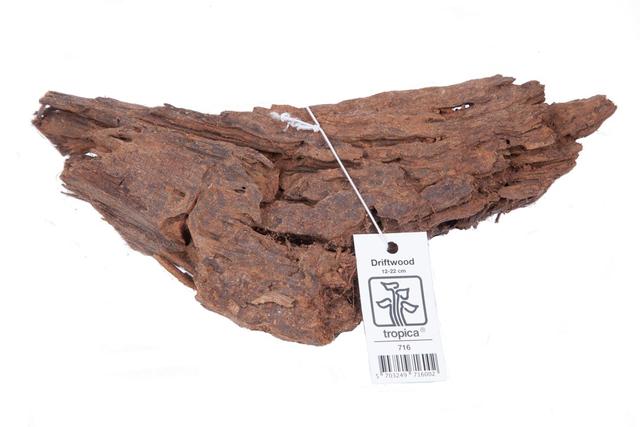
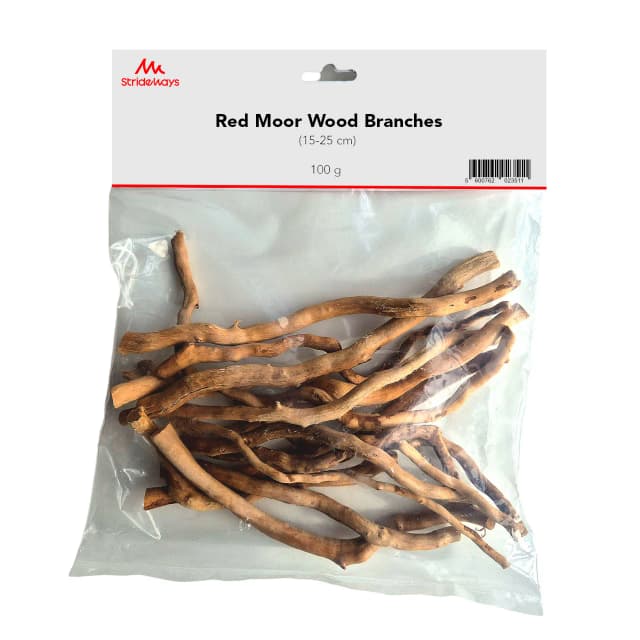
The shop has Tropica Driftwood 12–20 cm, which works as the centrepiece of a composition. Strideways Red Moor Wood Branches come in a 100 g pack of mixed pieces 15–25 cm long: they suit fine finishing and tying on moss and plants.
Pieces of natural wood differ from the photo, so do not expect an exact copy. Before putting wood in the aquarium rinse it with clean water and soak it for a few days. Some wood species release tannins that colour the water yellow-brown. According to Wikipedia this happens especially in blackwater biotope styles; the water becomes lighter with water changes.
Wood may float at first. Soak it until it sinks, or fix it to a stone. Do not use untreated wood straight from the forest, because it may contain rot and unsuitable substances.
3. Rocks: lava rock and others
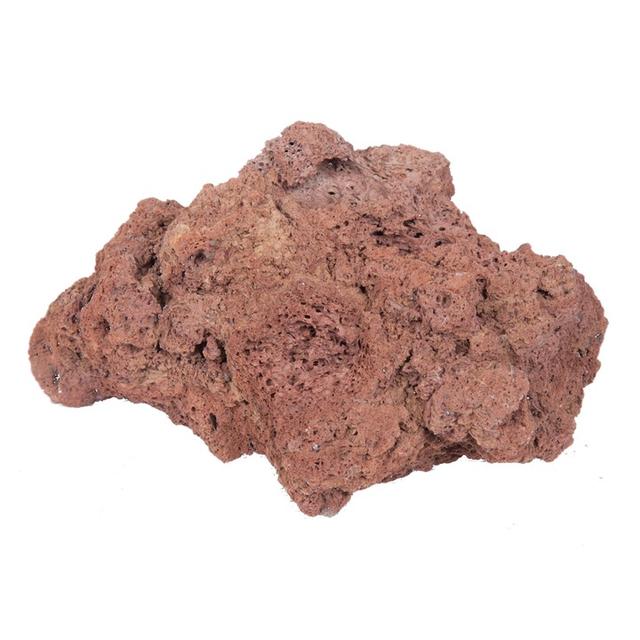
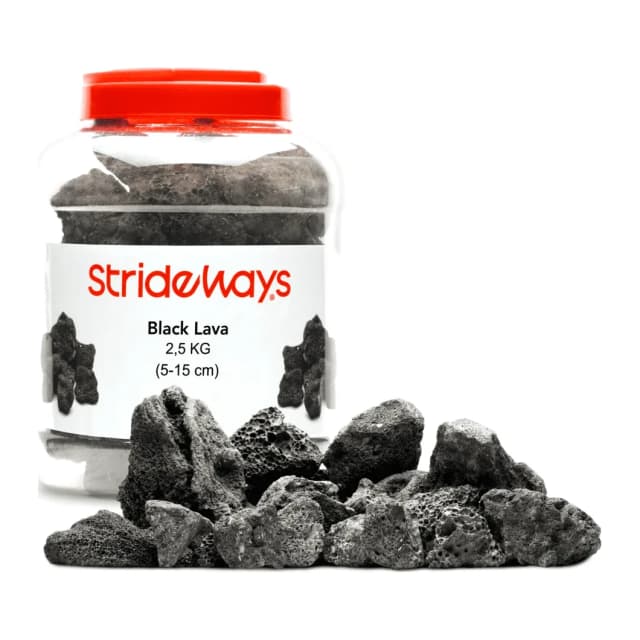
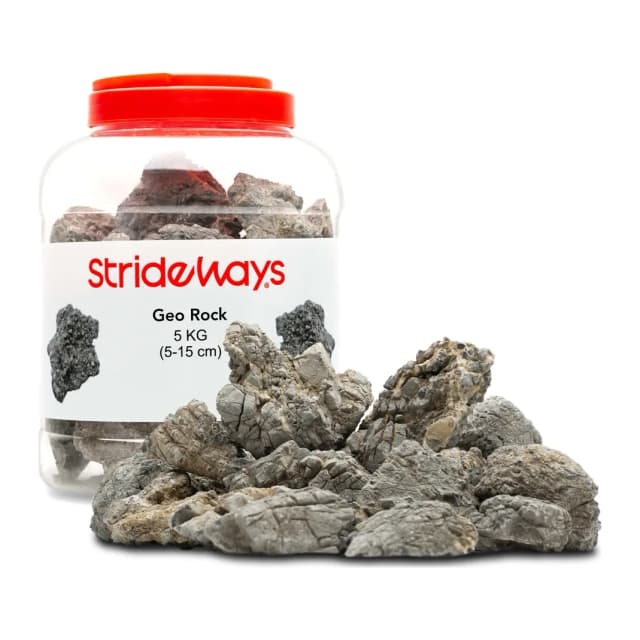
Lava rock is usually porous and rough-surfaced, so plants and moss attach to it well. Tropica Lava Rock is 8–15 cm. Strideways offers Black Lava Stone in a 2.5 kg bottle and Geo Stone in a 5 kg bottle: check the product page for the type and size of the stone.
Choose rock that does not change the water hardness or pH unexpectedly. If the product page does not say whether the rock is inert, check with the manufacturer. Some rocks, for example limestone, raise hardness and do not suit a soft-water aquarium.
Tropica's guide puts the substrate and gravel in first; rocks and roots go in after them and before planting. Do not let larger rocks rest straight on the glass; set them on or in the substrate. Under heavy rocks, lay a thin polystyrene plate before the substrate to protect the glass.
4. Composition
According to Wikipedia, the Iwagumi style usually uses three main stones: one larger and two smaller. The main stone is placed slightly off-centre rather than exactly in the middle. In the nature style a single focal point is positioned to reflect the golden ratio.
As a beginner, choose one central element, do not put everything against the glass and leave free space. Combine rocks of the same kind so that they look like one natural group. Place larger pieces at the back and smaller ones in front to create depth.
Before the final placement, try the composition dry or in a basin of water. Do not hurry: hardscape is hard to change after filling and planting.
5. Attaching plants
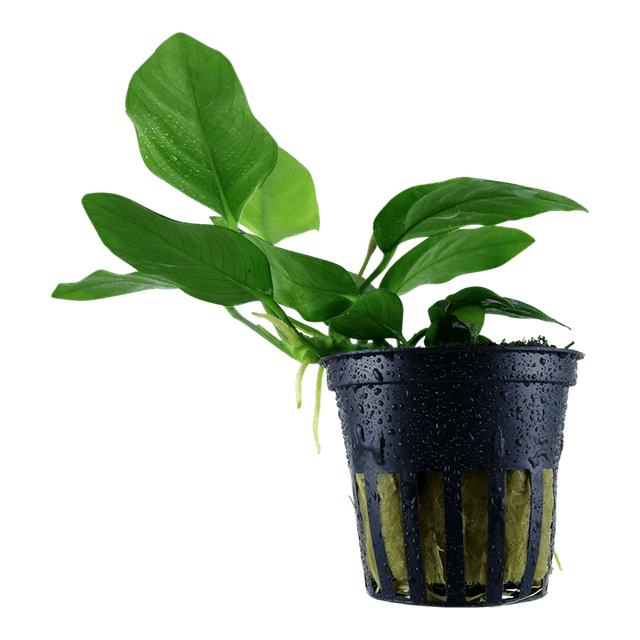
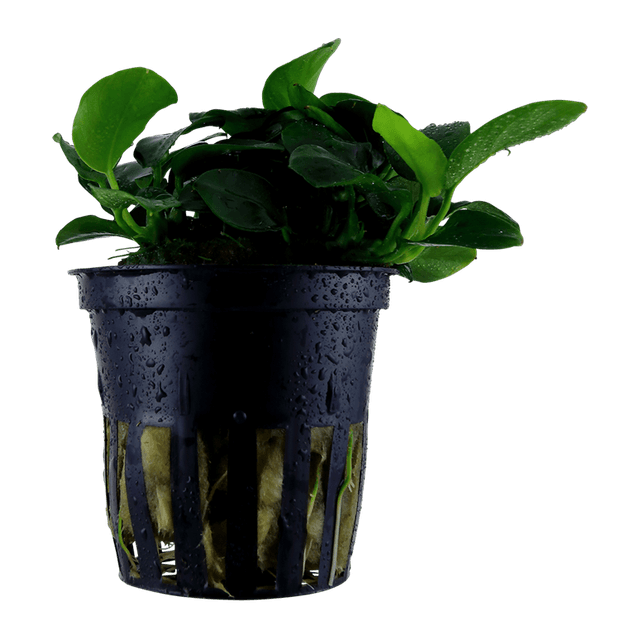
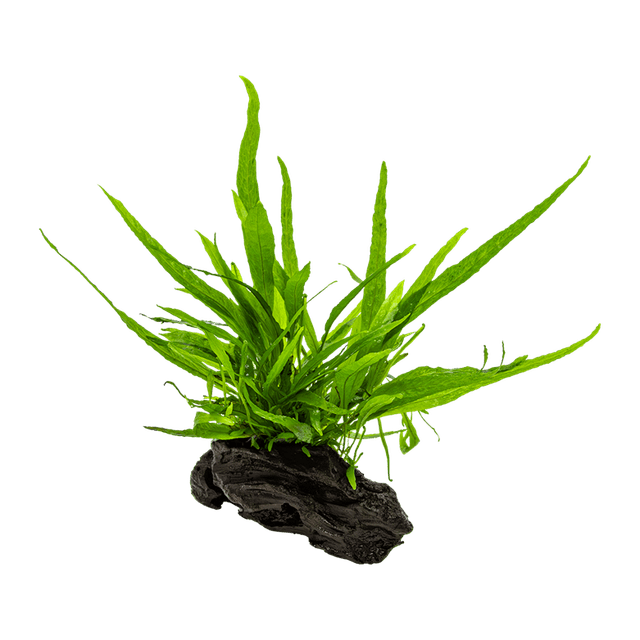
Some plants grow on rock or wood and are not planted in the substrate. According to the product page, Anubias barteri var. nana is easy and suits rock or wood, as does Anubias barteri ‘Petite’, whose height is 3–5 cm. Microsorum pteropus nano wood is a set with a piece of wood on which the plant is already attached.
Attach the plant with thread, nylon line or glue and do not push the rhizome into the substrate. After a couple of weeks roots grow onto the rock or wood and the thread can be removed. If needed, you can also use Red Moor branches to tie on moss and small plants.
Keep plants on rocks and wood clean: remove dead leaves so that they do not feed algae.
Choosing and using hardscape
| Material | Manufacturer data | Use |
|---|---|---|
| Tropica Driftwood | 12–20 cm | Composition centrepiece; soak first |
| Red Moor branches | 100 g, 15–25 cm | Finishing, tying on moss |
| Tropica Lava Rock | 8–15 cm | Rough surface, for attaching plants |
| Strideways Black Lava Stone | 2.5 kg bottle | Check the product page for the type |
| Strideways Geo Stone | 5 kg bottle | Check the product page for the type |
| Anubias nana / Petite | 5–15 cm / 3–5 cm | Attach to rock or wood |
Checklist
- Choose one central element and leave free space
- Rinse and soak wood before putting it in the aquarium
- Check that the rock does not change water hardness
- Place hardscape after the substrate, before planting
- Do not rest large rocks directly on the glass
- Tie on Anubias and fern, do not bury the rhizome
- Try the composition before filling
- Remove dead leaves from the hardscape
Products for this guide
| Plant | Height | Light | CO2 | Growth | Difficulty | Placement |
|---|---|---|---|---|---|---|
| Anubias barteri var. nana | 5–15 cm | — | — | — | easy | on rock or wood |
| Anubias barteri 'Petite' | 3–5 cm | low | low | slow | easy | on rock or wood |
| Microsorum pteropus nano wood | 15–30 cm | — | — | — | easy | centre |
Size, light and CO2 demand are manufacturer data; real results depend on your aquarium.
€12.99
Unit price: €5.20 / kg
€5.99
Unit price: €59.90 / kg
€24.99
Unit price: €5.00 / kg
Frequently asked questions
Why does driftwood turn the water brown?
Wood releases tannins. This is natural and usually harmless, and the water becomes lighter with water changes. Soaking before putting it in the aquarium reduces the colouring.
Do all rocks suit an aquarium?
No. Some rocks, for example limestone, raise water hardness and pH. Choose products made for aquariums and read the product page.
How do I attach plants to wood?
Tie them with thread or nylon line, do not push the rhizome into the substrate and wait a couple of weeks for the roots to attach.
How much hardscape do I need?
A beginner usually needs one or two pieces of wood and a few stones. Less and well thought out is better, because you also need to leave room for plants and open space.