1. A daily look at the aquarium
Once the aquarium is set up and the first weeks are over, fishkeeping becomes a matter of routine care. Choosing a tank and starting it up are covered in the separate guide “How to start an aquarium”; this one is about what comes after. It shows what to do every day, what to do regularly and when to ask for advice.
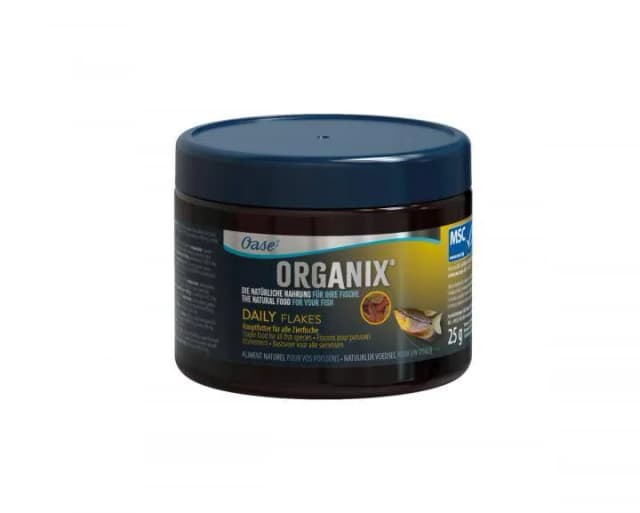
Feed a little at a time and only as much as the fish eat quickly, because uneaten food spoils the water. Organix Daily Flakes are a staple food for fish in community aquariums, and the manufacturer recommends feeding 1–2 times a day. Still check the needs of your own species, as some fish need different food.
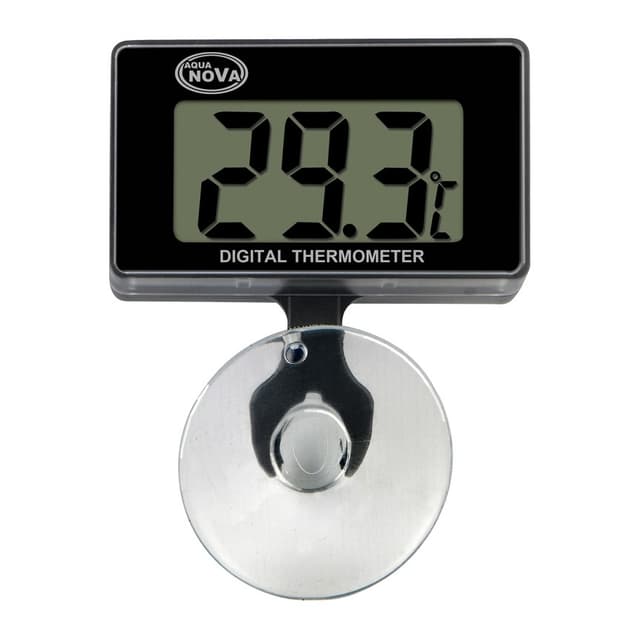
While feeding, check the equipment too. The Aqua Nova Digital Aquarium Thermometer sits inside the tank and, according to the manufacturer, measures the water temperature with high accuracy. Compare the reading with the needs of your species and check that the filter runs as usual and the light switches on and off on time.
2. Partial water change and tap water conditioner
Change part of the water regularly, never all of it at once. A partial water change removes substances that build up and keeps conditions stable, while sudden changes stress the fish. How much and how often depends on the tank, its stocking and its plants, so follow your water tests and the needs of your species.
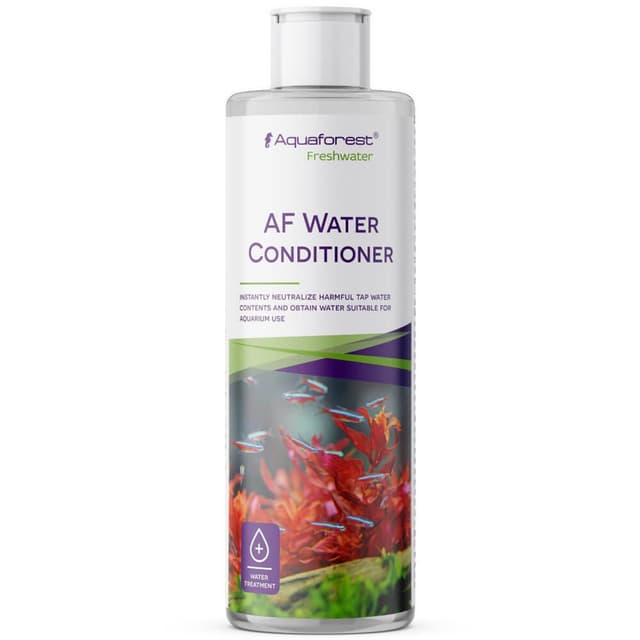
Tap water needs treatment before it goes into the aquarium. Aquaforest Water Conditioner instantly prepares tap water for the tank and, according to the manufacturer, reduces chlorine and binds heavy metals. The manufacturer recommends 10 ml of conditioner per 100 l of tap water at every water change.
Dose the conditioner for the new water, not for the whole tank volume, and bring the new water close to the tank temperature. Keep the bottle tightly closed at room temperature and away from sunlight.
3. Cleaning the gravel with a siphon
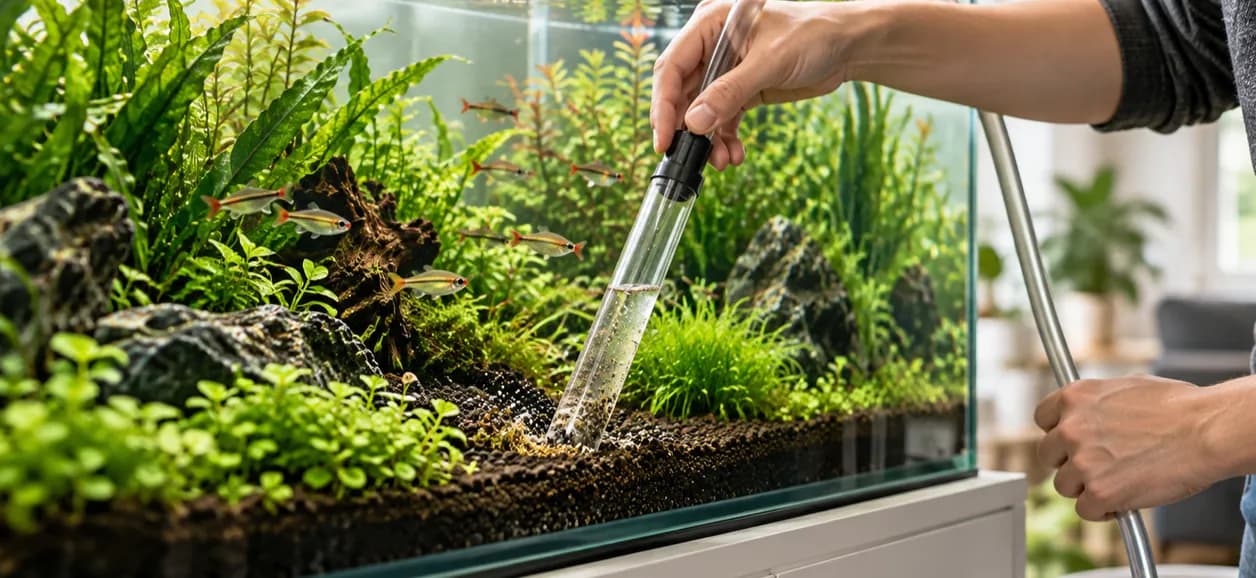
Food remains and other debris collect on the bottom and load the water over time. A convenient moment to clean the bottom is the water change, as the water drawn out through the siphon is the part you replace anyway. Move calmly over open areas and do not dig under plant roots.
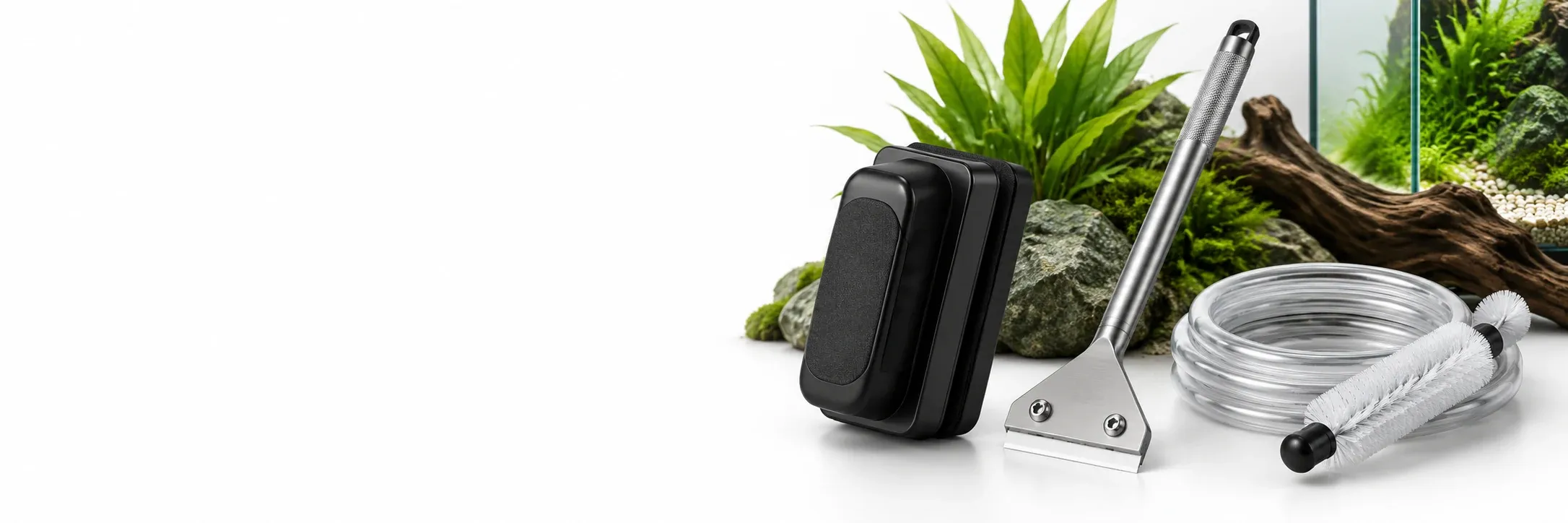
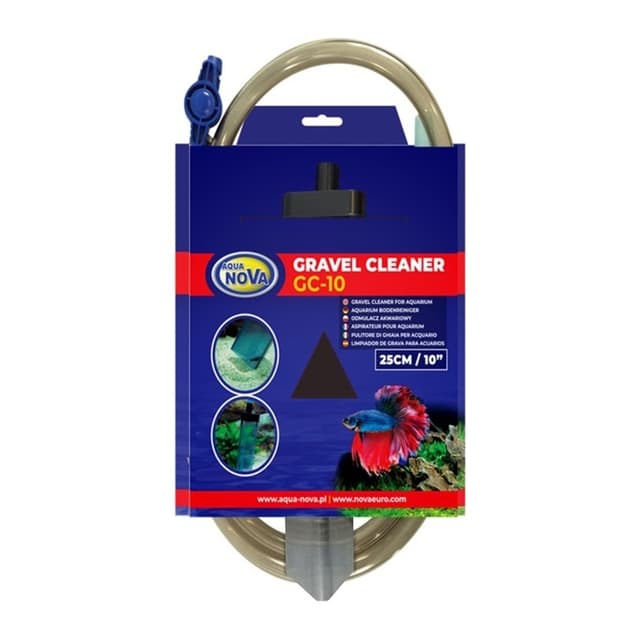
The Aqua Nova GC is a gravel cleaner with an adjustable valve and comes in three sizes for small, medium and large aquariums. The GC-10 is 25 cm, the GC-18 45 cm and the GC-24 60 cm long, so choose the size to match your tank. The valve lets you regulate the water flow, which helps keep sand or fine gravel from being sucked out.
4. Glass and filter care
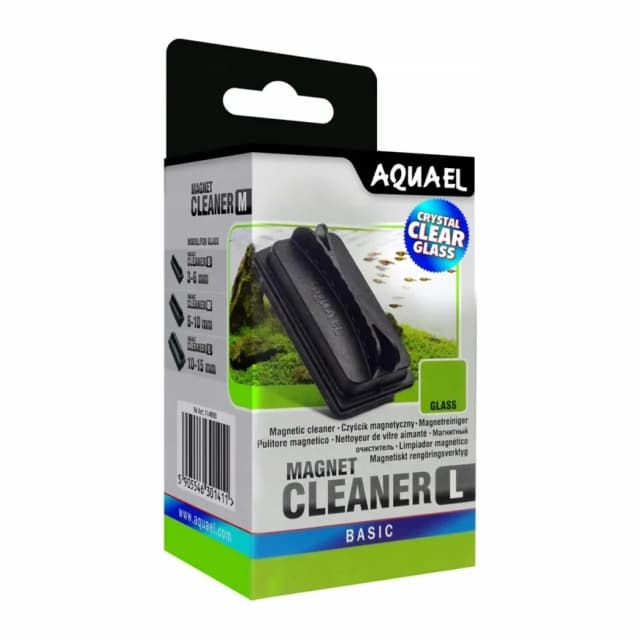
A film of algae on the glass is normal, and removing it is part of regular care. The AquaEL Magnetic Cleaner has two parts held together by magnets: one inside the tank and one on the outside of the glass, so your hands stay out of the water. According to the manufacturer, the coated surface does not scratch the glass and removes even stubborn algae.
Choose the size by the thickness of the glass: S suits glass up to 6 mm, M 6–10 mm and L 10–15 mm. Keep sand grains from getting between the cleaner and the glass.
Bacteria that keep the water clean live in the filter, so rinse the filter media only in water taken from the aquarium, never under the tap. Do not replace all the media at once; always keep part of the old media. When replacing media, follow the manufacturer's instructions.
5. Water tests, plants and algae
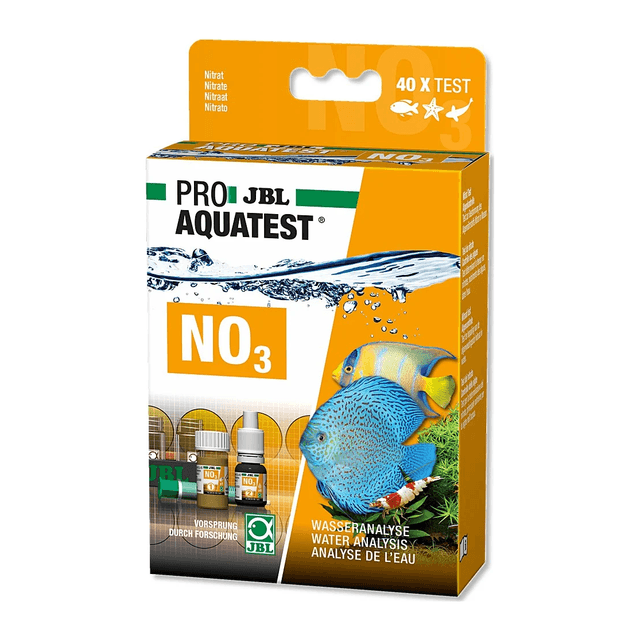
Water can look clear and still have a poor composition, so test it now and then. Nitrate builds up gradually and shows whether water changes and feeding are in balance. JBL Test PRO NO3 is a colour test for measuring nitrate yourself.
The manufacturer recommends 0–50 mg/l for a community freshwater aquarium and 10–30 mg/l for a planted aquarium with few fish. Fill both test tubes with 10 ml of sample water using the syringe, add the reagents to one of them and shake hard for exactly one minute. Read the result with the comparator and colour scale.
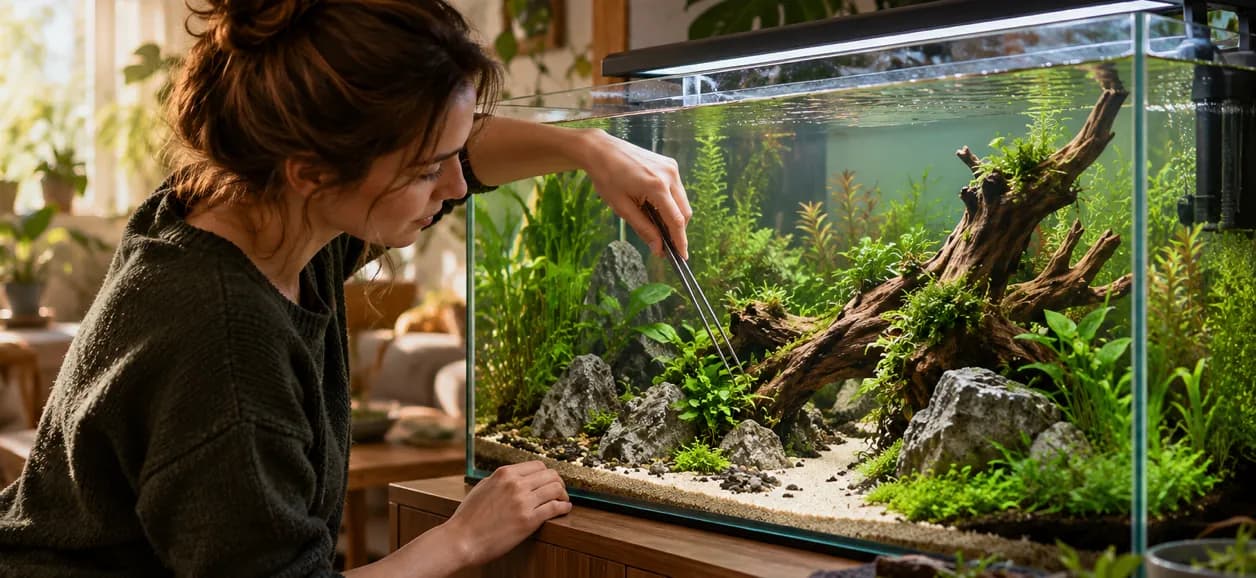
Plants use nutrients and compete with algae, so remove yellow and decaying leaves. If algae suddenly spread, check the lighting time, feeding and test results. In a fertilised aquarium the nitrate test helps choose the right fertiliser dose.
6. When to ask for advice
If fish behave unusually, for example hide, gasp at the surface or stop eating, test the water first and check the temperature. Check the filter as well, because a stopped flow makes the water worse quickly.
Do not guess at a disease or add products to the water at random. Describe the problem to a specialist or a veterinarian and bring your water test results, as they help to understand the situation. Before adding new fish, always check the needs and compatibility of the species.
Care tasks at a glance
| Task | How often | Tool |
|---|---|---|
| Feeding | Every day, a little at a time | Fish food |
| Checking temperature, filter and light | Every day | Thermometer |
| Partial water change | Regularly, part of the water | Conditioner and siphon |
| Cleaning the glass | When algae appear on the glass | Magnetic cleaner |
| Rinsing filter media | When the flow weakens | Aquarium water, not tap water |
| Water test | Now and then and when problems appear | Test kit |
Checklist
- Feed a little and remove uneaten food
- Check the thermometer, filter and light every day
- Change part of the water regularly, never all of it
- Treat new tap water with conditioner
- Clean the gravel with a siphon during water changes
- Rinse filter media only in aquarium water
- Test the water now and then
Products for this guide
from€5.99
from€10.99
Unit price: €21.98 / l
from€11.99
from€10.99