


Tests and Refractometers
Keep salinity, nitrate and phosphate in check: hydrometers with a thermometer or measuring cylinder and marine tests.
How to choose?Advice and care
How to choose marine tests
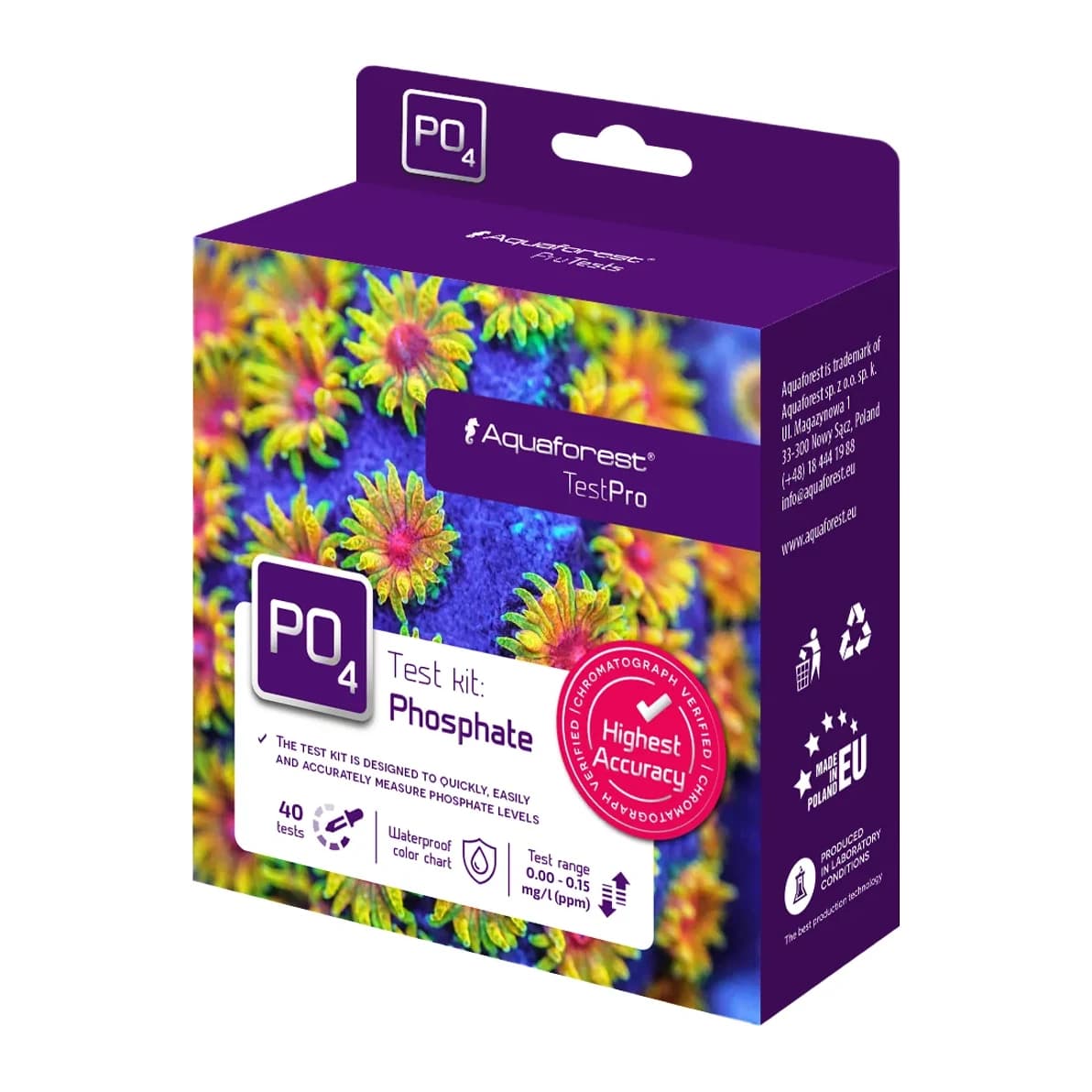
Salinity is the key daily reading; nitrate and phosphate show the nutrient level.
Hydrometer
A hydrometer shows water density, from which you read salinity.
Temperature
The reading applies at a set temperature, so check the thermometer too.

Write it down
Log your results to spot changes over time.
Popular brands
All brandsFrequently asked questions
How often should I measure salinity?
After topping up evaporated water and every time you mix new salt water.
Do corals need nitrate and phosphate?
Yes, in small amounts, but an excess feeds algae. Tests show whether the level is balanced.
Read more
Corals and other invertebrates do not show a problem straight away, so a change in the water is often noticed only once the harm is done. Testing gets ahead of that: regular readings show whether the water is holding steady or a parameter is starting to drift.
A hydrometer is a simple, battery-free way to measure salinity. Because water density depends on temperature, take the reading at the temperature the manufacturer specifies. In the model with a measuring cylinder the reading is steadier, as the sample stays still. A nitrate and phosphate test shows whether the reef has too many nutrients or too few.
A common mistake is measuring salinity straight after adding water, before it has mixed, or forgetting that only water evaporates and the salt stays behind. Top up evaporation with osmosis water, not seawater, and check salinity each time you mix a new batch of seawater.
