
1. Before you choose: observe and ask for advice
Signs such as white spots, frayed fins, ulcers or rapid breathing can have several different causes. The same sign may come from a parasite, a bacterium or poor water quality, so this guide does not make a diagnosis. If the cause is unclear, ask a veterinarian or a fish-health specialist before you add anything to the water.
The eSHa treatments are aimed at narrower groups of problems: some at fungus and bacteria, some at single-celled parasites, others at worms or parasitic crustaceans. All eSHa products covered here come in a 20 ml bottle. The manufacturer states that they are for ornamental fish only and must not be used with animals intended for consumption.
Always read the eSHa leaflet in the pack before use and dose by it. The leaflet holds the dose and the directions for use; this guide only helps you find which product to read about.
2. eSHa 2000: fungus, fin rot and bacterial infections
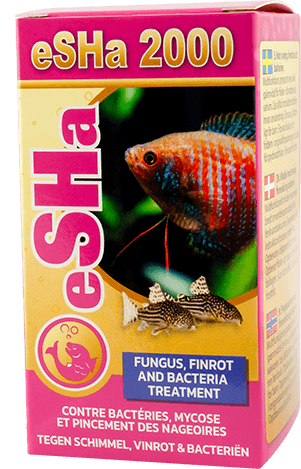
eSHa 2000 is a broad-range treatment for freshwater aquariums. For signs of fungus, fin rot and bacterial infections the manufacturer offers this product and lists over 18 diseases and symptoms, including Saprolegnia, Flavobacterium columnare, dropsy, gill disease, ulcers and wounds.
The length of use and the dose are in the eSHa leaflet. Take the dose and the directions from the eSHa leaflet and do not dose by eye.
If you are looking for the eSHa 2000 instructions, they are in the leaflet inside the pack. Before you start, note the real water volume of the tank and the condition of the fish so that you can compare changes during the course.
3. eSHa EXIT and HEXAMITA: white spot, velvet and Hexamita
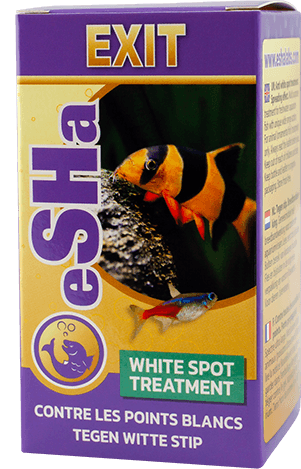
For signs of white spot disease (Ichthyophthirius) and velvet (Oodinium) in freshwater aquariums, eSHa offers EXIT. The manufacturer also lists Chilodonella, Trichodina, Apiosoma and Tetrahymena.
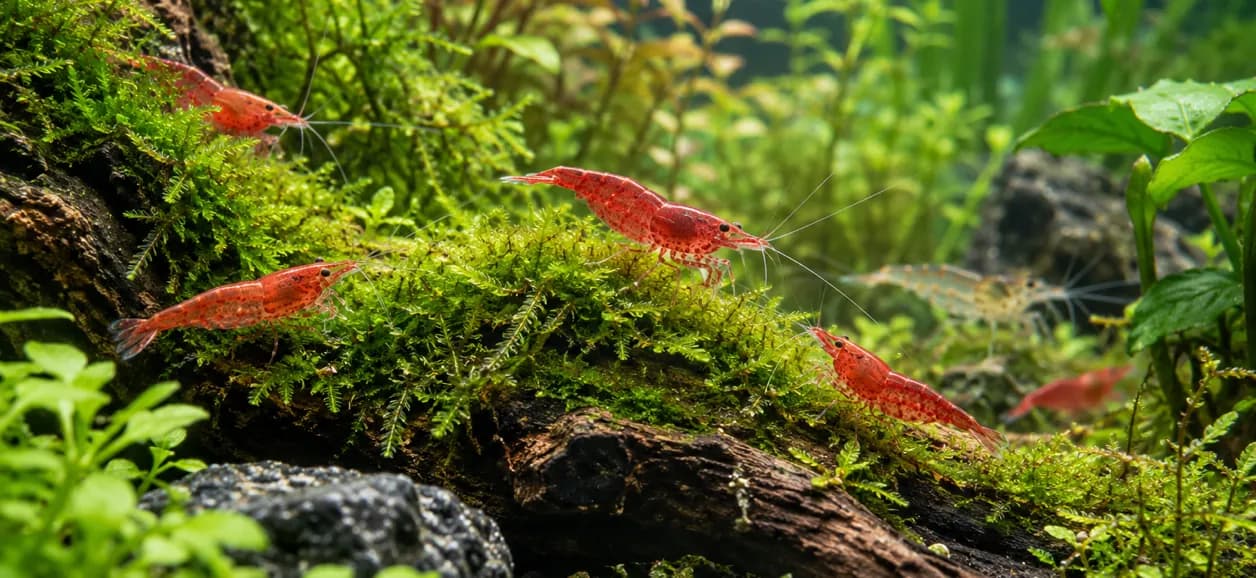
EXIT is copper-free and, according to eSHa, safe with shrimp, snails, scaleless fish, plants and filters when dosed correctly. Keep in mind that it may discolour the water and stain silicone; the dose is in the eSHa leaflet.
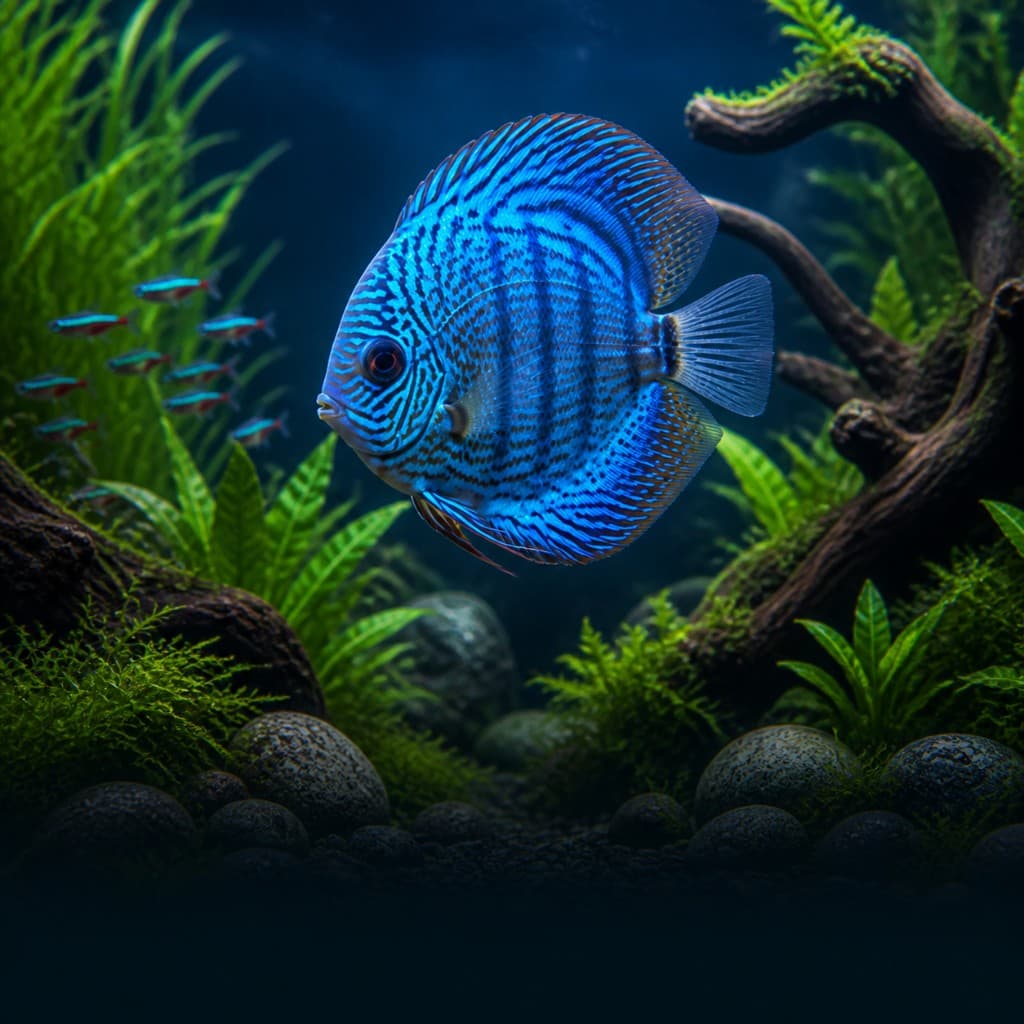
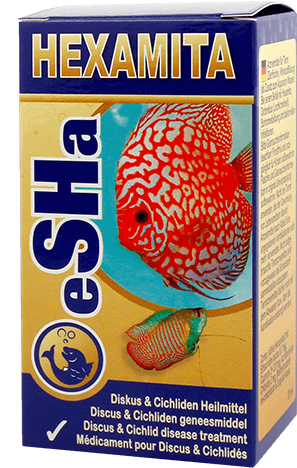
eSHa HEXAMITA was developed against hole-in-the-head disease (Hexamita) of discus and is formulated for cichlids such as discus and angelfish; according to the manufacturer it is also usable with many tropical and coldwater fish. According to eSHa it is well tolerated by fish, plants and filters. Dose by the eSHa leaflet.
4. Worms and parasitic crustaceans: gdex, -ndx and alx
For flatworms, skin flukes (Gyrodactylus), gill flukes (Dactylogyrus) and tapeworms (Cestoda), eSHa offers gdex. It is meant for tropical and coldwater aquariums and for marine fish in quarantine tanks.
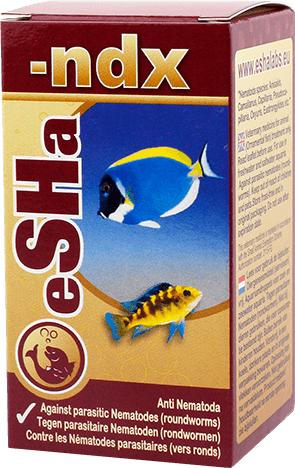
eSHa -ndx is levamisole-based and targets parasitic roundworms (nematodes) such as Camallanus, Capillaria, Pseudocapillaria, Eustrongylides and Oxyuris, which live mostly in the intestines of the fish. It is used in the same settings as gdex: tropical and coldwater aquariums and marine fish in quarantine.
eSHa alx is aimed at parasitic crustaceans such as carp lice (Argulus), anchor worms (Lernaea) and gill lice (Ergasilus) on the skin and gills of fish, in freshwater aquariums, ponds and marine quarantine tanks. Remove shrimp and crayfish before use and take care with invertebrates such as corals, anemones, sea urchins, snails and clams. According to eSHa it is well tolerated by plants and filters.
5. A separate treatment tank and Aquaforest Purify
A separate quarantine or treatment tank lets you watch a sick fish more closely and keeps the plants and invertebrates of the main tank away from the product. Prepare its water as you would for a normal water change and make sure it is well aerated.
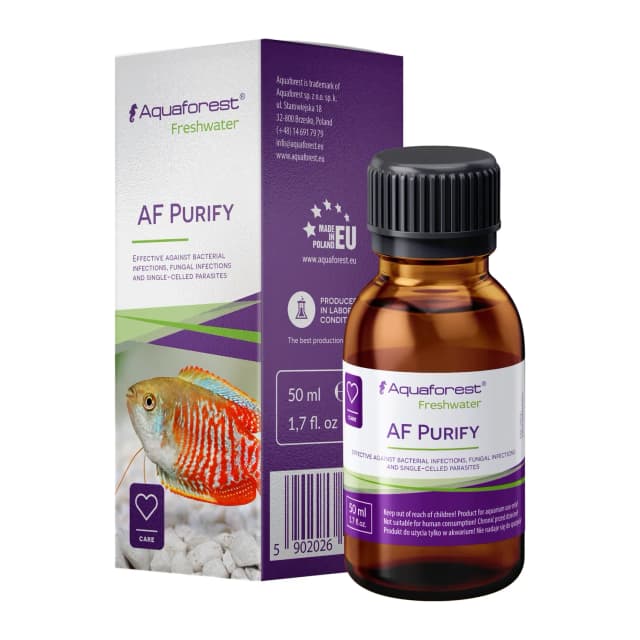
Aquaforest Purify is a preparation for freshwater aquariums with specialist compounds for the care of fish. The manufacturer recommends it as a bath in a separate quarantine or treatment tank, also because it strongly colours the water, gravel and decorations.
According to the manufacturer, keep the bath at 27–30 °C and aerate the water well. Take the dosing and water-change scheme from the manufacturer's directions and follow it exactly in the separate tank.
eSHa products and what the manufacturer offers them for
| Product | Against (according to the manufacturer) | Note from the product text |
|---|---|---|
| eSHa 2000 | Fungus, fin rot, bacterial infections | Freshwater aquariums; use by the eSHa leaflet |
| eSHa EXIT | Ichthyophthirius, Oodinium | Copper-free; may discolour water and stain silicone |
| eSHa HEXAMITA | Hexamita (hole-in-the-head) | For cichlids such as discus and angelfish |
| eSHa gdex | Flatworms, Gyrodactylus, Dactylogyrus, Cestoda | Tropical and coldwater tanks, marine fish in quarantine |
| eSHa -ndx | Nematodes, e.g. Camallanus, Capillaria | Levamisole-based |
| eSHa alx | Argulus, Lernaea, Ergasilus | Remove shrimp and crayfish first |
Checklist
- Note the signs and the real water volume of the tank.
- If the cause is unclear, ask a veterinarian or a fish-health specialist.
- Choose the product by what the manufacturer offers it for.
- Read the eSHa leaflet and dose by it.
- Check in the eSHa leaflet whether the product suits your shrimp, snails and plants; for alx eSHa advises removing shrimp and crayfish first.
- Remember that EXIT may discolour the water and stain silicone.
- Do not use eSHa products with animals intended for consumption.
Products for this guide
€8.99

€13.99
€8.99
€10.99
€11.99

€11.99
€8.70
Unit price: €174.00 / l
Frequently asked questions
Where can I find the eSHa 2000 instructions?
The instructions are in the eSHa leaflet inside the pack; dose by it.
What is eSHa gdex used for?
Against flatworms, skin and gill flukes (Gyrodactylus, Dactylogyrus) and tapeworms (Cestoda), in tropical and coldwater aquariums and for marine fish in quarantine.
Is eSHa EXIT safe with shrimp?
According to eSHa, EXIT is safe with shrimp, snails, scaleless fish, plants and filters when dosed correctly. It may discolour the water and stain silicone.
Which fish is eSHa HEXAMITA for?
It was developed against hole-in-the-head disease (Hexamita) of discus and is formulated for cichlids such as discus and angelfish; according to the manufacturer it is also usable with many tropical and coldwater fish.